
Pest Control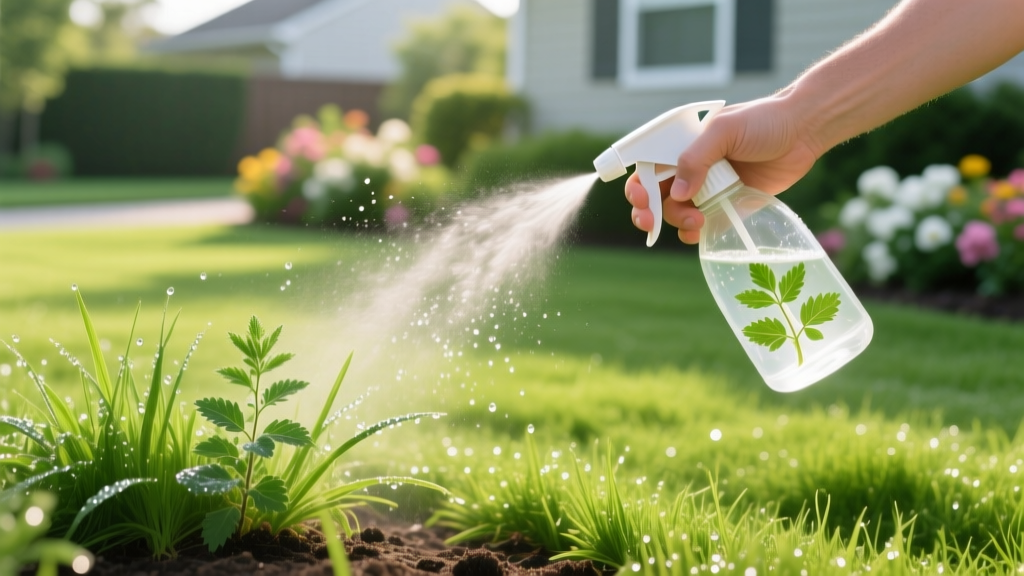
Best Homemade Weed Killer for Lawns: Safe DIY Recipes That Work
The Hard Truth About DIY Weed Control on Turfgrass
Searching for a homemade weed killer for lawns usually leads to a chaotic mix of internet recipes involving kitchen vinegar, table salt, and dish soap. While these mixtures can indeed desiccate plant tissue, the vast majority of them are non-selective and highly detrimental to your turfgrass and soil microbiology. When you apply a broad-spectrum contact herbicide to a lawn, you are not just killing the dandelion or clover; you are burning the surrounding grass blades and altering the soil chemistry.
⚠ Critical Warning: There is no such thing as a DIY selective herbicide. Any homemade acidic or oil-based spray will burn turfgrass on contact. The strategies detailed below are strictly for spot treatment of broadleaf weeds and must be applied with a targeted shielded nozzle or a brush to avoid collateral damage to your lawn.
To successfully manage weeds organically in 2026, homeowners must move beyond 5% culinary vinegar and understand the precise chemistry of plant cuticle penetration. This guide provides a scientifically sound, soil-safe homemade weed killer for lawns that maximizes weed burn-down while preserving your soil's cation exchange capacity.
The Science of Acetic Acid: Why Kitchen Vinegar Fails
Standard grocery store vinegar contains roughly 5% acetic acid. According to research from the USDA Agricultural Research Service, 5% acetic acid is only effective on very young, tender seedlings. It lacks the chemical strength to strip the thick, waxy cuticle of mature broadleaf weeds like plantain, dandelion, or thistle. When you spray 5% vinegar on a mature weed, you may burn the top leaves, but the taproot remains entirely unaffected, leading to rapid regrowth within 7 to 10 days.
To achieve genuine herbicidal activity, you need horticultural vinegar, which ranges from 20% to 30% acetic acid. At these concentrations, acetic acid acts as a rapid desiccant, instantly dissolving the lipid barrier of the leaf and causing cellular collapse. However, this increased efficacy introduces significant handling risks, requiring strict personal protective equipment (PPE).
Concentration Efficacy and Cost Breakdown
| Acetic Acid % | Target Weeds | Cost per Gallon (2026) | Required PPE |
|---|---|---|---|
| 5% (Culinary) | Tiny seedlings only | $3.00 - $5.00 | None |
| 10% - 15% | Young annuals | $12.00 - $18.00 | Safety glasses, gloves |
| 20% (Horticultural) | Mature broadleaves | $25.00 - $35.00 | ANSI Z87.1 goggles, nitrile gloves, long sleeves |
| 30% (Industrial) | Woody stems, deep roots | $45.00 - $60.00 | Full face shield, acid-resistant apron |
The Safest Homemade Weed Killer Recipe for Spot Treatment
This formulation leverages the desiccating power of 20% acetic acid, enhanced with d-limonene (citrus oil) to dissolve the weed's waxy cuticle, and a non-ionic surfactant to ensure the solution sticks to vertical leaves rather than beading off. The Environmental Protection Agency (EPA) recognizes these active ingredients as minimum-risk components when used correctly.
Exact Mixing Ratios (Makes 1 Gallon)
- The Base: Pour 1 gallon of 20% horticultural vinegar into a dedicated, acid-resistant pump sprayer. (Never use a sprayer previously used for synthetic systemic herbicides like glyphosate).
- The Cuticle Breaker: Add 2 fluid ounces (4 tablespoons) of pure, cold-pressed orange oil (d-limonene). This is the secret ingredient that most internet recipes miss; it rapidly breaks down the lipid barriers of tough weeds like creeping charlie.
- The Surfactant: Add 1 tablespoon of pure liquid castile soap. Do not use synthetic dish detergents (like Dawn), as they contain degreasers and synthetic fragrances that can leave toxic residues in the soil microbiome. Castile soap acts as a sticker-spreader.
- Agitate: Seal the sprayer and shake gently for 30 seconds to emulsify the oils into the aqueous vinegar base.
What to Avoid: The Salt and Boiling Water Traps
Many viral DIY weed killer recipes advocate for adding Epsom salt, table salt, or pouring boiling water on weeds. While these methods will kill the plant, they inflict long-term damage on your lawn's soil structure.
"Sodium ions from table salt displace calcium and magnesium on the soil's cation exchange sites. This leads to severe soil compaction, destroys soil aggregation, and creates osmotic drought stress for surrounding turfgrass roots. Once salt accumulates in the topsoil, it is incredibly difficult to leach out."
— Adapted from soil science guidelines via the University of Minnesota Extension
Similarly, boiling water not only cooks the weed but also flash-pasteurizes the soil, killing beneficial mycorrhizal fungi and nitrogen-fixing bacteria that your turfgrass relies on for nutrient uptake. Stick to the vinegar-citrus formulation, which breaks down rapidly in the soil without leaving toxic heavy metal or sodium residues.
DIY vs. Commercial Organic Herbicides: A Cost & Efficacy Matrix
If you are managing a large property, mixing your own solution may not be the most time-efficient route. Here is how our homemade recipe compares to leading commercial organic alternatives available in 2026.
| Product Type | Active Ingredients | Cost per Ready-to-Use Gallon | Pros & Cons |
|---|---|---|---|
| DIY Vinegar-Citrus | 20% Acetic Acid, d-limonene | ~$28.00 | Pro: Highly customizable, cheap in bulk. Con: Requires PPE, manual mixing. |
| Avenger Weed Killer | 70% d-limonene (Citrus Oil) | ~$65.00 | Pro: Excellent cuticle penetration, smells great. Con: Expensive, less effective on deep taproots. |
| BurnOut II | Cloves, Rosemary, Peppermint oils | ~$80.00 | Pro: Very safe, no acid handling. Con: Weak on mature, established weeds. |
Application Protocols for Maximum Burn-Down
Because homemade contact herbicides lack systemic action (they do not travel down to the roots), your application technique dictates your success rate. Follow these strict environmental parameters:
- Timing is Everything: Apply between 10:00 AM and 2:00 PM on a hot, sunny day. The UV radiation and heat accelerate the desiccation process. Spraying at dusk or on overcast days reduces efficacy by up to 40%.
- Wind Speed: Never spray if winds exceed 5 MPH. Acetic acid drift will instantly burn the tips of your desirable turfgrass, leaving your lawn with a speckled, scorched appearance.
- Nozzle Selection: Use a pin-stream or shielded cone nozzle. Avoid fine mist nozzles, which increase drift risk and fail to deliver the heavy drenching required to penetrate the weed's crown.
- Thorough Coverage: You must coat the entire leaf surface, including the underside where the stomata (pores) are concentrated. If you miss the basal rosette of a dandelion, it will regenerate.
- The 48-Hour Rule: Ensure no rainfall is forecasted for at least 48 hours. Rain will wash the unabsorbed acids and oils off the leaf surface before cellular collapse is complete.
Post-Treatment Lawn Recovery
Even with careful spot treatment, the soil beneath the treated weed will experience a temporary drop in pH due to the acetic acid. To buffer the soil and encourage your surrounding turfgrass to fill in the void left by the dead weed, apply a light dusting of pulverized agricultural lime (calcium carbonate) over the treated area 48 hours after spraying. Follow this with a quarter-inch layer of screened compost to reintroduce beneficial microbes. By addressing the soil biology immediately after organic weed removal, you create a dense, competitive turf canopy that naturally suppresses future weed seed germination.

