
Pest Control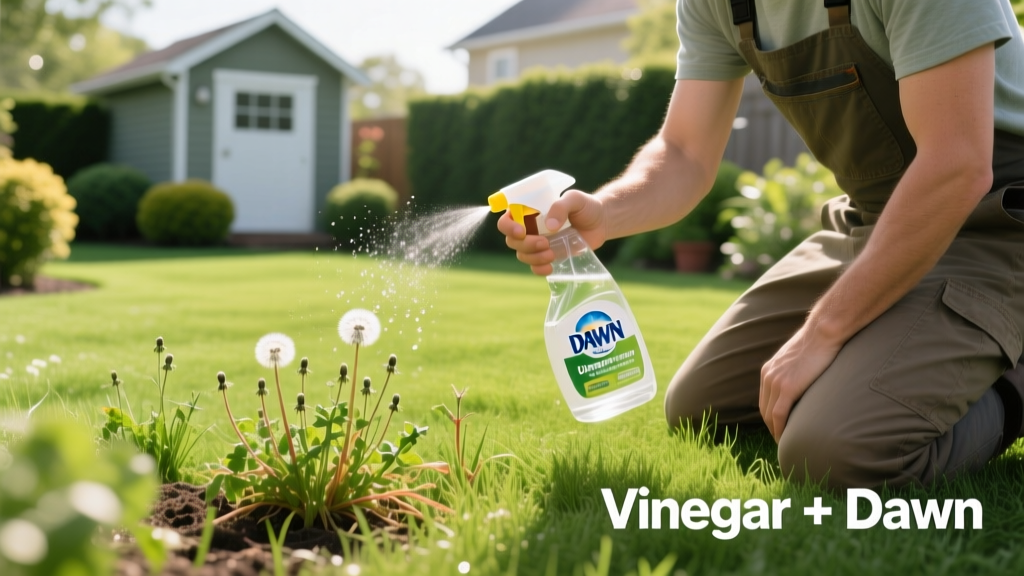
Vinegar and Dawn Weed Killer: Recipe, Efficacy, and Lawn Safety
The Viral Trend vs. Botanical Reality
Social media feeds are saturated with time-lapse videos showing weeds wilting into brown husks within hours of being sprayed with a mixture of household vinegar, Dawn dish soap, and salt. While the visual results of this DIY vinegar and Dawn weed killer are undeniably dramatic, the videos rarely show what happens to the underlying soil microbiome or the surrounding turfgrass three weeks later. As an organic contact herbicide, acetic acid has a legitimate place in integrated pest management, but the viral recipe circulating online contains critical flaws that can cause long-term damage to your landscape.
To use this method effectively without sterilizing your soil or burning your lawn, you must understand the biochemical mechanics of acetic acid, the precise role of surfactants, and the severe limitations of contact-only herbicides on perennial root systems.
The Science: Acetic Acid and Surfactants
The active ingredient in this DIY weed killer is acetic acid. When applied to foliage, acetic acid rapidly breaks down plant cell membranes, causing immediate desiccation and tissue death. However, the efficacy depends entirely on the concentration:
- Household White Vinegar (5% Acetic Acid): Effective only on very young, tender annual weeds with thin cuticles. It will merely stunt mature weeds or burn the top growth of perennials, leaving the root system intact to regenerate.
- Horticultural Vinegar (20% to 30% Acetic Acid): The commercial standard for organic contact burning. It easily penetrates the waxy cuticles of mature broadleaf weeds and grasses, but it is highly corrosive and requires strict personal protective equipment (PPE).
The Role of Dawn Dish Soap
Dawn (specifically the original blue formula) acts as a non-ionic surfactant. Weed leaves, particularly mature broadleaves like plantain and dandelion, are coated in a hydrophobic waxy cuticle designed to repel water. Adding 1 to 2 tablespoons of Dawn per gallon of vinegar reduces the surface tension of the liquid, allowing the acetic acid to spread evenly across the leaf surface and penetrate the stomata rather than beading up and rolling off into the soil.
⚠️ Critical Warning: Omit the Salt
Most viral recipes call for adding 1 cup of table salt (sodium chloride) or Epsom salt to the mixture. Do not do this. Sodium chloride does not break down in the environment. It accumulates in the soil, causing severe osmotic stress that prevents any future plant growth, effectively sterilizing the soil patch for years. While Epsom salt (magnesium sulfate) is less toxic, it is entirely unnecessary for the contact-burning action of the vinegar and can lead to nutrient lockout in the surrounding turf.
The Optimized Vinegar and Dawn Weed Killer Recipe
If you are treating driveway cracks, patio pavers, or isolated weeds in non-turf areas, this optimized recipe maximizes top-kill while minimizing soil toxicity.
- Base: 1 Gallon of 20% Horticultural Vinegar (Available at agricultural supply stores; costs roughly $22-$28 per gallon). If treating tiny seedlings, 5% household vinegar ($3/gallon) is sufficient.
- Surfactant: 1.5 Tablespoons of original blue Dawn Dish Soap.
- Agitation: Pour the vinegar into a pump sprayer first, then add the Dawn. Gently swirl the tank to mix. Do not shake vigorously, or the surfactant will create a massive foam head that prevents proper spraying.
- Application Timing: Spray between 10:00 AM and 2:00 PM on a hot, sunny, windless day. UV radiation and heat accelerate the cell-membrane collapse caused by the acetic acid.
'Vinegar is a contact herbicide, meaning it only kills the plant tissue it actually touches. It has no residual soil activity, so it will not prevent new weed seeds from germinating later in the season.' — Penn State Extension
Efficacy Matrix: What Will It Actually Kill?
Homeowners often misidentify weed types and apply contact herbicides to deep-rooted perennials, leading to frustration when the weed returns. Use this matrix to determine if the vinegar and Dawn weed killer is the right tool for your specific infestation.
| Weed Category | Examples | Vinegar Efficacy (20%) | Root Kill? |
|---|---|---|---|
| Annual Broadleaf (Seedlings) | Purslane, Spurge, Lamb's Quarters | High (90-100%) | N/A (Shallow roots) |
| Mature Annual Broadleaf | Crabgrass, Annual Bluegrass | Medium (70-80%) | No |
| Perennial Broadleaf | Dandelion, Plantain, Thistle | Low (Top-kill only) | No (Regrows in 14 days) |
| Established Turfgrass | Bermuda, Fescue, Zoysia | Severe Burn | No (Crowns survive) |
| Moss and Liverwort | Patio moss, shade moss | High (Desiccates fully) | Yes (No deep roots) |
The Hidden Cost: Soil pH and Grass Burn
The most common failure mode of the vinegar and Dawn weed killer is accidental overspray onto desirable turfgrass. Because acetic acid is non-selective, it cannot differentiate between a dandelion and your Kentucky Bluegrass. A 20% vinegar solution will drop the localized soil pH drastically upon contact, causing immediate chlorosis (yellowing) and necrosis (browning) of grass blades.
According to the University of California Agriculture and Natural Resources (UC ANR), while vinegar breaks down in the soil relatively quickly (usually within a few days to a week depending on microbial activity), the initial acid shock can harm beneficial soil nematodes and mycorrhizal fungi in the immediate splash zone. If you are treating weeds embedded directly in your lawn, a liquid vinegar spray is the wrong tool. You will spend more time and money reseeding the burned grass patches than you would have by simply hand-pulling the weed or using a selective organic herbicide.
Commercial Organic Alternatives (When DIY Fails)
For weeds growing directly within turfgrass, or for deep-rooted perennials that laugh off a vinegar top-kill, modern organic chemistry offers superior, targeted solutions.
1. Iron HEDTA (FeHEDTA)
Marketed under brand names like Fiesta or Natria Lawn Weed Control, Iron HEDTA is a selective organic herbicide. It exploits the physiological difference between broadleaf weeds and grasses. Broadleaves absorb the chelated iron in toxic quantities, causing rapid oxidative stress and tissue death, while turfgrasses simply metabolize the iron, resulting in a darker, greener lawn. It is highly effective on dandelions, clover, and plantain without harming the surrounding grass.
2. Pelargonic Acid (Fatty Acids)
Products like Scythe or BurnOut utilize pelargonic acid, a naturally occurring fatty acid. It acts similarly to acetic acid by destroying cell membranes but is generally faster-acting and more effective on the waxy cuticles of mature weeds than 5% household vinegar. It remains non-selective, so it must be used with a shielded sprayer near desirable plants.
Cost Breakdown: DIY vs. Commercial Organic
| Treatment Type | Average Cost per Gallon (Ready-to-Use) | Best Use Case |
|---|---|---|
| DIY 5% Vinegar + Dawn | $3.50 | Tiny seedlings in driveway cracks |
| DIY 20% Vinegar + Dawn | $24.00 | Mature weeds on patios/fences |
| Iron HEDTA (Selective) | $35.00 - $45.00 | Broadleaf weeds inside turfgrass |
| Pelargonic Acid (Contact) | $40.00 - $55.00 | Heavy brush and mature perennials |
Frequently Asked Questions
Will vinegar and Dawn kill grass permanently?
No. While a 20% vinegar solution will severely burn the foliage of turfgrass, the crown and root systems of established warm-season and cool-season grasses usually survive. The grass will appear dead and brown for 2 to 3 weeks before pushing new green shoots from the crown. However, repeated applications in the exact same spot will eventually deplete the root's energy reserves and kill the grass patch.
Does Dawn dish soap harm the soil?
In the small quantities used for a surfactant (1.5 tablespoons per gallon), Dawn will not cause long-term harm to soil biology. Modern dish soaps are biodegradable and break down rapidly via microbial action. The danger to the soil comes from the addition of sodium chloride (table salt) or the massive pH drop caused by over-applying high-concentration acetic acid.
Can I use apple cider vinegar instead of white vinegar?
You can, but it is a waste of money. Apple cider vinegar typically contains the same 5% acetic acid concentration as cheap distilled white vinegar, but it costs three to four times as much per gallon. The trace minerals and 'mother' in apple cider vinegar provide zero additional herbicidal benefit. Always opt for the cheapest distilled white vinegar available for 5% applications, or invest in purpose-made 20% horticultural vinegar for serious weed control.

