
Pest Control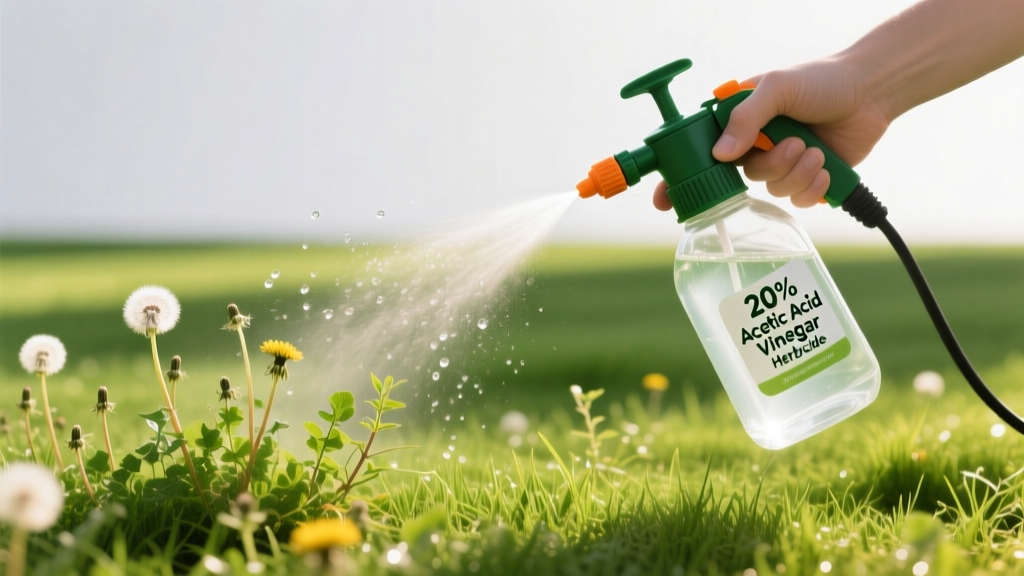
Vinegar Herbicides: Mixing 20% Acetic Acid for Weed Control
The Reality of Kitchen Vinegar vs. Horticultural Vinegar
The internet is saturated with DIY weed control recipes calling for standard grocery store vinegar. This approach fundamentally misunderstands the chemistry of acetic acid as a desiccant. Standard culinary vinegar contains a 5% acetic acid concentration. At this level, it will burn the cotyledons (first leaves) of newly germinated weed seedlings, but it lacks the chemical potency to breach the thick waxy cuticle of mature broadleaf weeds or grasses.
True vinegar herbicides rely on horticultural-grade acetic acid, typically sold in 20% to 30% concentrations. Products like Green Gobbler 20% Vinegar Weed Killer or Nature's Avenger utilize this higher concentration to rapidly destroy plant cell walls upon contact, causing immediate desiccation and tissue necrosis. According to the National Pesticide Information Retrieval System, acetic acid acts as a non-selective, contact-only herbicide with no residual soil activity, meaning it only kills the plant tissue it physically touches.
⚠️ The 5% Myth: Spraying 5% kitchen vinegar on an established dandelion will only scorch the top leaves. The taproot will survive and push up new growth within 7 to 10 days. You must use 20%+ concentrations for mature weed control.
Essential Safety Gear (PPE) for 20%+ Acetic Acid
Handling 20% to 30% acetic acid requires strict adherence to safety protocols. Unlike 5% vinegar, horticultural vinegar is highly corrosive and can cause severe, irreversible corneal damage and chemical burns on the skin. The EPA categorizes higher-concentration acetic acid products with strict signal words, often requiring 'Danger' or 'Warning' labels depending on the exact formulation.
- Eye Protection: Standard safety glasses are insufficient. You must wear ANSI Z87.1-certified chemical splash goggles that seal against the face to prevent aerosolized mist from entering the eyes.
- Hand Protection: Use heavy-duty neoprene or nitrile gloves. Latex gloves will degrade rapidly upon contact with high-concentration acetic acid.
- Respiratory Protection: When mixing concentrates or spraying in enclosed, poorly ventilated areas (like a greenhouse), an N95 mask or a half-face respirator with acid gas cartridges prevents severe respiratory tract irritation.
Formulating Your Vinegar Herbicide Mix
Acetic acid alone struggles to adhere to the hydrophobic (water-repelling) leaves of mature weeds. To maximize efficacy, you must introduce a surfactant to break the surface tension, allowing the acid to spread evenly across the leaf surface and penetrate the stomata. Adding d-Limonene (orange oil) acts as a synergistic solvent that further strips the plant's waxy cuticle.
| Ingredient | Purpose | Ratio per Gallon | Est. Cost (2026) |
|---|---|---|---|
| 20% Acetic Acid Base | Primary active desiccant | 128 oz (1 Gallon) | $35.00 - $45.00 |
| Non-Ionic Surfactant | Breaks surface tension | 1 oz (2 tbsp) | $0.50 per use |
| d-Limonene (Orange Oil) | Cuticle solvent / Synergist | 2 oz (4 tbsp) | $1.25 per use |
Step-by-Step Mixing Protocol
- Fill your sprayer tank with the 20% acetic acid base first. Never add water, as diluting horticultural vinegar below 15% drastically reduces its efficacy on mature weeds.
- Pour in the non-ionic surfactant. If you do not have a commercial agricultural surfactant, 2 teaspoons of Dawn dish soap can serve as a temporary substitute, though crop-oil-based surfactants yield 30% better adhesion.
- Add the d-Limonene (orange oil).
- Seal the tank and shake gently to combine. Avoid aggressive shaking to prevent excessive foaming inside the tank.
Application Strategy: Timing and Temperature
Vinegar herbicides are highly dependent on environmental conditions. Because they rely on rapid moisture extraction from plant cells, heat and ultraviolet light accelerate the desiccation process. Spraying on a cool, overcast morning will yield poor results, often allowing the weed to recover.
Optimal Spray Window: Apply between 10:00 AM and 2:00 PM when ambient temperatures exceed 80°F (26°C) and the sun is shining directly on the target weeds. Ensure no rain is forecast for at least 24 hours to allow the acid to fully degrade the leaf tissue.
Saturate the foliage until it glistens, but avoid heavy runoff. Because acetic acid is non-selective, any drift onto desirable turfgrass, ornamental shrubs, or garden vegetables will cause immediate necrosis. Use a cardboard shield or a specialized sprayer wand with a directional cone nozzle to protect adjacent plants.
Equipment Warnings: Protecting Your Sprayer
One of the most common failure modes for DIY organic weed control is the destruction of application equipment. Acetic acid is highly corrosive to metals. If you use a standard compression sprayer with brass fittings, steel wands, or standard rubber O-rings, the 20% acid will pit the metal and degrade the seals within a single season, leading to leaks and equipment failure.
- Tank Material: Use only high-density polyethylene (HDPE) or polypropylene tanks.
- Seals and Gaskets: Ensure your sprayer utilizes Viton (fluoroelastomer) seals. Viton is highly resistant to acidic degradation compared to standard Buna-N or rubber seals.
- Wand Material: Opt for fiberglass or heavy-duty plastic wands with ceramic nozzles.
Post-Application Neutralization: Immediately after use, flush the sprayer tank, hose, and wand with a mixture of water and baking soda (sodium bicarbonate). The baking soda will neutralize any residual acetic acid, preventing long-term corrosion of the internal components.
Soil Health Impact and Recovery
While acetic acid breaks down rapidly in the environment—typically metabolizing by soil microbes within 48 to 72 hours—heavy, repeated applications can temporarily lower the soil pH in the immediate spray zone. According to guidelines recognized by the USDA National Organic Program, acetic acid is permissible for organic weed management, but it must not be used in a way that permanently alters soil biology or harms surrounding ecosystems.
If you notice stunted growth or yellowing in subsequent plantings in areas heavily treated with vinegar herbicides, the soil pH has likely dropped below the optimal 6.0-7.0 range for most turf and garden plants. To buffer the soil and restore the pH balance, apply pelletized dolomitic lime at a rate of 5 lbs per 100 square feet and water it in deeply.
FAQ: Troubleshooting Vinegar Herbicide Failures
Why did the perennial bindweed grow back two weeks after spraying?
Vinegar herbicides are strictly contact desiccants; they possess no systemic action. They cannot travel down the phloem to kill deep taproots or extensive rhizome networks. For perennial weeds like bindweed, field thistle, or mature nutsedge, the top growth will die, but the root will push new shoots. You must repeatedly spray the new growth every time it emerges to eventually starve the root system of carbohydrates.
Can I mix vinegar herbicide with salt to make it stronger?
No. Adding sodium chloride (table salt) to your mixture is a severe landscaping error. Unlike acetic acid, which breaks down in days, salt accumulates in the soil profile, causing permanent salinization. This will render the soil completely sterile and toxic to future plant growth, violating the core principles of sustainable, EPA-recognized minimum-risk pest management.
Is 30% acetic acid better than 20%?
While 30% acetic acid acts slightly faster on thick, waxy leaves, it is significantly more dangerous to handle, requires heavier PPE (including face shields and acid aprons), and is highly restricted in many municipalities. For 95% of residential lawn and garden weeds, a properly formulated 20% mix with a high-quality surfactant provides the optimal balance of efficacy and safety.

