
Pest Control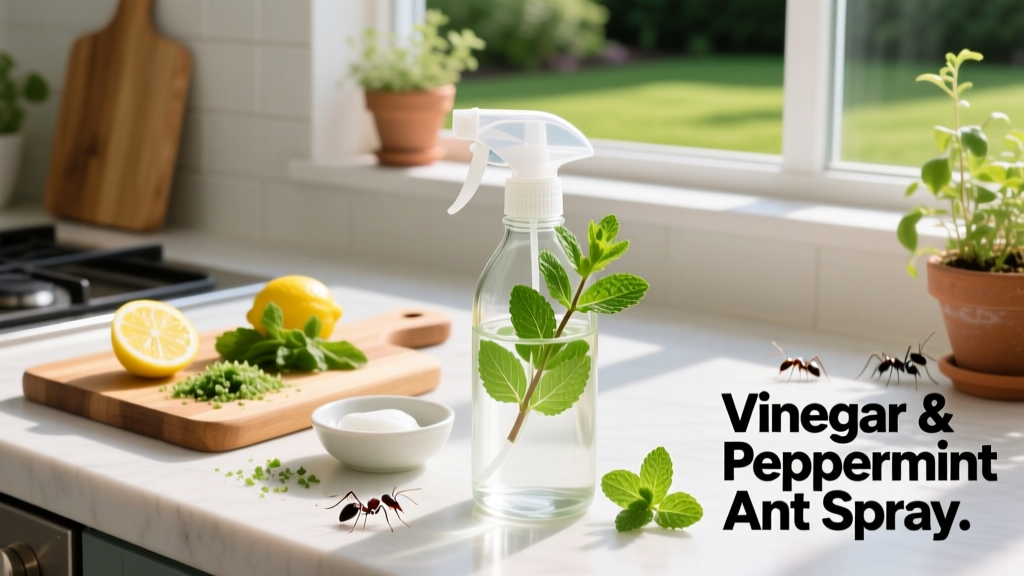
DIY Ants Natural Spray: Vinegar and Peppermint Recipes That Work
Why Synthetic Sprays Fail Against Ant Colonies
When a line of odorous house ants or pavement ants invades your kitchen or patio, the immediate instinct is to reach for a synthetic pyrethroid spray. However, chemicals like bifenthrin or permethrin only kill the foraging workers you see on the surface. According to the University of California Agriculture and Natural Resources (UC ANR), killing workers without eliminating the queen often triggers 'colony budding'—a stress response where the colony splits into multiple new nests, ultimately making the infestation worse.
An effective ants natural spray operates on a completely different biological principle. Instead of relying on slow-acting neurotoxins, natural sprays utilize surfactants and acidic compounds to destroy the invisible pheromone trails ants use to navigate, while simultaneously acting as a contact desiccant. Below are two field-tested, chemical-free recipes designed to break the foraging cycle without harming your lawn, pets, or local pollinators.
The Science of Pheromone Disruption
Ants lay down chemical trails using secretions from their Dufour's gland. When a forager finds food, it taps its abdomen on the ground to guide the colony. Distilled white vinegar (acetic acid) neutralizes these chemical markers on contact, effectively blinding the rest of the colony to the food source.
Recipe 1: The Heavy-Duty Vinegar & Surfactant Eradicator
This formula is designed for active, heavy trails. It combines the pheromone-destroying power of acetic acid with a liquid surfactant to break the surface tension of the ant's exoskeleton, causing rapid dehydration.
Ingredients and Cost Breakdown
- 8 oz Distilled White Vinegar (5% Acidity): ~$0.15 per batch (based on $3.50/gallon retail pricing).
- 8 oz Distilled Water: Prevents mineral deposits on your baseboards and windowsills.
- 1 Teaspoon Dawn Ultra or Liquid Castile Soap: Acts as the critical surfactant. Do not use antibacterial soap, as it lacks the necessary degreasing agents to penetrate the ant's waxy cuticle.
- Equipment: 16 oz amber glass or heavy-duty PET plastic spray bottle (amber glass protects the solution from UV degradation).
Mixing Protocol
- Pour the distilled water into the spray bottle first to prevent excessive foaming.
- Add the white vinegar.
- Add the dish soap last.
- Secure the nozzle and gently invert the bottle three times to mix. Do not shake vigorously, or you will create a soap blockage in the spray nozzle.
Recipe 2: Peppermint & Citrus Perimeter Repellent
While the vinegar spray kills and erases trails on contact, it evaporates quickly and leaves no residual barrier. For long-term exclusion, you need an essential oil-based spray. The Environmental Protection Agency (EPA) classifies certain essential oils as minimum-risk pesticides because they disrupt the insect's octopamine receptors, causing paralysis and death upon direct contact, while acting as a powerful olfactory deterrent.
The Essential Oil Matrix
| Ingredient | Volume | Function |
|---|---|---|
| Distilled Water | 14 oz | Carrier base |
| Witch Hazel (Alcohol-free) | 2 oz | Emulsifier (binds oil and water) |
| Peppermint Essential Oil | 20 drops | Octopamine receptor disruptor |
| Sweet Orange Essential Oil | 10 drops | D-limonene compound (dissolves exoskeleton wax) |
Cost per batch: Approximately $0.85, assuming a $14.00 retail price for a 1 oz bottle of high-quality peppermint oil (yielding ~600 drops).
Application Rules for Essential Oils
Because oil and water separate, you must shake this bottle before every single use. Spray this mixture heavily around foundation weep holes, window casings, and door sweeps. The residual scent barrier remains active for 5 to 7 days indoors, and 2 to 3 days outdoors.
Comparing Natural vs. Chemical Controls
Understanding when to deploy your ants natural spray versus when to call a professional is critical for integrated pest management (IPM).
| Feature | Vinegar/Soap Natural Spray | Synthetic Pyrethroid Spray | Professional Borax Baiting |
|---|---|---|---|
| Primary Action | Contact kill & trail erasure | Residual surface poison | Slow-acting colony transfer |
| Colony Budding Risk | Low (non-toxic stress) | High (triggers splitting) | None (queen consumes bait) |
| Pet/Child Safety | High (food-grade ingredients) | Low (requires drying time) | Moderate (keep out of reach) |
| Residual Life | 0 days (evaporates) | 30-90 days | Until consumed |
| Best Use Case | Indoor trails & kitchen counters | Outdoor perimeter foundation | Hidden nests & carpenter ants |
The 3-Step Perimeter Defense Strategy
To maximize the efficacy of your organic sprays, follow this chronological application framework:
- Dusk Application: Ants are primarily nocturnal foragers. Spray your vinegar solution at dusk when the trails are thickest. This ensures you hit the maximum number of workers and erase the most recent pheromone maps.
- The 'Wait and Wipe' Method: After spraying an active trail, wait 60 seconds. The soap needs time to penetrate the exoskeleton. Once the ants stop moving, wipe the surface with a microfiber cloth to physically remove the dead insects and the dissolved pheromones.
- Barrier Sealing: Once the surface is dry, apply the Peppermint/Citrus spray to the entry point (e.g., the crack in the baseboard). This prevents scouts from re-establishing the trail the following morning.
Phytotoxicity Warning for Gardeners
Never spray the vinegar and soap mixture directly on your lawn, ornamental plants, or garden beds, especially in direct sunlight. Acetic acid is a non-selective contact herbicide that will rapidly desiccate plant foliage and lower soil pH. Keep the vinegar spray strictly for hardscapes, concrete, and indoor baseboards. Use the peppermint spray for garden borders instead.
Troubleshooting Common Failure Modes
If your natural spray does not seem to be working, you are likely encountering one of these three edge cases:
- Ignoring the Moisture Source: Odorous house ants often nest near moisture. If you spray the trail but ignore the leaking pipe under your sink, the colony will simply carve a new path. Fix the moisture issue first.
- Rain Wash-Off: Essential oil barrier sprays degrade rapidly in UV light and rain. If you treat your exterior foundation and it rains the next day, the d-limonene barrier is gone. Reapply immediately after the concrete dries.
- Misidentifying the Species: These sprays are highly effective against sugar ants (odorous house ants, Argentine ants, pavement ants). They are not effective against carpenter ants or fire ants. Carpenter ants require structural wood treatments, and fire ants require targeted mound drenches. If you see large, wood-boring ants or aggressive red mound builders, natural contact sprays will not suffice.
Final Maintenance Protocol
Consistency is the cornerstone of organic pest control. Keep a 16 oz bottle of the vinegar/soap eradicator under your kitchen sink for immediate trail disruption, and use the peppermint/citrus barrier spray on your exterior doors and windowsills on the first Saturday of every month. By focusing on pheromone disruption rather than indiscriminate chemical poisoning, you maintain a safe home environment while effectively starving the colony of its foraging network.

