
Pest Control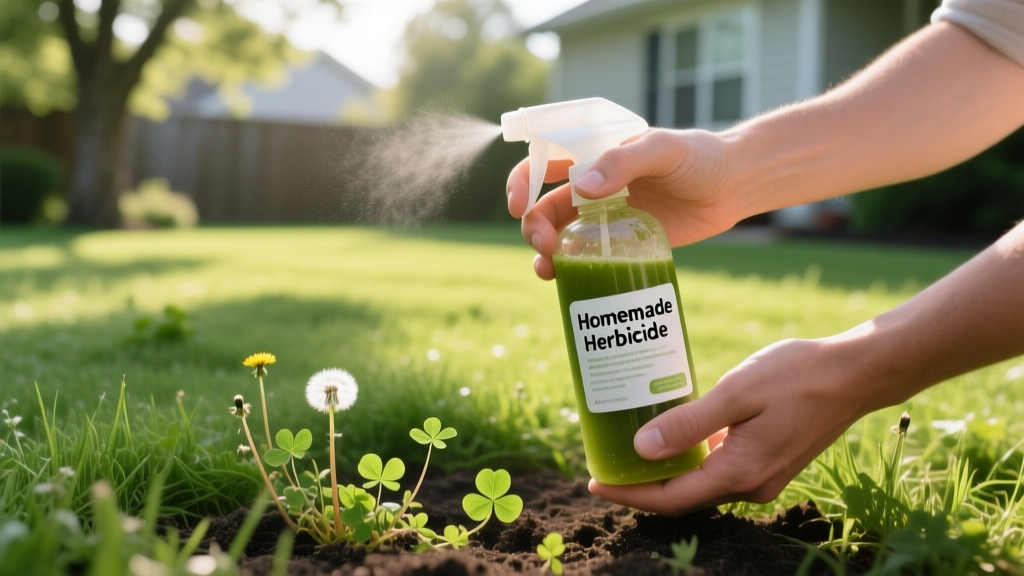
The Truth About Homemade Herbicide: Recipes, Efficacy, and Soil Safety
The Chemistry of DIY Weed Killers
Most internet tutorials for homemade herbicide fail because they rely on 5% culinary white vinegar and ignore basic plant physiology. To effectively kill weeds without synthetic chemicals like glyphosate, you must understand how contact desiccants work. Acetic acid (the active component in vinegar) and d-limonene (citrus oil) are non-systemic contact herbicides. They do not travel to the roots. Instead, they strip the waxy cuticle from the leaf surface, causing rapid cellular fluid loss and desiccation.
Because these ingredients only destroy the tissue they physically touch, their efficacy is entirely dependent on three factors: acid concentration, ambient temperature, and the presence of a surfactant to break the water's surface tension. According to the EPA's Minimum Risk Pesticide guidelines, acetic acid is exempt from standard registration when used as a minimum-risk active ingredient, making it a legally viable and safe option for residential organic weed management when handled correctly.
Three Proven Homemade Herbicide Recipes
Do not use standard grocery store vinegar. You must source horticultural vinegar (20% to 30% acetic acid), which is available at agricultural supply stores or online. Always wear chemical-resistant gloves and goggles, as 20%+ acetic acid can cause severe corneal damage.
Recipe 1: The 20% Acetic Acid Burn-Down
This is the most reliable formulation for annual weeds, driveway cracks, and patio pavers.
- Base: 1 Gallon of 20% Horticultural Vinegar
- Booster: 1 Cup of pure d-Limonene (Orange Oil)
- Surfactant: 1 Tablespoon of non-ionic surfactant (e.g., methylated seed oil or Coco-Wet)
Note: Avoid standard dish soap (like Dawn). Dish soaps are anionic surfactants and often contain high levels of sodium and added salts that can harm soil structure.
Recipe 2: The Citrus Oil Emulsion
Best for sensitive areas where you want to minimize soil acidification. d-Limonene dissolves plant cell membranes rapidly.
- Base: 1 Gallon of distilled water
- Active: 4 oz of pure, cold-pressed d-Limonene
- Emulsifier: 2 Tablespoons of organic liquid castile soap (to bind the oil and water)
Recipe 3: The Clove Oil Spot Treatment
Eugenol, the active compound in clove oil, is highly effective on young, tender seedlings.
- Base: 1 Gallon of 10% Cleaning Vinegar
- Active: 2 Tablespoons of Clove Essential Oil
- Surfactant: 1 Tablespoon of non-ionic wetting agent
⚠️ CRITICAL WARNING: The Salt Myth
Never add table salt (sodium chloride) or Epsom salt (magnesium sulfate) to your homemade herbicide. While sodium chloride will kill weeds, it acts as a soil sterilant. Sodium ions displace calcium and magnesium in clay soils, causing soil particles to bind tightly together (flocculation). This destroys soil porosity, prevents water infiltration, and creates a hardpan that will prevent anything from growing in that spot for years. As noted by Colorado State University Extension, remediating sodic soils requires extensive applications of elemental sulfur and gypsum, costing far more than the weeds were worth.
Application Protocol: Maximizing Kill Rates
Mixing the right solution is only half the battle. Contact herbicides require precise environmental conditions to succeed.
- Temperature Threshold: Apply only when daytime temperatures are between 75°F and 90°F. Acetic acid requires heat to rapidly vaporize and desiccate plant tissue. Spraying at 60°F will result in a 70% failure rate.
- Solar Radiation: Spray between 10:00 AM and 2:00 PM when the sun is at its peak. The UV radiation and heat accelerate the cellular breakdown process.
- Nozzle Selection: Use a flat-fan nozzle (e.g., 0.5 GPM) rather than a cone nozzle. You want a fine, even mist that coats the leaf surface without drenching the soil beneath it.
- Rainfastness: These solutions have zero rainfastness. Check the forecast to ensure no rain is expected for at least 12 hours post-application.
The Hard Water Gotcha: Why Your Mix Might Fail
One of the most overlooked failure modes in DIY weed control is water chemistry. If you live in an area with hard water (high in calcium and magnesium carbonates), mixing your acetic acid with tap water will cause an immediate neutralization reaction. The alkaline minerals buffer the acid, dropping the pH of your spray solution from a highly lethal 2.5 up to a harmless 6.0 before it even leaves the tank. Always use distilled water, rainwater, or add a water-conditioning agent (like ammonium sulfate) to your tank before adding the vinegar.
Homemade Herbicide vs. Commercial Organic Options
While homemade mixes are cost-effective, commercial organic herbicides offer standardized concentrations and proprietary surfactant blends. Here is how they compare in the 2026 market:
| Feature | DIY 20% Vinegar Mix | Avenger Weed Killer (Commercial) | A.D.I.O.S. (Commercial) |
|---|---|---|---|
| Active Ingredient | 20% Acetic Acid + d-Limonene | 70% d-Limonene | Sodium Chloride / Citric Acid blend |
| Cost per Gallon (RTU) | ~$12.00 | ~$45.00 | ~$38.00 |
| Surfactant Included? | No (Must add manually) | Yes (Proprietary blend) | Yes |
| Efficacy on Mature Weeds | Low (Top-kill only) | Moderate | Moderate |
| Soil Impact | Temporary pH drop (recovers in days) | Negligible | High salinity risk if over-applied |
Frequently Encountered Failure Modes
If your homemade herbicide isn't working, troubleshoot using this diagnostic framework:
- The Perennial Taproot Problem: You sprayed a mature dandelion, and it turned brown, but two weeks later, new leaves emerged. Contact herbicides do not kill roots. For deep-rooted perennials, you must apply the homemade spray three times at 7-day intervals to exhaust the plant's carbohydrate reserves, or physically extract the root.
- Leaf Cuticle Thickness: Mature weeds with thick, waxy leaves (like plantain or mature thistle) will shed the spray. You must increase the surfactant ratio by 50% or physically bruise the leaves with a weeding tool before spraying to allow the acid to penetrate.
- Wind Drift Damage: Because 20% acetic acid is non-selective, it will burn your desirable turfgrass just as easily as it burns crabgrass. Never spray on windy days. Use a cardboard shield or a specialized spot-sprayer hood to isolate the target weed.
Mitigating Soil Impact and Recovery
While acetic acid breaks down rapidly in the soil (usually within 3 to 5 days via microbial degradation), repeated applications in the same spot can temporarily lower soil pH and harm beneficial mycorrhizal fungi. To buffer the soil after heavy spot-treatments in garden beds, apply a light dusting of dolomitic lime or a liquid kelp bio-stimulant 48 hours after the weeds have fully desiccated. This restores the cation exchange capacity (CEC) and encourages rapid microbial recovery, ensuring your soil remains healthy for future planting. For more on organic soil management, refer to the University of Minnesota Extension's guide on non-chemical weed control.
Summary Checklist for Success
- Use 20%+ horticultural vinegar, never 5% kitchen vinegar.
- Include a non-ionic surfactant to break leaf surface tension.
- Apply only on sunny days above 75°F.
- Never use salt (sodium chloride) in your mixture.
- Expect to treat perennial weeds 2 to 3 times to exhaust root reserves.

