
Pest Control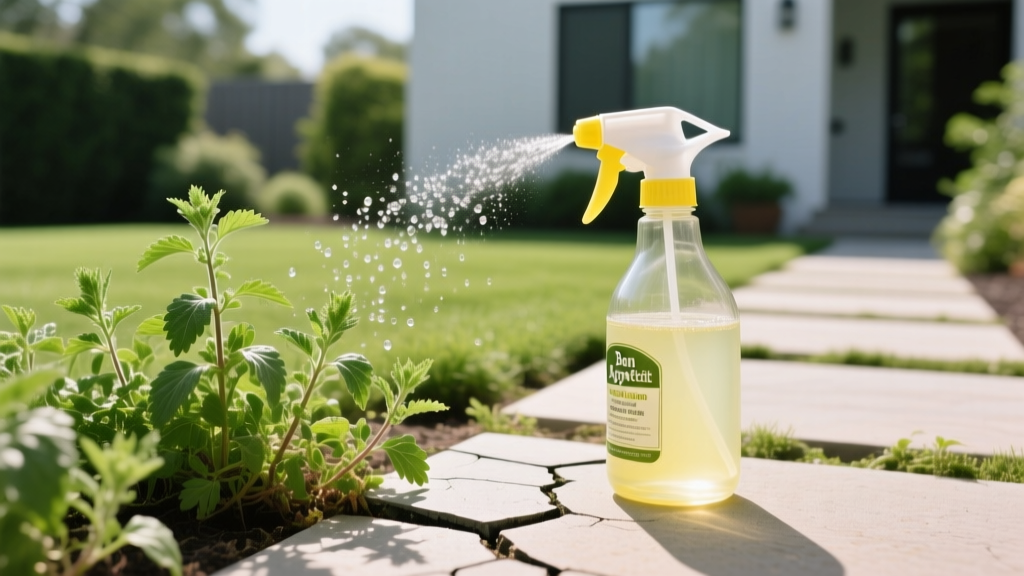
Best Homemade Weed Killer Recipe: Safe, Organic & Fast-Acting
The Biochemical Reality of Acetic Acid Herbicides
Most online guides suggest using standard 5% kitchen white vinegar to kill weeds. This is a fundamental misunderstanding of plant physiology. Grocery-store vinegar lacks the concentration required to penetrate the waxy cuticle of mature broadleaf weeds. To achieve rapid cellular desiccation, you must use horticultural vinegar containing 20% to 30% acetic acid. At this concentration, the acid rapidly strips the protective leaf cuticle, causing the cell membranes to rupture and the plant tissue to dry out within hours of exposure.
However, acetic acid is strictly a contact herbicide. It does not translocate through the plant's phloem to the root system. Understanding this limitation is the difference between a successful organic weed management strategy and a frustrating cycle of perpetual regrowth. The University of Minnesota Extension notes that while home-made herbicides provide excellent top-growth burn, they require repeated applications for perennial weeds with deep root reserves.
⚠️ Critical Safety Alert: 20% to 30% acetic acid is a severe eye and skin irritant, capable of causing permanent corneal damage. When mixing or spraying this homemade weed killer recipe, you must wear ANSI Z87.1 rated splash-proof safety goggles, chemical-resistant nitrile gloves, and long sleeves. Treat it with the same respect as synthetic chemical herbicides.
The Driveway & Patio Crack Recipe (Permanent Eradication)
When treating weeds growing in concrete cracks, gravel paths, or patio pavers, the goal is total eradication and soil sterilization to prevent immediate reseeding. This formula utilizes sodium chloride (table salt) to permanently alter the soil osmotic pressure, ensuring nothing grows back in that specific crevice.
| Ingredient | Volume | Function | Est. Cost (2026) |
|---|---|---|---|
| 30% Horticultural Vinegar | 1 Gallon | Cellular desiccation & burn | $32.00 |
| Sodium Chloride (Rock Salt) | 1 Cup | Osmotic soil sterilization | $0.80 |
| Liquid Castile Soap | 1 Ounce | Non-ionic surfactant | $0.75 |
The Science of the Surfactant
Do not skip the liquid Castile soap. Water and vinegar have high surface tension (roughly 72 mN/m). When sprayed on leaves, they bead up and roll off. Adding a surfactant drops the surface tension to roughly 30 mN/m, allowing the acidic solution to spread into a thin film, maximizing cuticle contact and preventing the liquid from evaporating too quickly. According to the EPA's guidelines on minimum risk pesticides, utilizing inert ingredients like botanical soaps can significantly enhance the efficacy of organic active ingredients without introducing synthetic toxins.
The Lawn-Adjacent Recipe (Contact Burn Without Soil Damage)
Never use the salt-heavy driveway recipe near your lawn, flower beds, or vegetable garden. Sodium chloride destroys soil structure, binds with clay particles, and creates toxic salinity levels that will prevent grass and ornamentals from absorbing water. For weeds popping up in mulch beds or along fence lines, use this modified, salt-free formula.
Step-by-Step Mixing Protocol
- Prep the Sprayer: Use a dedicated 1-gallon or 2-gallon pump sprayer. Do not use a sprayer that has previously held synthetic herbicides like 2,4-D or glyphosate to avoid cross-contamination.
- Add the Acid: Pour 1 gallon of 20% horticultural vinegar into the tank. (20% is preferred over 30% for garden beds to reduce the risk of accidental drift damage to desirable plants).
- Incorporate the Surfactant: Add 1 ounce of pure liquid Castile soap (such as Dr. Bronner's). Avoid dish detergents containing heavy degreasers or synthetic fragrances, which can leave phytotoxic residues.
- Mix Gently: Secure the lid and gently swirl the tank. Do not shake vigorously, or the soap will create a massive foam head that makes pumping impossible.
- Pressurize and Apply: Pump to 40 PSI and apply a fine mist directly to the weed foliage until the leaves are uniformly wet but not dripping.
Application Matrix: Timing and Weather Conditions
The efficacy of this homemade weed killer recipe is heavily dependent on environmental conditions. Acetic acid relies on rapid evaporation and heat to accelerate cellular collapse. Applying this on a cold, cloudy day will yield poor results.
| Condition | Optimal Parameter | Sub-Optimal / Avoid |
|---|---|---|
| Air Temperature | Above 75°F (24°C) | Below 60°F (15°C) |
| Sunlight | Direct, mid-day sun | Heavy overcast or evening |
| Wind Speed | Less than 5 mph | Above 10 mph (drift risk) |
| Rain Forecast | Dry for 24 hours | Rain expected within 6 hrs |
Limitations: Where Homemade Formulas Fail
While highly effective on annual weeds like crabgrass, chickweed, and young dandelions, organic contact herbicides have distinct failure modes. Understanding these will save you time and money.
- Deep Taproots: Mature dandelions, curly dock, and bindweed store massive energy reserves in deep taproots. The acetic acid will burn the top growth to a crisp, but the root crown will push out new shoots within 10 to 14 days. You must re-spray the regrowth 3 or 4 times to exhaust the root's carbohydrate reserves.
- Rhizomatous Grasses: Weeds like quackgrass or invasive bermudagrass spread via underground rhizomes. Contact burn on the surface leaves will not kill the subterranean network.
- Soil pH Alteration: Repeatedly spraying large volumes of vinegar in the same garden bed can temporarily lower the soil pH, making it too acidic for alkaline-loving ornamentals. Limit heavy applications to localized spot treatments.
Frequently Asked Questions
Can I use Epsom salt instead of table salt?
No, not if your goal is sterilization. Epsom salt is magnesium sulfate. While it can cause some osmotic stress to plants, it also provides magnesium, a vital secondary macronutrient that can actually benefit surrounding soil biology. For driveway cracks where you want permanent eradication, sodium chloride (NaCl) is the required compound.
Will this recipe kill my lawn grass if it drifts?
Yes. Acetic acid is non-selective. It cannot distinguish between a broadleaf weed and a desirable turfgrass blade. If you are treating weeds in a lawn, you must use a physical shield (like a piece of cardboard) to block overspray, or apply the solution carefully with a sponge brush rather than a pump sprayer.
How long does it take to see results?
Under optimal conditions (direct sunlight and temperatures above 75°F), you will notice the weed foliage wilting and turning brown within 2 to 4 hours. Complete desiccation of the top growth usually occurs within 24 hours.

