
Pest Control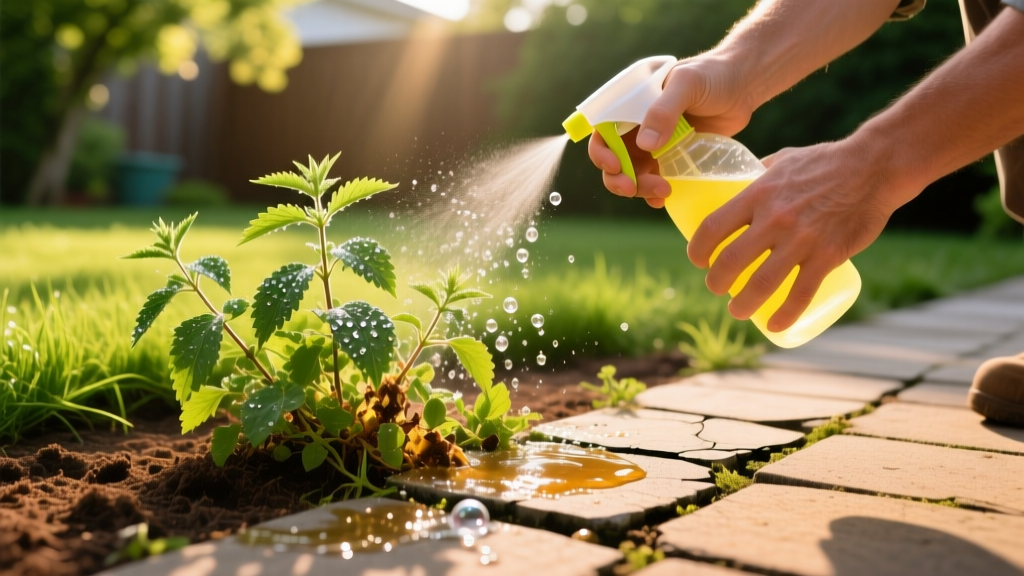
The Ultimate Homemade Weed Killer Guide: Recipes That Actually Work
The Reality of Homemade Weed Killers: Contact vs. Systemic
Transitioning away from synthetic herbicides like glyphosate is a priority for many homeowners in 2026, but the internet is flooded with ineffective DIY recipes. To successfully manage weeds using organic methods, you must first understand the mechanical difference between contact and systemic herbicides. Commercial synthetic herbicides are often systemic; they are absorbed through the leaves and translocated down to the root system, killing the entire plant.
Every homemade weed killer is strictly a contact herbicide. These solutions destroy the waxy cuticle of the leaf, causing rapid desiccation and cell rupture. While they will scorch the top growth of a weed within hours, they do not travel to the roots. This means homemade solutions are highly effective on young, annual weeds with shallow root systems, but they will fail to eradicate mature perennial weeds like bindweed, Bermuda grass, or established dandelions unless applied repeatedly to exhaust the root's energy reserves.
The Science of Acetic Acid: Why Kitchen Vinegar Fails
The most common mistake homeowners make is using standard 5% acidity white vinegar from the grocery store. At 5% concentration (a pH of roughly 2.5), household vinegar lacks the acid load required to penetrate the protective cuticle of mature broadleaf weeds. It will burn the edges of tender seedlings, but larger weeds will simply drop their damaged leaves and push new growth from the crown within a week.
For a homemade weed killer to work, you must source 20% horticultural vinegar. At 20% acetic acid concentration, the pH drops to approximately 2.0, providing enough chemical burn to instantly collapse plant cell walls on contact. According to the UC Statewide IPM Program, acetic acid at concentrations above 11% is highly effective for rapid burndown of young weeds, though it requires careful handling due to its corrosive nature.
⚠ The Epsom Salt Myth: Stop Ruining Your Soil
Dozens of viral gardening blogs recommend adding Epsom salt (magnesium sulfate) to vinegar weed killers. This is scientifically backward. Epsom salt is a fertilizer, not a desiccant. While the vinegar might burn the leaves, the Epsom salt will leach into the soil and provide excess magnesium, which can actually antagonize calcium uptake and degrade soil structure over time. If a recipe calls for salt to kill weeds, it must be Sodium Chloride (standard table salt), which induces severe osmotic stress and dehydrates plant tissue. However, sodium chloride must only be used on hardscapes, never in garden beds (see soil risks below).
Recipe 1: Heavy-Duty Hardscape Eradicator (Driveways & Patios)
This formulation is designed for cracks in driveways, sidewalk pavers, and gravel paths where soil health is not a concern. The addition of sodium chloride ensures that the soil in the crack becomes temporarily inhospitable to future weed seeds.
Ingredients & Cost Breakdown (2026 Pricing)
- 1 Gallon 20% Horticultural Vinegar: ~$28.00 (Available at agricultural supply stores or online)
- 1 Cup Table Salt (Sodium Chloride): ~$0.50 (Do not use sea salt or Himalayan salt; standard iodized or non-iodized table salt dissolves fastest)
- 1 Tablespoon Liquid Dish Soap (e.g., Dawn): ~$0.10 (Acts as a non-ionic surfactant to break the water's surface tension, allowing the acid to spread evenly across the leaf rather than beading up and rolling off)
Mixing and Application Steps
- Pour 1 cup of table salt into an empty 1-gallon pump sprayer.
- Add a small amount of hot water (about 2 cups) to dissolve the salt completely. Swirl until no crystals remain.
- Add the 1 gallon of 20% horticultural vinegar.
- Add the dish soap last to prevent excessive foaming, then gently invert the sprayer to mix.
- Pump to 40-50 PSI and apply using a fan nozzle setting, thoroughly coating the foliage until it drips.
Recipe 2: Lawn-Safe Spot Treatment (For Turfgrass Areas)
You cannot use the hardscape recipe in your lawn. The acetic acid is non-selective and will burn your turfgrass, while the sodium chloride will create a dead zone in your soil where grass cannot grow for months. For weeds embedded in your lawn, you need a targeted, soil-safe organic approach utilizing d-limonene (citrus oil extract).
D-limonene strips the protective waxy coating off broadleaf weeds, causing them to dehydrate, but it breaks down rapidly in the soil without leaving toxic salt residues. Commercial organic herbicides like Avenger Weed Killer use this as the active ingredient, but you can mix a localized spot-treatment at home.
The Citrus Oil Lawn Recipe
- 1 Gallon of Water
- 4 Ounces of Pure d-limonene (Citrus Oil Extract, available in the canning or cleaning aisles)
- 1 Teaspoon of Castile Soap (Surfactant)
Note: This mixture will still damage grass if oversprayed. Use a shielded spray wand or a paintbrush to apply the solution directly to the leaves of the broadleaf weed (like clover or plantain) without touching the surrounding turf.
Efficacy Comparison Matrix
Understanding how your homemade weed killer stacks up against commercial alternatives helps set realistic expectations for lawn care management.
| Herbicide Type | Action Type | Cost per Gallon | Soil Impact | Best Use Case |
|---|---|---|---|---|
| 20% Vinegar + Salt | Contact (Burndown) | ~$28.50 | High (Salinity risk) | Driveways, fence lines, gravel |
| d-limonene (Citrus Oil) | Contact (Burndown) | ~$35.00 | Low (Biodegrades fast) | Spot treatment in garden beds |
| Commercial Glyphosate | Systemic (Root kill) | ~$45.00 | Moderate (Microbial disruption) | Perennial weeds, large areas |
| Boiling Water | Thermal Contact | ~$0.05 | None | Small sidewalk cracks |
The Application Protocol: Maximizing Burn Rates
Because contact herbicides rely entirely on environmental conditions to facilitate rapid dehydration, timing your application is just as critical as the recipe itself. Follow these parameters for maximum efficacy:
☀ The Ideal Application Window
- Time of Day: Spray between 10:00 AM and 2:00 PM. The sun's UV radiation and peak heat accelerate the desiccation process.
- Temperature: Air temperature must be above 70°F (21°C). Acetic acid becomes sluggish and significantly less effective on cool, overcast days.
- Moisture: Leaves must be completely dry before spraying. Morning dew or recent rain will dilute the acid on contact, neutralizing the burn.
- Wind: Do not spray if wind speeds exceed 5 MPH. Horticultural vinegar drift can severely damage the leaves of nearby desirable ornamental plants.
Long-Term Soil Health and Salinity Risks
While the vinegar and salt recipe is highly effective for hardscapes, it is vital to understand the long-term soil chemistry implications of using sodium chloride. According to research highlighted by university extension programs, including the University of Minnesota Extension, excessive sodium in soil causes a process called deflocculation.
Sodium ions displace calcium and magnesium on soil clay particles, causing the soil structure to collapse. This results in a hard, compacted, impermeable crust that repels water and prevents oxygen from reaching plant roots. If you use the salt-heavy recipe near the edges of your lawn or garden beds, the sodium will eventually migrate into the topsoil via rainwater runoff, creating a dead zone where neither grass nor ornamentals will grow. Restrict the salt-based recipe strictly to concrete cracks, gravel paths, and areas where no future planting is intended.
Frequently Asked Questions
Will baking soda kill weeds permanently?
Baking soda (sodium bicarbonate) acts as a mild contact desiccant and can burn the foliage of very small, young weeds. However, it does not kill the root system. Furthermore, baking soda raises the soil pH (making it more alkaline), which can lock up essential nutrients like iron and manganese for surrounding plants, causing chlorosis. It is not recommended for large-scale weed management.
How long does it take for 20% vinegar to kill weeds?
Under optimal conditions (direct sunlight, temperatures above 75°F, and dry foliage), you will see visible wilting and browning within 2 to 4 hours. Complete desiccation of the top growth usually occurs within 24 hours. Perennial weeds will likely attempt to resprout from the roots 10 to 14 days later, requiring a second application.
Is 20% horticultural vinegar safe for pets?
In its concentrated liquid form, 20% acetic acid is a severe eye and skin irritant and can cause chemical burns to a pet's paws or respiratory distress if inhaled as a mist. You must keep pets indoors during application. However, once the solution has completely dried on the weeds and the acetic acid has broken down (usually within 24 to 48 hours), the area is safe for pets to walk on.

