
Pest Control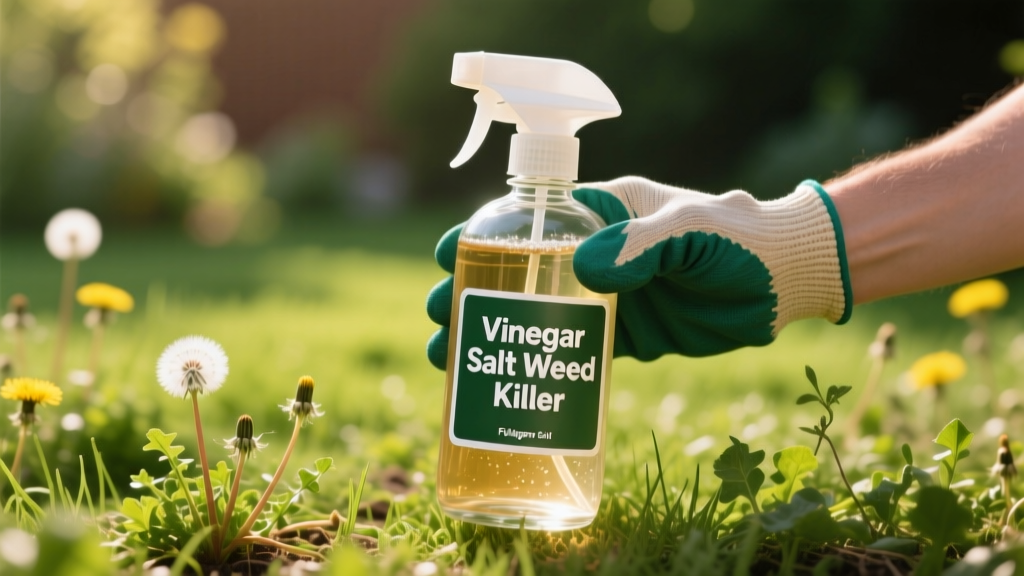
The Ultimate Vinegar Salt Weed Killer Recipe: Safe Mixing & Application Guide
The Chemistry of Acetic Acid and Sodium Chloride
Before mixing any homemade herbicide, it is critical to understand the biological mechanisms that make the ingredients effective. The standard vinegar salt weed killer recipe relies on three distinct chemical actions to destroy unwanted vegetation. Unlike systemic synthetic herbicides (such as glyphosate) that travel to the roots, this organic mixture is a contact desiccant. It destroys the plant's above-ground tissues but does not translocate to the root system.
Acetic Acid (Cell Membrane Lysis)
Household white vinegar contains 5% acetic acid, while horticultural vinegar contains 20% to 30%. When applied to foliage, acetic acid rapidly lowers the pH of the plant's cell sap. This extreme acidity causes the cell membranes to rupture (lysis), leading to rapid dehydration and tissue necrosis. According to the EPA's guidelines on minimum risk pesticides, acetic acid is highly effective on young, annual weeds with thin cuticles, but struggles to penetrate the waxy leaves of mature perennials without higher concentrations.
Sodium Chloride (Osmotic Stress)
Salt acts as a powerful desiccant through osmosis. When saltwater coats a leaf, it creates a hypertonic environment. Water is rapidly drawn out of the plant's cells to balance the concentration gradient, a process known as plasmolysis. This accelerates the drying effect initiated by the vinegar.
Surfactant (Surface Tension Reduction)
Water and vinegar naturally possess a high surface tension (approximately 72 dynes/cm). When sprayed on waxy weed leaves, the liquid beads up and rolls off. Adding a liquid dish soap acts as a non-ionic surfactant, dropping the surface tension to roughly 30 dynes/cm. This allows the solution to spread evenly across the leaf surface and penetrate the stomata.
⚠️ CRITICAL SAFETY WARNING: If you upgrade from 5% household vinegar to 20% horticultural acetic acid for stubborn perennials, you must wear ANSI Z87.1-rated safety goggles and nitrile gloves. 20% acetic acid is highly corrosive and can cause irreversible corneal damage and severe chemical burns upon contact with skin or eyes.
The Exact Vinegar Salt Weed Killer Recipe
This formulation is optimized for maximum foliar burn while minimizing the amount of salt introduced to the environment. Do not alter the ratios; excess salt will not kill weeds faster but will drastically increase the risk of long-term soil contamination.
Standard Recipe (For Annual Weeds & Seedlings)
- 1 Gallon White Vinegar (5% Acetic Acid)
- 1 Cup Non-iodized Table Salt or Rock Salt (Sodium Chloride)
- 1 Tablespoon Liquid Dish Soap (Dawn Ultra or pure Castile soap)
Heavy-Duty Recipe (For Mature Perennials & Deep-Rooted Weeds)
- 1 Gallon Horticultural Vinegar (20% to 30% Acetic Acid)
- 1.5 Cups Non-iodized Salt
- 2 Tablespoons Liquid Dish Soap
Mixing Instructions: Always dissolve the salt in the vinegar first. Shake or stir vigorously until the sodium chloride is completely dissolved. Add the dish soap last to prevent excessive foaming. Transfer to a pump-action garden sprayer with a fan-nozzle tip for even coverage.
Ingredient Breakdown & Cost Analysis
One of the primary drivers for DIY herbicide use is cost. Below is a breakdown of the material costs for a standard 1-gallon batch compared to commercial alternatives, based on 2026 average retail pricing.
| Ingredient / Product | Function | Est. Cost Per Gallon |
|---|---|---|
| 5% White Vinegar | Primary Desiccant (Acid) | $3.50 |
| Non-iodized Salt (1 cup) | Osmotic Desiccant | $0.40 |
| Dish Soap (1 tbsp) | Surfactant / Spreader | $0.15 |
| Total DIY Recipe Cost (1 Gallon) | $4.05 | |
| Commercial Glyphosate (41%) | Systemic Synthetic | $18.00 - $25.00 |
| Commercial d-Limonene Organic | Contact Organic | $35.00 - $45.00 |
Application Protocol: Timing and Technique
Because this recipe lacks systemic root-killing properties, the success of your application relies entirely on environmental conditions and spray technique. Follow these parameters for maximum efficacy:
- Temperature Threshold: Apply only when ambient temperatures are above 70°F (21°C). Acetic acid volatility and desiccation rates increase significantly in warm air. Applications below 60°F will yield poor results.
- Solar Radiation: Spray between 10:00 AM and 2:00 PM on a cloudless day. Direct UV radiation accelerates the breakdown of the plant's cellular structure once the acid compromises the leaf cuticle.
- Moisture Window: Ensure no rain is forecasted for at least 48 hours. The solution needs a minimum of 4 hours of dry contact time to fully desiccate the foliage. If it rains within 2 hours of application, the treatment will fail.
- Spray Technique: Use a coarse fan nozzle. Avoid fine misting, which causes drift onto desirable plants. Spray the weed until the leaves are uniformly coated and dripping slightly. Do not drench the surrounding soil.
Hardscapes vs. Garden Beds: The Salinization Risk
The most common and destructive mistake homeowners make with the vinegar salt weed killer recipe is applying it to garden beds, lawns, or areas where future planting is intended. This mixture must be restricted exclusively to hardscapes such as driveway cracks, patio paver joints, gravel paths, and fence lines.
The Science of Soil Salinization
When sodium chloride accumulates in the soil profile, it fundamentally alters soil chemistry and physics. According to data from the USDA Natural Resources Conservation Service, high levels of sodium cause a process called flocculation reversal. Normally, calcium and magnesium ions bind clay particles together into healthy, porous aggregates. Sodium ions, however, displace these minerals, causing clay particles to disperse and seal the soil surface.
The result is an impermeable crust that prevents water infiltration, destroys soil aeration, and creates a toxic osmotic environment where plant roots cannot absorb water. If you salt your garden beds, you may render the soil completely sterile for years, requiring extensive gypsum (calcium sulfate) applications and deep tilling to remediate.
Safer Organic Alternatives for Garden Beds
If you need to control weeds in active garden beds, vegetable patches, or lawn edges where soil health is paramount, abandon the salt-based recipe. Utilize these organic, soil-safe alternatives instead:
- Boiling Water: The safest, zero-residue contact herbicide. Pouring 212°F water directly onto the crown of a weed instantly cooks the plant tissues and destroys the root crown without altering soil chemistry.
- Corn Gluten Meal (Pre-emergent): Applied at 20 lbs per 1,000 sq ft in early spring, this organic byproduct inhibits root formation in germinating weed seeds. It will not kill existing weeds but prevents new ones while adding nitrogen to the soil.
- d-Limonene (Citrus Oil): Commercial organic herbicides derived from citrus peels strip the waxy cuticle off weeds similarly to acetic acid but break down in the soil rapidly without leaving toxic salts behind.
- Flame Weeding: Using a propane torch to pass briefly over weeds ruptures their cells via thermal shock. This is highly effective for garden rows and leaves behind only carbon ash.
Frequently Asked Questions
Will this recipe kill weeds down to the root?
No. The vinegar and salt mixture is strictly a contact herbicide. It will completely burn off the top growth of the weed, but established perennials (like bindweed, dandelions, or Canada thistle) have deep taproots or rhizomes that will survive and resprout within 2 to 3 weeks. Repeated applications are required to exhaust the root's energy reserves.
Can I use Epsom salt instead of table salt?
Epsom salt is magnesium sulfate, not sodium chloride. While it can act as a mild desiccant, it does not cause the severe osmotic stress required for rapid weed kill. Furthermore, adding excess magnesium to your soil can cause nutrient lockout, preventing plants from absorbing calcium and potassium. Stick to standard NaCl for hardscapes, and avoid Epsom salt for weed control.
Does the vinegar change the soil pH permanently?
No. Acetic acid is highly volatile and breaks down rapidly in the soil environment, usually within a few days. Soil buffering capacity quickly neutralizes the temporary pH drop. The lasting damage to soil comes entirely from the sodium in the salt, not the vinegar.

