
Pest Control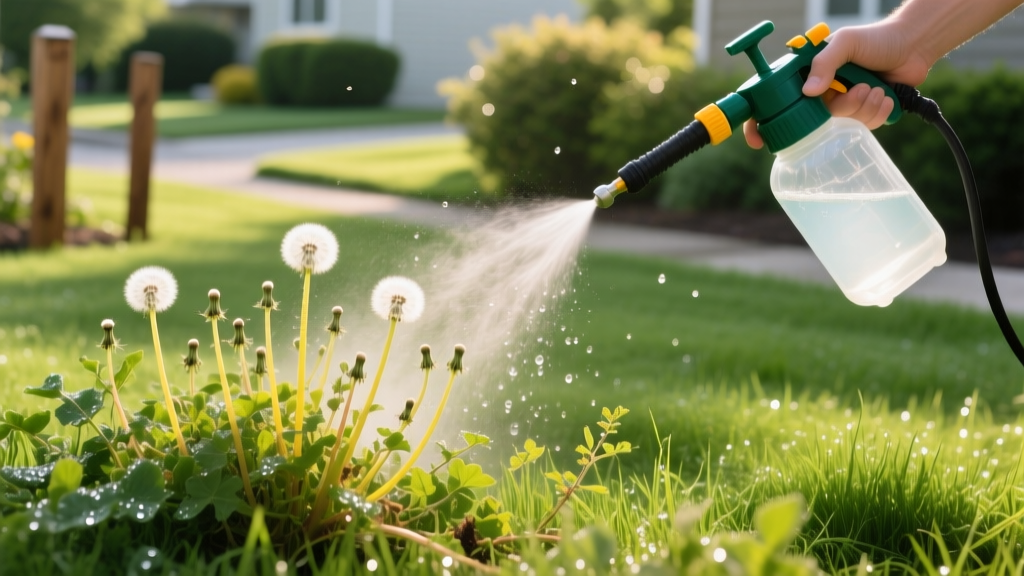
Vinegar Weed Killer: Spot-Treating Lawn Weeds With Acetic Acid
The internet is saturated with claims that 5% household culinary vinegar can eradicate lawn weeds. In practice, spraying standard kitchen vinegar on mature weeds results in superficial leaf burn followed by rapid regrowth. To achieve genuine desiccation as a vinegar weed killer (often searched as vinager weed killer), homeowners must utilize horticultural-grade acetic acid (20% to 30% concentration) paired with specific adjuvants. According to the EPA's Minimum Risk Pesticides guidelines, acetic acid is exempt from standard federal pesticide registration when used as a minimum-risk active ingredient, making it a highly effective, non-synthetic option for localized spot treatments.
The Science of Acetic Acid Desiccation
Acetic acid functions as a contact desiccant, not a systemic herbicide. When applied to foliage, it rapidly strips the waxy cuticle and ruptures plant cell membranes, causing cellular fluid to leak out and the tissue to dry out. Because it does not translocate to the roots, its effectiveness is entirely dependent on the weed species, the concentration of the acid, and the physical structure of the plant's leaves. The UC Statewide IPM Program notes that while organic contact herbicides provide rapid burn-down of top growth, perennial weeds with deep taproots or extensive rhizome networks will require multiple applications or mechanical root extraction.
Weed Species Susceptibility Matrix
Not all weeds react identically to acetic acid. Succulent annuals collapse within hours, while waxy perennials require higher concentrations and specialized surfactants. Use this matrix to calibrate your spot-treatment approach.
| Weed Species | Root Architecture | Required Acetic Acid % | Surfactant Needed | Expected Burn-Down |
|---|---|---|---|---|
| Crabgrass (Digitaria) | Shallow / Fibrous | 15% - 20% | Yes (Standard) | 2 - 4 hours |
| Dandelion (Taraxacum) | Deep Taproot | 20% - 30% | Yes (Heavy) | 4 - 6 hours (Top only) |
| Broadleaf Plantain | Medium / Fibrous | 20% | Yes (Heavy) | 3 - 5 hours |
| Purslane (Portulaca) | Shallow / Succulent | 10% - 15% | No | 1 - 2 hours |
| Nutsedge (Cyperus) | Deep Tubers | 30% (Burn-down only) | Yes (Heavy) | Fails to kill tubers |
Targeting Annual Broadleaves and Grasses
For shallow-rooted annuals like crabgrass, chickweed, and spurge, a 15% to 20% acetic acid solution is usually sufficient. Because these plants lack extensive energy reserves in their roots, complete defoliation via contact burn-down often starves the plant before it can regenerate new shoots.
The Perennial Taproot Challenge
Dandelions, dock, and thistles store massive energy reserves in deep taproots. A 30% acetic acid solution will obliterate the above-ground foliage in a single afternoon, but the root will likely push up new leaves within 14 days. For these species, use the vinegar weed killer to weaken the plant, then follow up with a manual taproot extractor or a targeted systemic organic herbicide (such as iron HEDTA) if repeat acetic acid applications fail.
Formulating a Commercial-Grade Spot Treatment
Water-based acids bead up and roll off waxy leaf surfaces. To force the acetic acid through the plant's cuticle, you must add a non-ionic surfactant. Do not use standard dish soap; anionic soaps can react unpredictably and lack the spreading power required for mature weeds.
The 20% Spot-Treatment Recipe
- 1 Gallon Horticultural Vinegar (20% Acetic Acid) — Cost: ~$35 to $45 per gallon in 2026 markets.
- 1.5 oz Non-ionic Surfactant (e.g., Methylated Seed Oil or a commercial spreader-sticker like Dyna-Gro Pro Spread).
- 1 tbsp Food coloring (Optional, but highly recommended for tracking spray overlap on green lawns).
⚠️ CRITICAL SAFETY WARNING: Unlike 5% culinary vinegar, 20% to 30% acetic acid is a severe corrosive. It can cause irreversible corneal damage and chemical burns upon contact. Always wear ANSI Z87.1 rated splash goggles, long sleeves, and chemical-resistant nitrile gloves when mixing and spraying. Keep a neutralizing agent (like baking soda) nearby for accidental skin spills.
Application Protocol: Timing and Technique
Acetic acid relies on heat and solar radiation to accelerate cellular rupture. Applying this solution on a cool, cloudy morning will drastically reduce its efficacy.
- Check the Forecast: Ensure temperatures will exceed 70°F (ideally 80°F+) and that no rain is expected for at least 12 hours post-application.
- Calibrate the Nozzle: Adjust your pump sprayer to a medium-coarse droplet size. Fine mist settings increase the risk of wind drift, which will burn desirable turfgrass. Acetic acid is strictly non-selective.
- Deploy a Physical Shield: When spot-treating weeds embedded in a healthy lawn, hold a piece of rigid cardboard behind the weed to catch overspray and protect the surrounding turf.
- Saturate the Foliage: Spray until the weed leaves are visibly dripping. Ensure you coat the center rosette (the crown) where new growth originates.
Soil Impact and Recovery Timelines
A pervasive myth is that vinegar sterilizes the soil. In reality, acetic acid breaks down rapidly in the soil environment. When a 20% solution hits the soil, it immediately begins to dissociate. Soil microbes metabolize the acetate, and the soil's natural buffering capacity (calcium carbonate and clay particles) neutralizes the pH drop.
Applying 1 gallon of 20% vinegar over 100 square feet will temporarily drop the soil pH by approximately 0.1 to 0.3 units. This localized acidity dissipates within 3 to 7 days. It will not prevent grass seed from germinating in that spot two weeks later, nor will it cause long-term heavy metal leaching in standard residential soils.
Troubleshooting Common Application Failures
Weeds Turning Brown but Returning in 14 Days
Cause: The weed is a perennial with a deep taproot or rhizome network (e.g., Dandelion, Field Bindweed). The contact desiccant killed the leaves but not the root crown.
Fix: Wait for the weed to push out 2 inches of new growth, then reapply the 20% solution. Alternatively, use a soil knife to sever the taproot 3 inches below the soil surface.
Spray Beading Up on Waxy Leaves
Cause: Insufficient or incorrect surfactant. Broadleaf plantain and mature crabgrass develop thick, hydrophobic cuticles.
Fix: Increase your non-ionic surfactant ratio by 0.5 oz per gallon. Ensure you are using an agricultural spreader-sticker, not a standard household detergent.
Desirable Lawn Grass Turning White/Brown
Cause: Spray drift caused by fine misting nozzles or windy conditions.
Fix: Switch to a shielded spray cone attachment. If turf burn occurs, water the area heavily to dilute the acid in the soil. The grass will likely recover from the roots within 10 to 14 days, provided the crown was not directly saturated.

