
Pest Control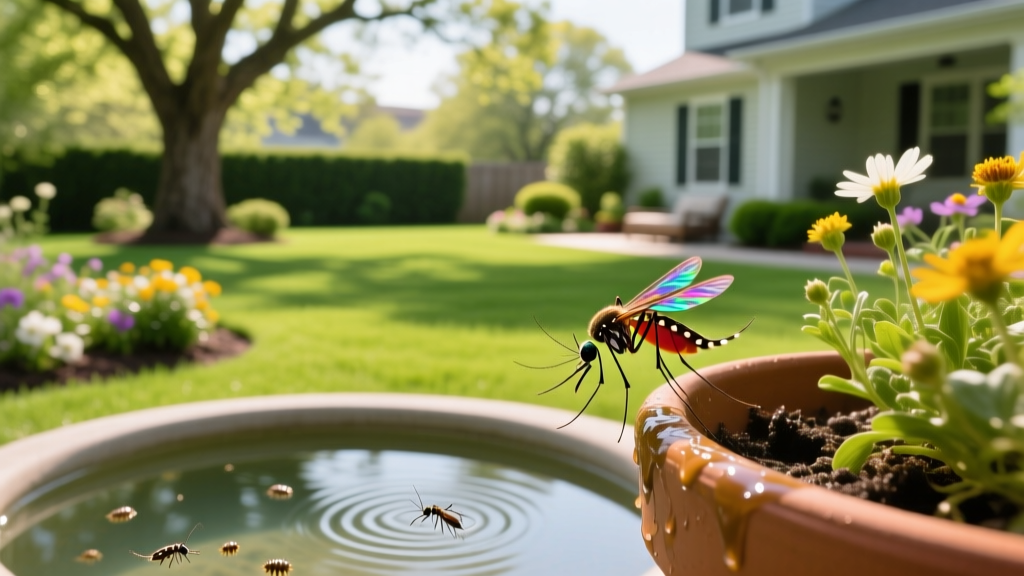
Seasonal Calendar for the Most Common Mosquito in Virginia Beach
Identifying the Most Common Mosquito in Virginia Beach
Virginia Beach’s unique Tidewater geography creates a complex, dual-threat mosquito environment. The intersection of suburban development and extensive brackish marshlands means homeowners are not dealing with a single pest, but rather a succession of species dictated by tidal cycles and temperature thresholds. When identifying the most common mosquito in Virginia Beach, entomologists point to three primary culprits that dominate the Hampton Roads region from early spring through late autumn.
Unlike inland regions where stagnant freshwater is the primary breeding ground, Virginia Beach’s coastal proximity introduces aggressive salt marsh species that operate on entirely different biological triggers. Understanding these species is the first step in building an effective, seasonally timed defense.
| Species | Common Name | Primary Habitat | Biting Time | Flight Range |
|---|---|---|---|---|
| Aedes taeniorhynchus | Black Salt Marsh Mosquito | Brackish tidal marshes, Spartina grass | Dusk / Dawn | Up to 20 miles |
| Aedes albopictus | Asian Tiger Mosquito | Artificial containers, birdbaths, tires | Daytime (aggressive) | Less than 300 feet |
| Culex pipiens | Northern House Mosquito | Polluted stagnant water, ditches, gutters | Nighttime | 1 to 2 miles |
The Virginia Beach Mosquito Seasonal Calendar
Treating mosquitoes in the Coastal Plain requires aligning your pest control schedule with local phenology and tidal events. The Virginia Beach frost-free window typically runs from mid-April to late October, but mosquito activity frequently bookends these dates.
Spring Awakening (March – April)
Target Species: Culex pipiens and early Aedes overwintering adults.
Action Required: Source reduction and early larviciding. As daytime temperatures consistently breach 50°F, overwintering Culex females emerge to seek blood meals for egg development. This is the critical window to clear winter debris from gutters, flush out catch basins, and apply Bacillus thuringiensis israelensis (Bti) to any standing water that cannot be drained.
Action Required: Source reduction and early larviciding. As daytime temperatures consistently breach 50°F, overwintering Culex females emerge to seek blood meals for egg development. This is the critical window to clear winter debris from gutters, flush out catch basins, and apply Bacillus thuringiensis israelensis (Bti) to any standing water that cannot be drained.
Peak Summer Aggression (May – August)
Target Species: Aedes albopictus (Asian Tiger) and Aedes taeniorhynchus (Black Salt Marsh).
Action Required: Perimeter barrier sprays and aggressive container management. The Asian Tiger mosquito peaks in July and August. Because they are daytime biters with a short flight range, they are highly localized to your property. Conversely, Black Salt Marsh mosquitoes will invade suburban yards from the marshes during evening hours, requiring broad-spectrum perimeter treatments.
Action Required: Perimeter barrier sprays and aggressive container management. The Asian Tiger mosquito peaks in July and August. Because they are daytime biters with a short flight range, they are highly localized to your property. Conversely, Black Salt Marsh mosquitoes will invade suburban yards from the marshes during evening hours, requiring broad-spectrum perimeter treatments.
Fall Lingering and Frost (September – November)
Target Species: Culex and late-hatching Salt Marsh mosquitoes.
Action Required: Maintain barrier sprays until the first hard frost. Many homeowners in Virginia Beach stop treating in September, but Culex populations often surge in early autumn as they prepare for diapause (overwintering). Continue applications until nighttime temperatures drop below 40°F for several consecutive days, usually late October in the Tidewater region.
Action Required: Maintain barrier sprays until the first hard frost. Many homeowners in Virginia Beach stop treating in September, but Culex populations often surge in early autumn as they prepare for diapause (overwintering). Continue applications until nighttime temperatures drop below 40°F for several consecutive days, usually late October in the Tidewater region.
Coastal Edge Cases: King Tides and Nor'easters
The most critical information gain for Virginia Beach homeowners is understanding the tidal trigger mechanism of the Black Salt Marsh mosquito (Aedes taeniorhynchus). This species does not breed in standing water in your yard. Instead, females lay desiccation-resistant eggs in the mud of the salt marshes during low tides. These eggs can survive dry, exposed conditions for months.
When a King Tide or a coastal Nor'easter pushes water levels above the normal high-tide mark, the marsh mud is submerged. This submersion acts as a biological trigger, causing millions of eggs to hatch simultaneously within 24 to 48 hours. Because these mosquitoes are strong fliers capable of traveling up to 20 miles on wind currents, a King Tide event in the Back Bay area can result in a massive swarm invading neighborhoods in Sandbridge, Princess Anne, and even central Virginia Beach days later.
Strategic Response: Monitor the National Weather Service tidal forecasts. If a King Tide or minor coastal flooding event is predicted, schedule a professional barrier spray or apply a DIY bifenthrin treatment to your property's perimeter 48 hours after the tidal peak to intercept the incoming swarm before they establish resting zones in your shrubbery.
Regional Timing for Targeted Treatments
Effective control requires matching the chemical or organic treatment to the specific species and seasonal timing. Below is a precise, actionable protocol for Virginia Beach properties.
1. Larval Control (Standing Water)
For water features, rain barrels, or marsh-adjacent ditches that cannot be drained, use Bti-based larvicides. Bti is a naturally occurring bacterium that targets mosquito larvae without harming fish, pets, or beneficial insects.
- Product: Mosquito Dunks or Mosquito Bits.
- Cost: $10 to $15 for a 6-pack of dunks.
- Application Rate: One dunk per 100 square feet of water surface area.
- Timing: Replace every 30 days from April through October.
2. Synthetic Perimeter Barrier (Heavy Pressure)
For severe Black Salt Marsh invasions or large properties backing up to wooded or marshy areas, synthetic pyrethroids provide the longest residual control.
- Product: Talstar P (Bifenthrin 7.9%).
- Cost: $45 to $55 per pint.
- Application Rate: Mix 0.5 to 1.0 fluid ounces per gallon of water. Apply 1 gallon of finished solution per 1,000 square feet.
- Target Zones: Spray the underside of leaves on shrubs, tall grasses, and the lower 3 feet of tree trunks where mosquitoes rest during the heat of the day.
- Timing: Apply every 21 to 30 days during peak summer months. Do not apply to blooming flowers to protect pollinators.
3. Organic/Essential Oil Barrier (Eco-Sensitive Zones)
If you have a vegetable garden, koi pond, or prefer organic methods near the beachfront, essential oil-based contact killers are effective but require more frequent application.
- Product: Essentria IC3 (Rosemary, Geraniol, and Peppermint oils).
- Cost: $85 to $95 per gallon.
- Application Rate: Mix 2 to 4 fluid ounces per gallon of water.
- Timing: Apply every 14 days. Essential oils degrade rapidly under high UV index conditions common in Virginia Beach summers.
FAQ: Virginia Beach Mosquito Timing
When does mosquito season officially end in Virginia Beach?
Mosquito activity ceases only after a hard frost, which typically occurs between late October and mid-November in the Tidewater region. However, microclimates near the Atlantic oceanfront or the Back Bay can remain warm enough to sustain Culex activity well into December.
Why am I getting bitten in my Virginia Beach yard at 2:00 PM?
Daytime biting is the hallmark of the Asian Tiger mosquito (Aedes albopictus). Unlike native species that rest during the day, Asian Tigers are aggressive daytime feeders. According to the Centers for Disease Control and Prevention, this species is highly adapted to suburban environments and breeds in tiny amounts of water, such as bottle caps or clogged gutter downspouts.
Does planting citronella or lemongrass work against salt marsh mosquitoes?
No. While plants like citronella contain compounds that repel insects, the concentration released passively into the air is insufficient to deter a swarm of Black Salt Marsh mosquitoes driven by a tidal hatch. Effective repellency requires crushing the leaves to release the oils, and even then, it only protects a radius of a few inches. Rely on EPA-registered spatial repellents (like metofluthrin coils) or barrier sprays for actual yard protection.

