
Pest Control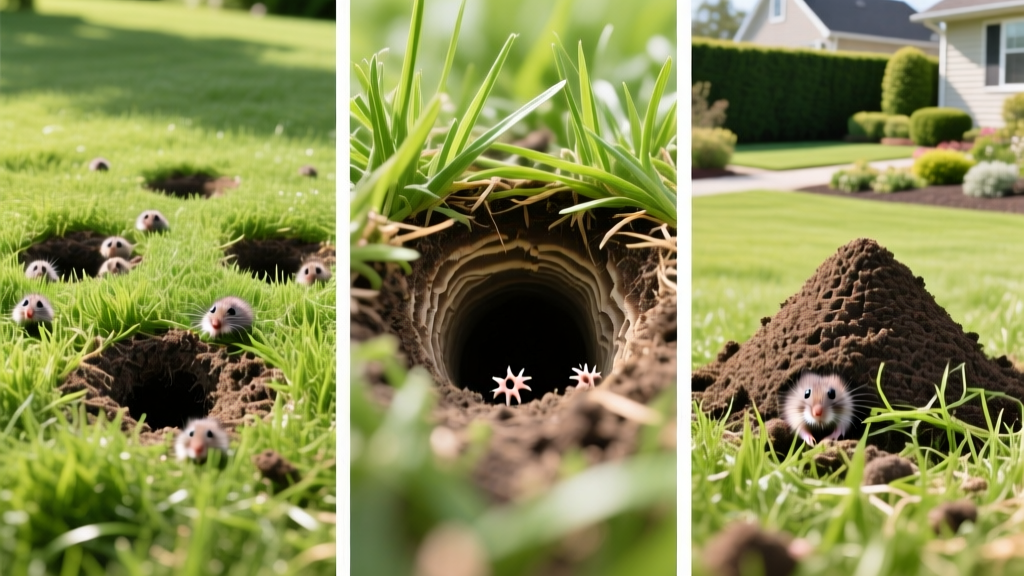
Vole Holes vs. Mole Holes: Identification and Lawn Repair Guide
The Anatomy of a Vole Hole: Differentiating Turf Pests
Before deploying traps or purchasing baits, accurate identification is the most critical step in mammal deterrence. Homeowners frequently misdiagnose vole damage as mole or pocket gopher activity, leading to wasted money on ineffective control methods. Voles (primarily the Meadow Vole, Microtus pennsylvanicus) are herbivorous rodents that create distinct subterranean and surface-level pathways.
A true vole hole measures exactly 1.5 to 2 inches in diameter. Unlike mole mounds, which are characterized by symmetrical, volcano-shaped piles of excavated soil, vole holes feature clean, golf-ball-sized openings with no dirt mounding at the entrance. According to Penn State Extension, voles utilize these holes to access surface runways—narrow, 1-to-2-inch wide paths where the grass has been entirely clipped at the soil line and packed down by continuous foot traffic.
Damage Signature Comparison Matrix
| Pest Species | Hole/Mound Appearance | Surface Runways | Primary Diet & Damage | Root/Turf Impact |
|---|---|---|---|---|
| Meadow Vole | 1.5 - 2 inch clean hole, no dirt mound | Visible 1-2 inch wide clipped grass paths | Grass roots, bulbs, tree bark | Severe; clips roots causing turf to peel back |
| Eastern Mole | Volcano-shaped dirt mounds (3-5 inches) | Raised soil ridges, no clipped grass | Earthworms, grubs, insects | Moderate; uproots grass via tunneling |
| Pocket Gopher | Horseshoe or fan-shaped dirt mounds | No surface runways; plugs holes with dirt | Plant roots, tubers, alfalfa | Severe; pulls entire plants underground |
The Winter Damage Factor: Snow Tunnels and Bark Girdling
Vole damage often goes unnoticed until the spring snowmelt reveals extensive lawn scarring. Snow provides thermal insulation and cover from aerial predators like hawks and owls, allowing voles to forage aggressively throughout the winter. Under the snowpack, voles construct 'snow tunnels' that perfectly map their surface runways. When the snow recedes, homeowners discover yellowish, dead grass trails crisscrossing the lawn.
More devastating than turf loss is the girdling of ornamental trees and shrubs. Voles chew through the cambium layer at the base of trunks, effectively cutting off the tree's nutrient transport system. A girdled tree will exhibit delayed spring budding, chlorotic (yellowing) foliage, and eventual death. Protecting high-value landscaping requires physical exclusion, specifically wrapping the lower 18 inches of trunks with 1/4-inch galvanized hardware cloth, buried 3 inches into the soil line to prevent burrowing underneath.
Critical Deterrence Warning: Do not use mole harpoon traps or scissor-jaw traps in vole runways. Mole traps are designed to trigger on the upward pressure of a burrowing insectivore. Voles are surface runners; deploying mole traps in a vole runway will result in zero captures and potential injury to non-target wildlife or pets.
Proven Eradication Protocols: Trapping and Baiting
Effective vole population control requires a multi-tiered approach combining habitat modification with targeted lethal control. The Internet Center for Wildlife Damage Management recommends initiating control measures in late fall before snow cover establishes, as winter populations are the most destructive.
Step 1: Habitat Modification and Runway Exposure
Voles require dense cover to feel secure. Lower your mower deck to cut the turf to 2.5 inches for the final fall mowing. Rake out heavy thatch layers exceeding 0.5 inches in depth, and pull mulch back at least 3 feet from the foundation of your home and the base of young trees. Removing this protective canopy forces voles into the open, increasing predation and making runways easier to locate for trapping.
Step 2: Precision Snap Trapping
For localized infestations (fewer than 20 visible holes), standard wooden snap traps are highly effective and cost-efficient.
- Equipment: Victor M154 Old-School Wooden Snap Traps (approx. $5.00 - $8.00 per unit).
- Baiting: Secure a small piece of apple or a dab of peanut butter mixed with birdseed to the trigger pedal using a cotton thread.
- Placement: Position the trap perpendicular to the runway, with the trigger end directly inside the path. The vole must trip the pedal while running through the tunnel.
- Protection: Cover the trap with a PVC pipe section or an inverted shoebox with a 2-inch entry hole cut into the side. This prevents birds, squirrels, and pets from accessing the trap while allowing voles to enter.
Step 3: Chemical Baiting for Severe Infestations
When a lawn features dozens of active holes and extensive runway networks, trapping becomes logistically unfeasible. In these scenarios, rodenticide baits formulated specifically for voles are necessary. Zinc Phosphide (0.01%) is the industry standard for acute vole control.
- Product Recommendation: Kaput-D ZP Vole Bait (approx. $45.00 - $60.00 per 4 lb bucket).
- Application Protocol: Zinc Phosphide is highly toxic to all mammals and must never be broadcast scattered. Place 1 to 2 tablespoons of bait directly into the vole hole or inside a tamper-resistant bait station positioned over an active runway.
- Safety Note: Zinc Phosphide reacts with stomach acid to produce phosphine gas, which is lethal to the vole but poses a secondary poisoning risk to scavengers. Always use EPA-approved, lockable bait stations (such as the Protecta LP Rat Bait Station, adapted for low-clearance vole access) to secure the pellets.
Lawn Repair and Turf Recovery Framework
Once the vole population has been eradicated or managed to acceptable thresholds, repairing the physical damage to the turf is the next priority. Vole runways often leave the soil compacted and the root zone severed, requiring mechanical intervention rather than simple overseeding.
- Runway Scarification: Use a heavy-duty steel garden rake or a motorized dethatcher set to a shallow depth (1/4 inch) to aggressively scratch the soil within the dead runways. This breaks up the compacted dirt and creates a seedbed.
- Topdressing: Apply a 1/4-inch layer of screened compost or a 70/30 sand-to-compost mix over the damaged areas. This levels the sunken runways and introduces microbial activity to the damaged root zone.
- Targeted Overseeding: Select a turfgrass species that matches your existing lawn. For cool-season lawns, apply Tall Fescue or Kentucky Bluegrass seed at a rate of 3 to 5 lbs per 1,000 square feet directly into the scarified runways.
- Hydration Protocol: Keep the top 1 inch of soil consistently moist (watering 2-3 times daily for 5 minutes) until germination occurs, typically within 7 to 14 days depending on soil temperatures.
Frequently Asked Questions
Do ultrasonic repellent stakes work for vole deterrence?
No. Independent university trials consistently show that ultrasonic and sonic repellent stakes provide negligible long-term deterrence for voles. Voles quickly habituate to the sound frequencies, and the acoustic waves fail to penetrate dense clay soils or thick thatch layers effectively.
Can I use castor oil sprays to drive voles away?
Castor oil-based repellents (containing ricinoleic acid) can provide temporary, short-term deterrence by making the soil and roots unpalatable. However, they require frequent reapplication (every 2-3 weeks or after heavy rainfall) and will not eradicate an established colony. They are best used as a preventative measure in early fall before snow cover.
Will filling vole holes with gravel stop them from returning?
Filling holes with gravel or mothballs is an ineffective urban myth. Voles will simply dig a new hole a few inches away or route their runway around the obstruction. Eradication requires lethal removal or permanent habitat modification to eliminate their food source and protective cover.

