
Pest Control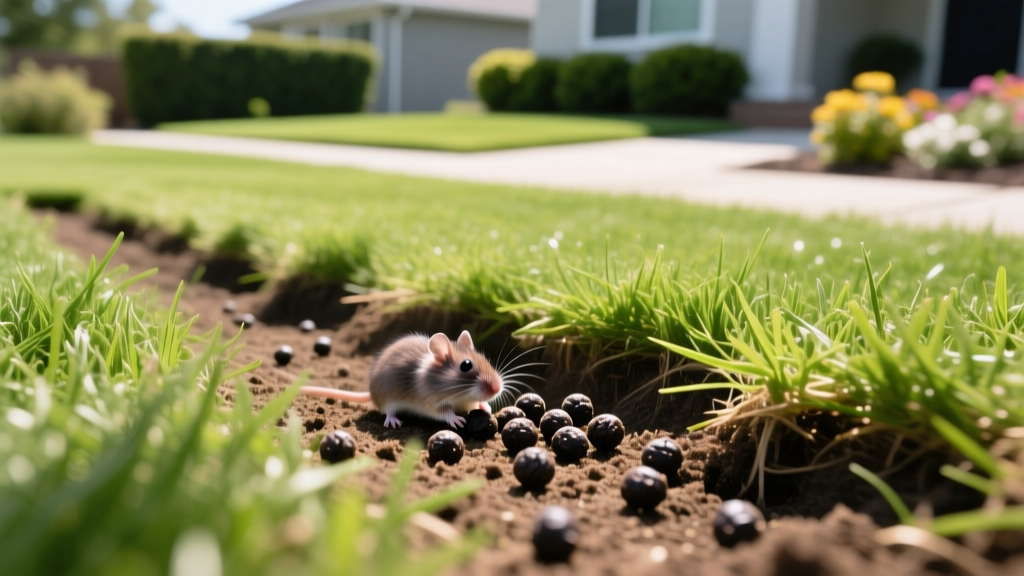
Identifying Vole Poop: Lawn Damage Signs and Deterrence
The Diagnostic Value of Vole Feces in Lawn Care
Finding unidentified droppings in your yard is the first tangible evidence of a subterranean or surface-dwelling pest problem. For turf managers and homeowners, correctly identifying vole poop is a critical diagnostic step. Voles (Microtus spp.) cause extensive damage to root systems, girdle young trees, and create unsightly surface runways that disrupt lawn uniformity. Unlike moles, which are insectivores, voles are herbivores that consume grass blades, roots, and bark. Their feces provide direct evidence of their feeding habits, population density, and the specific vectors they are using to navigate your landscape.
Morphological Characteristics
Vole feces are distinct in their size, shape, and deposition patterns. Fresh droppings typically measure between 1/8 and 1/4 of an inch in length and roughly 1/16 of an inch in thickness. They are spindle-shaped with somewhat blunt or slightly pointed ends, lacking the sharp, needle-like tapers characteristic of house mouse droppings. Coloration ranges from greenish-brown when the vole is actively feeding on fresh spring turf, to dark brown or black when consuming roots and bark in late autumn.
Safety Advisory: Always wear nitrile gloves and an N95 mask when inspecting or cleaning up rodent feces. While voles are not primary vectors for Hantavirus like deer mice, their droppings can harbor Salmonella and other zoonotic pathogens, and dried feces can become aerosolized during lawn raking or mowing.
Vole Poop vs. Other Rodent Droppings: A Comparative Matrix
Misidentifying the pest leads to ineffective treatment. A common mistake is deploying mole traps for a vole problem, or using indoor mouse bait stations for outdoor vole runways. Use the following morphological matrix to confirm your suspect species based on fecal evidence.
| Species | Feces Length | Shape & Ends | Primary Location |
|---|---|---|---|
| Vole | 1/8 to 1/4 inch | Spindle, blunt/slightly pointed | Surface runways, base of trees |
| House Mouse | 1/8 to 1/4 inch | Rod-shaped, sharply pointed | Indoors, near foundations, garages |
| Deer Mouse | 1/8 to 1/4 inch | Oblong, slightly pointed | Woodpiles, sheds, rural outbuildings |
| Norway Rat | 1/2 to 3/4 inch | Capsule-shaped, blunt ends | Burrows, compost bins, sewers |
| Mole | N/A (Subsurface) | N/A | Deep underground tunnels, never surface |
According to the University of California Integrated Pest Management program, the presence of surface droppings immediately rules out moles, which defecate in deep underground latrine chambers and leave only soil mounds on the surface.
Mapping the Infestation: The Runway Network
Vole poop is rarely scattered randomly. It is concentrated in specific zones that reveal the colony's architecture. Voles construct surface runways—narrow paths 1.5 to 2 inches wide cleared of grass and thatch. These runways connect to underground burrow entrances.
- Latrine Sites: Voles often establish specific latrine chambers just inside burrow entrances or at runway intersections. Finding dense clusters of droppings in these areas indicates high traffic and a nearby nesting zone.
- Tree Bases: In winter, voles move under the snow line to girdle tree bark. You will find accumulations of greenish-brown feces mixed with wood shavings at the base of young fruit trees, arborvitae, and ornamental shrubs.
- Thatch Layer: In heavily thatched lawns, voles may travel entirely under the grass canopy. Parting the thatch with a garden rake will reveal hidden runways and scattered feces.
Strategic Deterrence and Eradication Protocols
Once vole feces confirm an active infestation, immediate intervention is required to prevent exponential population growth. A single female meadow vole can produce 5 to 10 litters per year. Implement these targeted deterrence strategies.
Exclusion via Hardware Cloth
Protecting high-value ornamentals and young trees requires physical barriers. Do not use chicken wire; voles can easily squeeze through the 1-inch hexagonal gaps or chew through the thin gauge. Instead, purchase 1/4-inch galvanized hardware cloth. Cut a strip 24 inches wide and wrap it around the tree trunk. Bury the bottom edge 6 inches deep into the soil to prevent burrowing underneath, and secure it 18 inches above the soil line. As of 2026, a 2-foot by 10-foot roll of 1/4-inch galvanized hardware cloth costs approximately $35 to $45 at major home improvement centers.
Castor Oil Repellent Applications
For broad lawn protection where exclusion is impossible, castor oil-based repellents create an unpalatable environment that irritates the voles' digestive systems and senses of smell. Products like Bonide Mole & Vole RX or Tomcat Mole & Vole Repellent utilize a concentrated castor oil and garlic matrix. Apply using a hose-end sprayer at a rate of 2 to 3 ounces per 1,000 square feet. Water the product into the soil immediately after application to push the active ingredients down into the root zone and surface runways. Reapply every 3 to 4 weeks, or immediately after heavy rainfall exceeding 1 inch. A 32-ounce concentrate typically costs between $22 and $28, treating up to 10,000 square feet.
Precision Snap Trapping
When populations are dense and localized, trapping provides immediate reduction. The Victor Outdoorsman Snap Trap features a heavy-duty spring and a trip plate sensitive enough for lightweight voles. Bait the trap with a mixture of oatmeal and peanut butter, or a fresh slice of apple. Place the trap directly inside the active runway, positioning it perpendicular to the path so the vole triggers it while moving forward. Crucially, cover the set trap with a standard shoebox or a specialized wooden trap cover with 2-inch entry holes on opposite ends. This prevents birds, pets, and non-target wildlife from accessing the trap while mimicking the dark, enclosed environment voles prefer.
Frequently Asked Questions
Does finding vole poop mean my lawn is dying?
Not necessarily. Vole feces indicate presence, but lawn death is caused by their feeding habits. If you see surface runways cutting through the grass and clipped grass blades near the droppings, the turf roots are likely intact and will recover with light fertilization and overseeding. If the grass pulls up easily, the voles have severed the root crowns.
Can I use standard mouse poison for voles?
The Colorado State University Extension strongly advises against using standard indoor rodenticides outdoors. Outdoor vole baiting requires specialized, EPA-registered zinc phosphide or diphacinone baits placed inside tamper-resistant bait stations specifically designed for surface runways, to prevent secondary poisoning of raptors and domestic pets.
Why do I only see vole droppings in the winter?
Voles do not hibernate. In summer, they are largely nocturnal and hidden by dense turf. In winter, snow cover provides a protective blanket, allowing them to feed and defecate openly on the surface. When the snow melts in early spring, the extensive networks of runways and accumulated winter feces are suddenly exposed.

