
Pest Control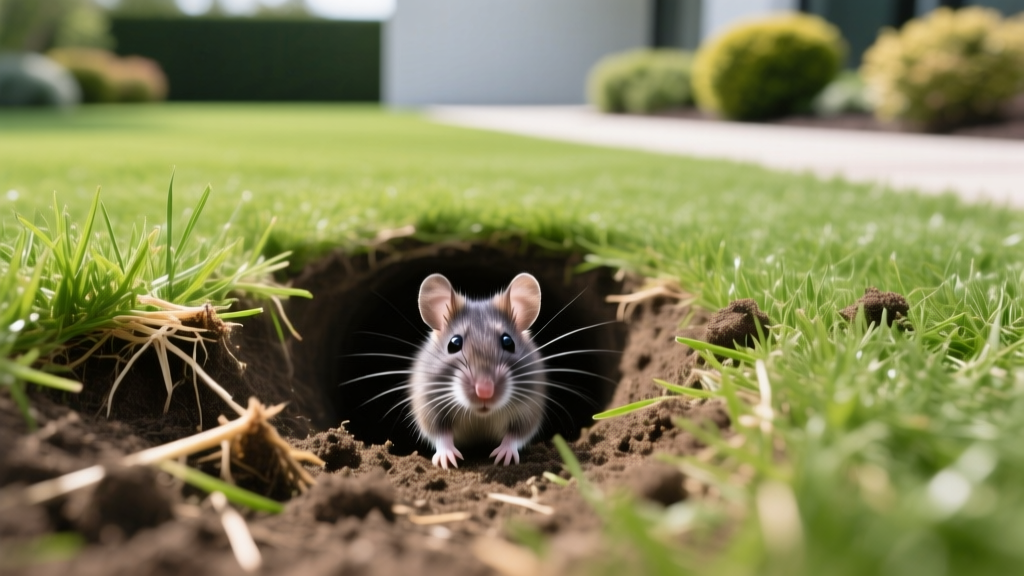
Vole Rodent Control: How to Stop Lawn Tunnels & Damage
Identifying the Intruder: Voles vs. Moles vs. Gophers
Before deploying any vole rodent control methods, you must confirm the species damaging your lawn. Homeowners frequently misidentify voles as moles or gophers, leading to ineffective treatments. Voles (Microtus spp.) are compact, herbivorous rodents with blunt snouts, small ears, and short tails. Unlike insectivorous moles, voles eat plant roots, tree bark, and bulbs, causing severe structural damage to landscaping and turfgrass root systems.
| Feature | Voles | Moles | Pocket Gophers |
|---|---|---|---|
| Primary Diet | Roots, bark, bulbs, grass | Earthworms, grubs, insects | Roots, tubers, underground stems |
| Tunnel Sign | Surface runways (1-2 inches wide) | Deep tunnels, raised ridges | Deep tunnels, lateral burrows |
| Hole/Mound Shape | Golf-ball sized holes, no mounds | Conical, volcano-shaped mounds | Crescent or fan-shaped mounds |
| Damage Type | Girdled trees, dead grass trails | Uprooted turf, dry soil pockets | Missing plants, severed taproots |
According to the Internet Center for Wildlife Damage Management, a single acre of favorable habitat can support up to 500 voles. Because they breed year-round in milder climates and produce 3 to 6 litters annually, a minor surface runway issue can escalate into a full-blown colony collapse of your lawn within a single season.
Habitat Modification: Starving and Exposing the Colony
Voles thrive in dense, moist ground cover that hides them from aerial predators like hawks and owls. The most sustainable vole rodent control strategy begins with altering the microhabitat to make your lawn inhospitable.
The 3-3-3 Tree Protection Rule
Voles frequently girdle young trees by chewing the bark beneath the snow line or just under the soil surface, severing the phloem and killing the tree. Protect ornamental and fruit trees using the 3-3-3 rule:
- 3 inches of mulch depth: Never pile mulch higher than 3 inches, as deep mulch retains the moisture voles require.
- 3 feet of clearance: Maintain a 3-foot radius of bare soil or short grass around the trunk.
- 3 inches from the trunk: Keep all mulch and vegetation at least 3 inches away from the actual bark.
Turf Management Adjustments
Adjust your mowing height to 2.5 to 3 inches. While taller grass is generally good for drought resistance, grass exceeding 4 inches provides a perfect canopy for vole runways. Additionally, dethatch your lawn annually. A thatch layer thicker than 0.5 inches creates an insulated, hidden highway for voles to travel between feeding sites without crossing open soil.
Lethal Control: Traps and Baits
When habitat modification is insufficient, direct population reduction is required. The Colorado State University Extension recommends targeting active runways during the fall and late winter when natural food sources are scarce and voles are most desperate.
Strategic Snap Trapping
Standard wooden snap traps (rat-sized) are highly effective and cost roughly $2 to $4 each. Do not place traps randomly. Locate an active runway by flattening a small section of grass and checking if it is rebuilt the next day.
Pro Trapping Technique: Place the snap trap perpendicular to the runway, with the trigger directly in the path. Bait with a mixture of peanut butter and rolled oats. Crucially, cover the trap with a plastic nursery pot or a shingle propped up on small rocks. This hides the trap from birds and pets while exploiting the vole's instinct to feed in enclosed, dark spaces.
Rodenticide Bait Stations
For large infestations, toxic baits are necessary. Zinc phosphide (2% active ingredient) is the industry standard for vole control. Products like Kaput Vole Bait (priced around $45 for a 4-pound pail) act quickly, typically eliminating the rodent within 24 hours after a single feeding.
Application Specifics: Use a specialized bait station or a PVC pipe T-joint to prevent non-target exposure. Place 1 tablespoon of bait inside the station and secure it over an active burrow entrance. Never broadcast zinc phosphide pellets directly onto the lawn, as this poses severe risks to seed-eating birds and domestic pets.
Exclusion Fencing Specifications
If you are protecting high-value garden beds or specific ornamental shrubs, physical exclusion is the only 100% guaranteed vole rodent control method. Standard chicken wire is useless; voles can easily squeeze through the 1-inch hexagonal gaps.
- Material: 19-gauge galvanized steel hardware cloth.
- Mesh Size: Strictly 1/4-inch or 1/2-inch openings.
- Installation Depth: Bury the bottom edge at least 6 inches below the soil surface, bending the bottom 2 inches outward into an 'L' shape to prevent burrowing underneath.
- Above-Ground Height: Extend the fencing 12 to 18 inches above the soil line to deter climbing and account for winter snow accumulation.
Expect to pay approximately $35 to $50 for a 36-inch by 10-foot roll of high-quality 1/4-inch hardware cloth. While the upfront material cost and labor are higher than trapping, a properly installed exclusion fence will last 15 to 20 years without requiring maintenance.
Winter Subnivean Tunneling: The Hidden Threat
Many homeowners assume vole activity stops when the ground freezes. In reality, voles remain active all winter, operating in the 'subnivean zone'—the insulated microclimate between the soil surface and the bottom of the snowpack. Beneath the snow, voles construct extensive tunnel networks, feeding on dormant turfgrass crowns and tree roots.
The damage often goes unnoticed until the spring snowmelt reveals winding, 2-inch-wide trails of dead, matted grass that closely resemble snow mold fungus. To prevent winter subnivean damage, ensure all fallen fruit, birdseed, and debris are cleared from the lawn before the first heavy snowfall, removing their localized food caches.
Frequently Asked Questions
Do ultrasonic repellent spikes work for voles?
No. Independent university trials have repeatedly shown that solar-powered ultrasonic spikes fail to deter burrowing rodents. Voles quickly habituate to the high-frequency noise, and the sound waves do not penetrate dense clay soils or thick root mats effectively.
Can I use castor oil-based repellents?
Castor oil derivatives (like MoleMax or Sweeney's Mole & Gopher Repellent) can temporarily irritate a vole's digestive tract and olfactory senses, pushing them to adjacent areas. However, these liquid repellents degrade rapidly under UV light and require reapplication every 3 to 4 weeks, or immediately after heavy rainfall. They are a short-term deterrent, not a permanent control solution.
Will getting a cat solve my vole problem?
While outdoor cats will opportunistically hunt voles, a single cat cannot outpace the reproductive rate of an established colony. Furthermore, relying on cats exposes them to secondary poisoning if they consume a vole that has recently ingested zinc phosphide or anticoagulant baits from a neighboring property.

