
Pest Control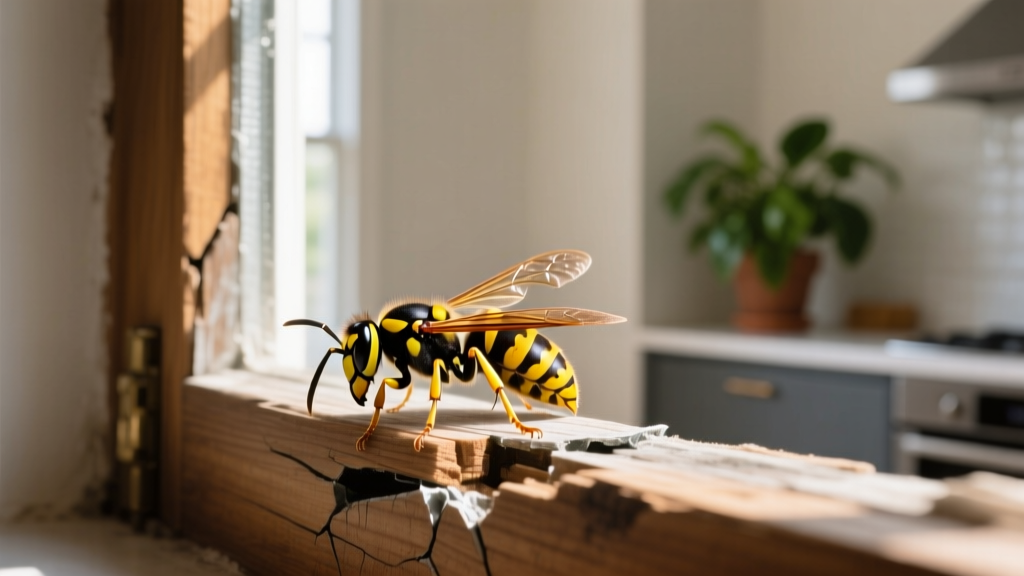
Wasps in House, No Windows Open? Why They Emerge & How to Stop Them
The Biology of Indoor Winter Wasps
Finding a sluggish wasp in your living room in January or February is jarring. If your windows and doors are sealed tight, the wasp is not flying in from the cold outdoors—it is emerging from inside your structural voids. This phenomenon, known as overwintering emergence, occurs when hibernating queens or late-season workers nest within attics, wall cavities, or soffits and are tricked into waking up by your home's central heating system.
During late autumn, fertilized female wasps enter diapause (a state of suspended animation similar to hibernation). They seek out dry, protected crevices to survive the freezing temperatures. When the interior wall temperature or attic space reaches roughly 55°F to 60°F due to indoor heating or unseasonably warm sunny days on the roof, their diapause breaks. The wasp assumes spring has arrived, becomes active, and follows the heat gradient or light sources down into your living spaces through recessed lighting, HVAC registers, or baseboard gaps.
⚠️ CRITICAL WARNING: Never use standard aerosol wasp sprays (like Raid Wasp & Hornet) on a wasp inside your living space. These sprays contain pyrethroids that cause immediate neurological spasms. The agitated wasp will fly erratically, increasing your risk of being stung, and will release alarm pheromones that can rouse other hidden wasps in the same wall void.
Tracing the Source: Species and Overwintering Habits
Not all wasps overwinter in the same locations, and identifying the intruder helps pinpoint the exterior breach. According to the University of California Statewide Integrated Pest Management Program (UC IPM), paper wasps and yellowjackets exhibit distinctly different shelter-seeking behaviors.
| Wasp Species | Typical Overwintering Site | Indoor Emergence Trigger |
|---|---|---|
| Paper Wasps (Polistes spp.) | Attic rafters, window frames, fascia gaps, behind shutters | Indoor heating (55°F+) or direct sun on siding |
| Yellowjackets (Vespula spp.) | Wall voids, abandoned rodent burrows, hollow blocks | Warm air from heating ducts leaking into voids |
| Bald-faced Hornets | Tree hollows, large attic cavities, chimney flues | Late spring (rarely mid-winter) |
The Exterior Defense Strategy: Sealing the Envelope
Killing the wasp in your kitchen is merely treating the symptom. The permanent cure requires exterior exclusion, ideally performed in late October or November before deep freezing sets in. Wasps can exploit gaps as small as 1/8 of an inch. Follow this specific material protocol to seal your home's envelope:
- Inspect the Roofline and Soffits: Use binoculars to scan where the roofline meets the siding. Look for rotted wood, missing vent screens, and gaps around plumbing penetrations.
- Pack Voids with Copper Mesh: Do not use steel wool, which rusts and stains your siding. Stuff Stinger Bullet copper mesh ($15 per 20-foot roll) tightly into weep holes, soffit gaps, and pipe penetrations. Wasps and rodents cannot chew through copper.
- Seal with Polyurethane Foam: Cap the mesh with Pur Black Polyurethane Foam ($28 per can). Unlike standard yellow 'Great Stuff' foam, Pur Black contains no attractants for rodents, resists UV degradation better, and provides a dense, airtight seal that blocks pheromone trails.
- Repair Siding and Caulk: For gaps under window sills and corner boards, use a high-quality siliconeized acrylic latex caulk. Apply it when exterior temperatures are above 40°F to ensure proper adhesion and curing.
Safe Removal of Indoor Emergents
When a wasp is already buzzing against your living room window, you need a removal method that prevents stings and avoids chemical contamination indoors. The most effective, non-toxic tool is a wet/dry shop vacuum.
The 'Sock-on-Wand' Vacuum Technique
Spraying a wasp indoors leaves toxic residue on your floors and walls. Swatting it risks a defensive sting. Instead, use this modified vacuum method:
- Take a clean, thin nylon dress sock and pull it over the end of the vacuum wand.
- Secure the sock tightly with a rubber band or zip tie.
- Turn on the shop vac and slowly approach the wasp.
- Suction the wasp against the wand. The sock acts as a filter, trapping the wasp on the outside of the wand while allowing air to pass through.
- Turn off the vacuum, carefully remove the sock with the wasp trapped inside, and release it outdoors or dispose of it.
This method ensures the wasp does not enter the vacuum tank, preventing the rotting smell and secondary pest attraction that occurs when insects die inside vacuum bags.
Professional Intervention: Costs and Thresholds
If you are seeing more than two or three wasps a week inside your home, or if you can hear a distinct buzzing or crackling sound coming from your drywall, you likely have an active, late-season nest inside the wall void. According to UC IPM guidelines on yellowjackets, wall-void nests must be treated carefully to avoid driving the colony deeper into the living space.
Cost Expectations:
- DIY Exclusion Materials: $45 - $75 (Copper mesh, Pur Black foam, caulk).
- Professional Exterminator (Exterior Treatment): $150 - $300 to dust the exterior entry point with an insecticidal dust like Tempo 1% Dust, which the wasps track into the nest.
- Professional Nest Removal & Drywall Repair: $350 - $800. This higher tier involves cutting open the drywall, removing the dead nest debris (which is critical, as abandoned nests attract carpet beetles and secondary scavengers), and patching the wall.
Frequently Asked Questions
Do wasps reuse the same nest inside my wall year after year?
No. Wasps do not reuse old nests. However, the pheromones left behind by a previous colony can attract new queens to the exact same structural void the following autumn. This is why cleaning the void and sealing the exterior gap with copper mesh and foam is mandatory.
Can I use a bug bomb or fogger in my attic to kill overwintering wasps?
No. Total-release foggers are highly ineffective for structural voids. The aerosol cannot penetrate deep into the insulation or wall cavities where the wasps are hiding. Furthermore, foggers leave a toxic, sticky residue on attic surfaces and pose a severe fire hazard if triggered near an HVAC pilot light or electrical junction box.

