
Pest Control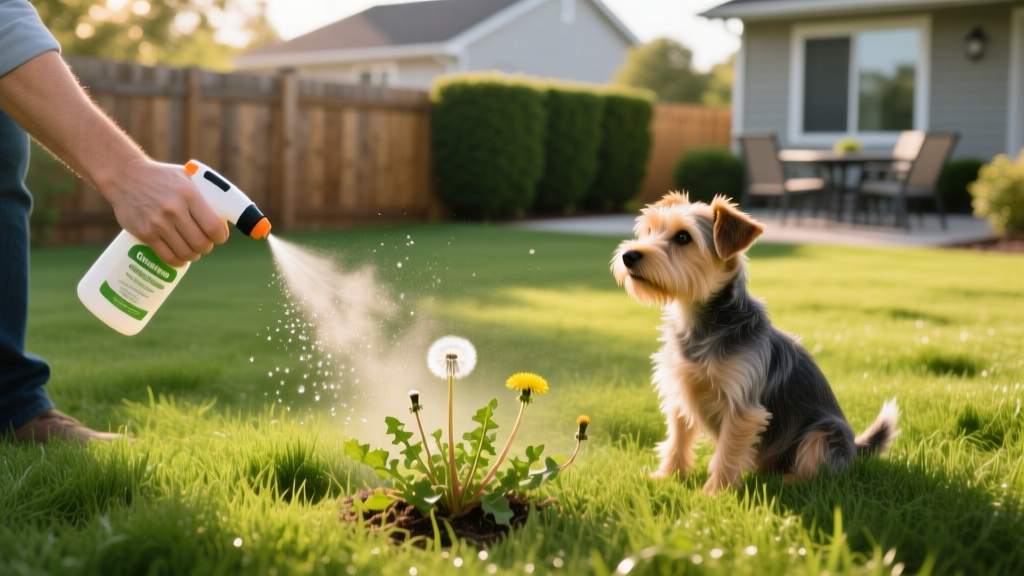
Finding a Weed Killer Safe for Pets: Spot-Treatment Guide for Lawns
The Reality of 'Weed Killer Safe' Marketing
When homeowners search for a weed killer safe for pets and children, they are immediately bombarded with products labeled 'natural,' 'organic,' or 'non-toxic.' However, the intersection of lawn care and pet safety is heavily misunderstood. The Environmental Protection Agency (EPA) regulates pesticides under the Federal Insecticide, Fungicide, and Rodenticide Act (FIFRA), but a specific exemption exists that complicates consumer choices. Understanding this regulatory framework is the first step in selecting a genuinely safe spot-treatment for your lawn.
Warning: The FIFRA 25(b) Exemption Trap
Under FIFRA section 25(b), the EPA exempts 'minimum risk pesticides' from federal registration. While this sounds beneficial, it means these products have not undergone the rigorous efficacy and toxicological testing required for standard herbicides. A product can legally be sold as a weed killer safe for pets simply because it uses high concentrations of essential oils, which can still cause severe contact dermatitis or respiratory distress in dogs if applied incorrectly.
Under FIFRA section 25(b), the EPA exempts 'minimum risk pesticides' from federal registration. While this sounds beneficial, it means these products have not undergone the rigorous efficacy and toxicological testing required for standard herbicides. A product can legally be sold as a weed killer safe for pets simply because it uses high concentrations of essential oils, which can still cause severe contact dermatitis or respiratory distress in dogs if applied incorrectly.
To achieve true safety without sacrificing weed control efficacy, you must look past the front-label marketing and analyze the active ingredients. For targeted spot-treatment of common broadleaf weeds, three specific active ingredients offer the optimal balance of mammalian safety and botanical lethality.
Top 3 Active Ingredients for Pet-Safe Spot Treatment
1. Iron HEDTA (FeHEDTA)
Chelated iron, specifically Iron HEDTA (hydroxyethylethylenediaminetriacetic acid), is currently the gold standard for selective, pet-safe broadleaf weed control. Broadleaf weeds like dandelions and plantains absorb high levels of iron, leading to oxidative stress, cellular necrosis, and rapid tissue blackening. Cool-season and warm-season turfgrasses, however, naturally restrict iron uptake, remaining unharmed.
- Recommended Product: Natria Lawn Weed Control or Fiesta Turf Weeder.
- Cost: $15 to $22 for a 32 oz Ready-To-Use (RTU) spray bottle; $45 to $60 for a 2.5-gallon concentrate.
- Application Rate: 2.5 to 3.5 fluid ounces per 1,000 square feet when diluted.
- Efficacy: Visible wilting within 3 to 6 hours; complete necrosis in 14 to 21 days. Requires a second application for mature taproot weeds.
2. Pelargonic Acid (Nonanoic Acid)
Pelargonic acid is a naturally occurring fatty acid found in animal fats and plant oils (like geraniums). It acts as a non-selective contact herbicide by destroying cell membranes, causing rapid desiccation. Because it is non-selective, it will damage turfgrass if oversprayed, making it strictly a precision spot-treatment tool for weeds growing in driveway cracks, patio pavers, or isolated lawn patches.
- Recommended Product: Scythe Herbicide or BurnOut Weed and Grass Killer.
- Cost: $25 to $35 per gallon of concentrate.
- Application Rate: 1.5 to 3 ounces per gallon of water for spot spraying.
- Efficacy: Visible burn-down in 15 to 30 minutes under direct sunlight. Does not kill roots; best for annual weeds or top-killing perennials before manual extraction.
3. D-Limonene (Citrus Oil Extract)
Extracted from citrus peels, D-Limonene strips the protective waxy cuticle from weed leaves, causing them to dehydrate rapidly. While it falls under the EPA's minimum risk exemption, commercial grades are highly concentrated. It is exceptionally effective on young, tender weeds but struggles against mature perennials with deep taproots.
- Recommended Product: Avenger Organics Weed Killer.
- Cost: $28 to $38 per gallon concentrate.
- Application Rate: Mix 4 to 6 ounces per gallon of water.
- Efficacy: Results visible in 1 to 2 hours. Highly dependent on ambient temperature (works best above 70°F).
Spot-Treatment Application Matrix: Weed Species vs. Safe Active Ingredient
Choosing the wrong active ingredient for a specific weed species is the primary reason homeowners abandon organic or pet-safe methods. Use this matrix to match your target weed with the correct chemistry.
| Weed Species | Growth Habit | Best 'Safe' Active Ingredient | Expected Timeframe to Eradication |
|---|---|---|---|
| Dandelion (Taraxacum officinale) | Perennial, deep taproot | Iron HEDTA (FeHEDTA) | 14-21 days (2 applications required) |
| Broadleaf Plantain (Plantago major) | Perennial, fibrous root | Iron HEDTA (FeHEDTA) | 10-14 days |
| Creeping Charlie (Glechoma hederacea) | Perennial, stoloniferous | Iron HEDTA (FeHEDTA) | 21-28 days (3 applications required) |
| White Clover (Trifolium repens) | Perennial, creeping | Iron HEDTA (FeHEDTA) | 14-21 days |
| Crabgrass (Digitaria) | Annual, shallow root | Pelargonic Acid | 1-3 days (top-kill only) |
| Purslane (Portulaca oleracea) | Annual, succulent | D-Limonene or Pelargonic Acid | 2-4 hours |
Step-by-Step Spot-Treatment Protocol for Maximum Efficacy
Pet-safe herbicides lack the aggressive systemic translocation properties of synthetic chemicals like 2,4-D or Glyphosate. Therefore, your application technique must be flawless to ensure the active ingredient penetrates the weed's foliage.
- Mow the Lawn to 2.5 Inches: Mowing 48 hours before application removes excess turf canopy, ensuring the spot-treatment reaches the target weed without being intercepted by grass blades.
- Hydrate the Soil: Water the lawn deeply 24 hours prior. Weeds under drought stress close their stomata (leaf pores) to conserve water, which prevents the absorption of Iron HEDTA and fatty acids.
- Check the Thermal Window: Apply only when ambient temperatures are between 65°F and 85°F. Pelargonic acid and D-Limonene lose efficacy below 60°F, while Iron HEDTA can cause temporary phytotoxicity to turfgrass if applied above 90°F.
- Utilize a Shielded Nozzle: Attach a bell-shaped spray shield to your pump sprayer. This confines the droplets to a 4-inch diameter circle, preventing drift onto desirable grass when using non-selective fatty acids.
- Spray to the Point of Runoff: Coat the weed leaves thoroughly until the liquid just begins to drip. Do not drench the soil; these products are primarily foliar-absorbed.
Pro-Tip for Iron HEDTA: Add a non-ionic surfactant (like a methylated seed oil) at a rate of 0.25% by volume to your Iron HEDTA tank mix. This reduces the surface tension of the water, allowing the chelated iron to spread evenly across the waxy leaves of plantain and clover, increasing absorption by up to 40%.
Re-Entry Intervals (REI) and Pet Safety Timelines
The most critical question for pet owners is when their dogs or cats can safely return to the treated area. The Re-Entry Interval (REI) is dictated by the physical state of the herbicide and its dermal toxicity profile.
Liquid vs. Granular Drying Times
Liquid spot-treatments (RTU sprays and concentrates) generally require a drying period of 2 to 4 hours before pets can re-enter the lawn. Once the water carrier evaporates, the active ingredients (Iron HEDTA, Pelargonic Acid) bind tightly to the plant tissue and soil particles, minimizing transfer to paws. Granular 'weed and feed' products, conversely, require watering-in and remain on the soil surface, posing a higher risk of paw-pad irritation and ingestion during grooming. For households with highly active pets, liquid spot-treatments are structurally safer than broadcast granular applications.
Liquid spot-treatments (RTU sprays and concentrates) generally require a drying period of 2 to 4 hours before pets can re-enter the lawn. Once the water carrier evaporates, the active ingredients (Iron HEDTA, Pelargonic Acid) bind tightly to the plant tissue and soil particles, minimizing transfer to paws. Granular 'weed and feed' products, conversely, require watering-in and remain on the soil surface, posing a higher risk of paw-pad irritation and ingestion during grooming. For households with highly active pets, liquid spot-treatments are structurally safer than broadcast granular applications.
According to guidelines published by the EPA regarding pesticides and pets, even minimum risk products should be kept away from animals until the application site is completely dry. Furthermore, the EPA's Minimum Risk Pesticides documentation emphasizes that 'natural' ingredients like concentrated citrus oils can cause gastrointestinal upset if a dog licks wet foliage immediately after application.
Post-Application Monitoring
After the 4-hour drying window, monitor your pets for the first 24 hours. While Iron HEDTA is of low toxicity to mammals, ingestion of large quantities of treated, decaying plant matter can cause mild, temporary gastrointestinal distress. Ensure your pet has access to fresh water to discourage them from drinking from puddles or damp soil in the treatment zone.
By prioritizing specific active ingredients like chelated iron and fatty acids over vague 'organic' marketing claims, you can effectively manage lawn weeds without compromising the health and safety of your household pets. Precision spot-treatment not only protects your lawn's ecosystem but also drastically reduces the total volume of herbicide introduced into your yard.

