
Pest Control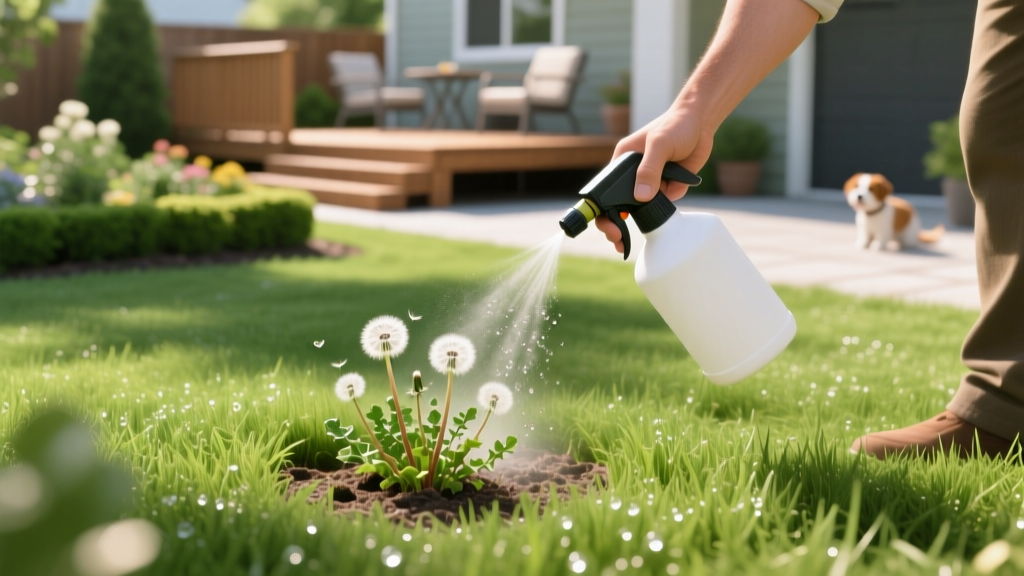
Spot-Treating Weeds: How to Choose a Weed Killer Safe With Pets
The Hidden Toxicity of Traditional Spot Sprays
When a dandelion or patch of clover breaks through your turf, the instinct is to grab a ready-to-use spot spray. However, conventional broadleaf herbicides rely on synthetic auxins like 2,4-D, dicamba, and MCPP. These chemicals do not merely sit on the leaf surface; they are systemic and leave toxic residues on the grass blades. Dogs and cats absorb these chemicals directly through their paw pads or ingest them during routine grooming. According to the ASPCA Animal Poison Control Center, exposure to synthetic lawn herbicides is a leading cause of seasonal gastrointestinal and neurological distress in household pets, with long-term studies linking 2,4-D exposure to elevated risks of canine lymphoma.
Finding a genuinely effective weed killer safe with pets requires moving away from synthetic auxins and glyphosate, and instead leveraging targeted biochemical mechanisms that disrupt weed cells without harming mammalian biology. In 2026, the gold standard for this is chelated iron (FeHEDTA), alongside specific fatty-acid burn-downs.
⚠️ CRITICAL CAT OWNER WARNING: The 'Natural' Clove Oil Trap
Many commercial 'organic' weed killers use eugenol (clove oil) as the active burn-down ingredient. While safe for dogs once dry, eugenol is highly toxic to cats. Felines lack the liver enzyme (glucuronyl transferase) required to metabolize eugenol, leading to rapid liver failure and fatal toxicity even from trace paw-contact exposure. Always check the active ingredient list for clove oil if you share your yard with cats.
Top Commercial Weed Killers Safe With Pets
Not all pet-safe herbicides perform equally. Iron HEDTA (FeHEDTA) is a selective herbicide that causes lethal iron toxicity in broadleaf weeds but is harmless to monocots (your lawn grass) and mammals. Fatty acids (pelargonic acid) are non-selective contact burn-downs. Here is how the top formulations compare for spot-treatment efficacy and pet re-entry safety.
| Product / Active Ingredient | Target Weeds | Avg. Price (2026) | Pet Re-Entry Time |
|---|---|---|---|
| Fiesta Turf Weeder (FeHEDTA 4.43%) |
Dandelion, Plantain, Thistle | $45 / Gallon | When dry (2-4 hrs) |
| Natria Lawn Weed Control (FeHEDTA 4.43%) |
Clover, Dandelion, Ground Ivy | $22 / 32oz RTU | When dry (2-4 hrs) |
| BurnOut Weed Killer (Citric Acid 25%) |
Non-selective (Kills grass too) | $35 / Gallon | When dry (1-2 hrs) |
| Avenger Organics (d-Limonene / Citrus Oil) |
Non-selective contact burn | $50 / Gallon | When dry (1-2 hrs) |
Weed-Specific Spot-Treatment Protocols
Identifying the weed species dictates your chemical choice. Applying a non-selective burn-down to a lawn will kill the weed, but it will also leave a dead brown patch of turf that invites future crabgrass infestations. According to University of Minnesota Extension turf specialists, matching the active ingredient to the weed's biology is critical for lawn preservation.
Broadleaf Weeds (Dandelions, Plantain, Clover, Ground Ivy)
The Solution: Iron HEDTA (FeHEDTA).
The Mechanism: Broadleaf weeds absorb excess iron, which triggers a lethal oxidative stress response (Fenton reaction) that destroys their cell membranes within hours. Grasses naturally regulate iron uptake and remain completely unaffected.
Application Specifics:
- Mixing: If using a concentrate, mix 2.5 fl oz of FeHEDTA per gallon of water.
- Targeting: Spray until the weed leaves are wet, but avoid heavy runoff into the soil.
- Temperature Restriction: Do NOT apply FeHEDTA when temperatures exceed 85°F. High heat causes the iron to phytotoxically burn the surrounding grass blades.
- The Clover Edge Case: White clover has a waxy cuticle and a complex root system. FeHEDTA will burn the top growth in 24 hours, but you must apply a second treatment exactly 21 days later to kill the regenerating roots.
Grassy Weeds (Crabgrass, Foxtail, Goosegrass)
The Problem: FeHEDTA does not work on grassy weeds because they share the same monocot biology as your lawn.
The Solution: There is no selective, pet-safe post-emergent liquid for crabgrass in 2026. You must rely on manual extraction or pre-emergent barriers.
Action Plan:
- Manual Spot-Pulling: Use a stand-up weeder tool (like the Fiskars Uproot Weeder) to extract the crabgrass clump, ensuring you get the shallow root nodes.
- Spot-Seed: Immediately fill the bare dirt void with a fast-germinating perennial ryegrass seed to outcompete future weed seeds.
- Pre-Emergent Defense: Apply Corn Gluten Meal (CGM) at a rate of 20 lbs per 1,000 sq ft in early spring. CGM is 100% pet-safe (it is literally a byproduct of corn milling) and acts as a natural pre-emergent that inhibits crabgrass seed germination while providing a nitrogen boost to your turf.
DIY Pantry Spot-Treatments: Efficacy vs. Risk
Many homeowners turn to household items for pet-safe weed control. However, the EPA's guidelines on organic pest control note that 'natural' does not automatically mean 'safe for mammals in high concentrations.' Here is the reality of DIY spot treatments:
Horticultural Vinegar (20-30% Acetic Acid)
Pros: Destroys weed cell membranes on contact. Highly effective on young annuals.
Cons: Non-selective (kills grass). Severe Pet Hazard: 20%+ acetic acid is a corrosive hazard that can cause blindness or severe paw burns if pets walk on it before it fully neutralizes. Not recommended for yards with active dogs.
Boiling Water
Pros: 100% pet-safe, zero chemical residue, free.
Cons: Only viable for driveway cracks or sidewalk pavers. Pouring boiling water on lawn soil will cook the grass roots and destroy beneficial soil microbes, leaving a dead patch.
The 'Paw-Safe' Application Timeline
Even with low-toxicity products like FeHEDTA, liquid surfactants in the mixture can cause mild gastrointestinal upset if ingested while wet. Follow this strict timeline to ensure zero pet exposure:
Step 1: The Morning Mow (Day 1, 8:00 AM)
Mow the lawn to 2.5 inches. This removes excess grass blade surface area, ensuring the herbicide targets the broadleaf weed rather than being blocked by the turf canopy.
Step 2: Targeted Application (Day 1, 10:00 AM)
Apply FeHEDTA when wind speeds are below 5 mph to prevent drift. Keep pets indoors during mixing and spraying.
Step 3: The Drying Window (Day 1, 10:30 AM - 2:30 PM)
FeHEDTA requires roughly 4 hours to fully dry and bind to the plant tissue. Humidity above 70% will extend this window. Check the grass by touching it with a paper towel; if no moisture transfers, it is dry.
Step 4: Re-Entry and Irrigation (Day 2)
Once dry, pets can safely roam. Wait 24 hours after application before running sprinklers to allow the iron to fully translocate into the weed's root system.
Frequently Asked Questions
Is Roundup (Glyphosate) safe for pets once it dries?
No. While Monsanto claims glyphosate is safe for pets after drying, the danger lies in the inert ingredients and surfactants (like POEA) used in Roundup formulations. These surfactants are known cellular disruptors and can cause severe contact dermatitis on dog paw pads. Furthermore, glyphosate is non-selective; it will kill your lawn grass alongside the weed, making it useless for lawn spot-treatment.
What happens if my dog eats a weed that was just sprayed with FeHEDTA?
Iron HEDTA has a very low mammalian toxicity profile (Toxicity Category III/IV). If your dog ingests a treated leaf after it has dried, the most likely outcome is mild, self-resolving gastrointestinal upset (loose stool). However, if a dog ingests the liquid concentrate directly from the bottle, the high iron load can cause iron poisoning. Always store concentrates in locked, elevated cabinets.
Can I use pet-safe weed killers near my backyard koi pond?
Exercise extreme caution. While FeHEDTA is safe for mammals, chelated iron and citrus oil burn-downs are highly toxic to aquatic life, fish, and amphibians. If your spot-treatment area is within 15 feet of a water feature, rely exclusively on manual extraction or boiling water (for hardscapes) to prevent toxic runoff.

