
Pest Control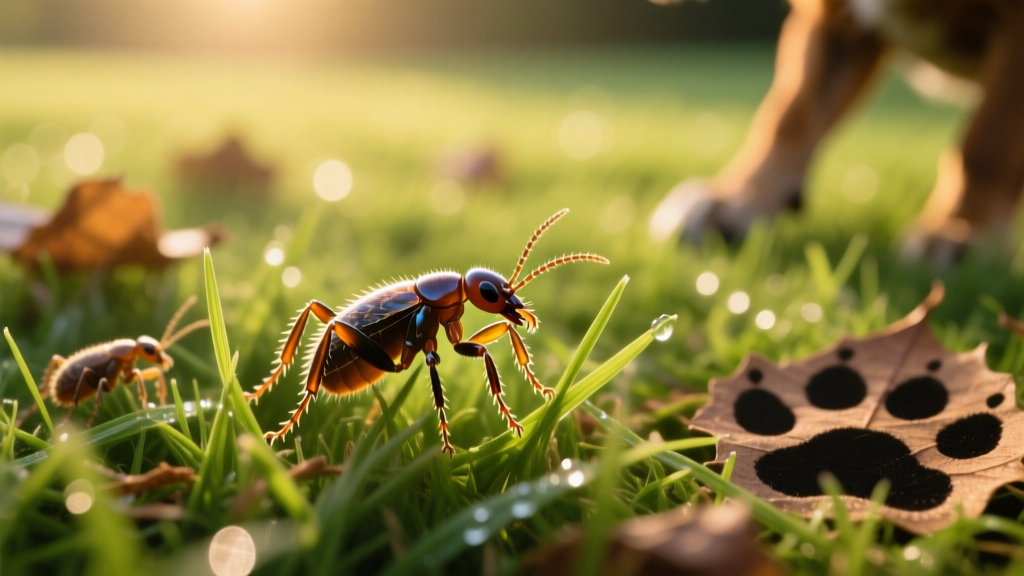
What Are Fleas Attracted To? The Science Behind Yard Infestations
Flea infestations rarely begin inside the home; they start in the microclimates of your yard. Understanding what fleas are attracted to is the first step in breaking their life cycle. Fleas are not random jumpers; they are highly evolved ectoparasites that rely on specific sensory cues and environmental conditions to locate hosts and survive off-host. By mapping their biological triggers and habitat preferences, homeowners can transition from reactive chemical spraying to proactive environmental disruption.
The Sensory Biology of Fleas: How They Hunt
The most common species invading North American yards is the cat flea (Ctenocephalides felis), which accounts for over 90% of flea complaints despite its name. Adult fleas spend the majority of their pre-emergence life in a protective pupal cocoon. They will remain in this dormant state for weeks or even months until specific sensory triggers signal that a viable host is nearby.
The Four Primary Host-Seeking Triggers
- Carbon Dioxide (CO2): Fleas detect the CO2 exhaled by mammals. A resting dog or cat exhaling in a shaded yard creates a localized CO2 plume that draws fleas from the soil surface.
- Heat: Fleas are attracted to the specific infrared heat signatures of warm-blooded animals. They respond most aggressively to temperatures between 98°F and 103°F (36°C - 39°C), which aligns perfectly with the body temperature of domestic pets and common urban wildlife.
- Vibrations and Movement: The physical footfalls of a 50-pound dog walking across a lawn create low-frequency vibrations through the soil and thatch layer, stimulating the pupae to emerge.
- Light and Shadow Changes: Fleas are not attracted to raw light like moths. Instead, they respond to sudden changes in light intensity—specifically, a shadow passing over them, which mimics a host walking between the sun and the ground.
Biological Insight: According to the University of California Integrated Pest Management (UC IPM) program, newly emerged adult fleas must find a blood meal within a few days to survive and reproduce. If they emerge due to a false trigger (like a lawnmower vibration) and no host is present, they will quickly deplete their energy reserves and die.
What Are Fleas Attracted To in Your Yard? (Environmental Triggers)
While sensory cues attract fleas to hosts, environmental conditions attract them to habitats. Flea larvae and pupae are highly susceptible to desiccation (drying out). Therefore, they are strictly attracted to yard microclimates that maintain high humidity and offer physical protection.
The Ideal Flea Microclimate Matrix
| Environmental Factor | Highly Attractive (Flea Havens) | Hostile (Flea Deterrents) |
|---|---|---|
| Relative Humidity | Above 50% (shaded, damp soil) | Below 40% (direct sun, dry dust) |
| Soil & Thatch Type | Sandy loam, thick thatch, leaf litter | Compacted clay, bare dirt, gravel |
| Sunlight Exposure | Heavy tree canopy, north-facing fences | Full, unobstructed southern sun |
| Organic Debris | Piles of leaves, unmanaged compost | Raked, cleared, and mulched beds |
Fleas are heavily attracted to the perimeter of your yard where structures meet vegetation. The junction where a wooden fence line meets overgrown shrubbery creates a wind-blocked, shaded corridor that traps moisture—making it a primary breeding ground.
The Host Factor: Why Fleas Target Specific Animals
Not all mammals are equally attractive to fleas. The Centers for Disease Control and Prevention (CDC) notes that while fleas will bite humans, we are considered 'dead-end' hosts. Human body temperature is slightly lower than that of many pets, and our lack of dense fur makes it difficult for fleas to navigate and hide from grooming behaviors.
In the yard, fleas are most attracted to the routes traveled by specific wildlife vectors. Opossums, raccoons, and feral cats are notorious flea carriers. An opossum can carry thousands of fleas into your yard, dropping eggs continuously as it forages under your deck or in your crawlspace. If your yard attracts these specific animals through accessible trash cans or pet food left outdoors, you are inadvertently creating a flea super-highway.
Actionable Yard Defense: Disrupting the Attraction Cycle
Knowing what fleas are attracted to allows you to deploy targeted treatments rather than blanket-spraying your entire property. Focus your efforts on the shaded, humid transition zones identified in the matrix above.
Step 1: Biological Warfare with Beneficial Nematodes
For an organic, highly effective approach, apply beneficial nematodes (Steinernema carpocapsae). These microscopic worms actively seek out and destroy flea larvae and pupae in the soil.
- Application Rate: 1 million nematodes per 200 square feet of shaded yard space.
- Cost: Approximately $35 to $45 for a 10-million count bag (brands like Arbico Organics or BioLogic).
- Execution: Apply at dusk or on a cloudy day. UV light kills nematodes instantly. The soil temperature must be between 55°F and 85°F. Water the area lightly before and immediately after application to help them wash into the thatch layer.
Step 2: Targeted Chemical Barrier (If Necessary)
If the infestation is severe, use a dual-action chemical spray containing an adulticide and an Insect Growth Regulator (IGR). Products like BioAdvanced Complete Insect Killer for Soil & Turf (containing Imidacloprid and Cyfluthrin) cost around $25 for a 32oz hose-end sprayer. The IGR component is critical: it mimics juvenile hormones, preventing larvae from molting into biting adults, effectively breaking the attraction and reproduction cycle.
Warning: Never apply permethrin-based yard sprays if you have outdoor cats. Permethrin is highly toxic to felines and can cause fatal neurological seizures even from secondary contact with treated grass.
Step 3: Environmental Modification
- Mow to the correct height: Keep your lawn at 2.5 to 3 inches. This allows sunlight to penetrate the thatch layer, dropping the relative humidity at the soil surface below the 50% threshold fleas need to survive.
- Clear the perimeter: Remove all leaf litter and organic debris within 3 feet of your home's foundation and fence lines.
- Block wildlife access: Install heavy-duty hardware cloth (1/2 inch mesh) under decks and sheds to exclude opossums and feral cats from nesting in these prime flea habitats.
Frequently Asked Questions
Are fleas attracted to light traps?
Fleas are not attracted to static light. Commercial light traps work by combining a heat source (simulating body temperature) with a specific green-yellow light wavelength and a pulsing mechanism that mimics the shadow of a moving host. Without the heat and movement components, a simple light bulb will not attract fleas.
Do fleas prefer certain blood types?
There is no scientific evidence that fleas are attracted to specific human or animal blood types (like Type O or Type A). Their attraction is driven entirely by the volume of CO2 exhaled, the heat signature of the host, and the physical accessibility of the host's fur or skin.
Why are fleas attracted to my ankles when I walk in the grass?
Fleas reside in the thatch and topsoil layer. When you walk through an infested yard, the vibrations of your footsteps trigger them to jump. They land on the closest available surface—your ankles and lower legs—because they generally only jump vertically up to 7 inches and horizontally up to 13 inches.

