
Pest Control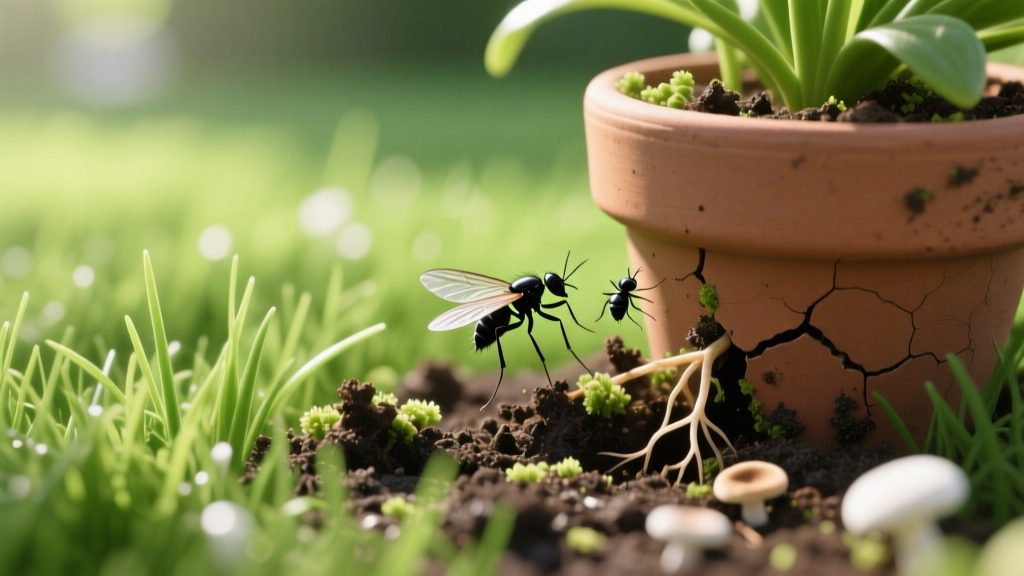
What Causes Gnats in Lawns and Potted Plants: Expert Guide
Homeowners asking what causes gnats in their lawns, garden beds, and potted plants are almost always dealing with fungus gnats (Bradysia species). Unlike fruit flies that are attracted to fermenting sugars, or drain flies that breed in plumbing biofilm, fungus gnats are strictly tied to soil ecology. The primary cause of a gnat infestation is a combination of excessive topsoil moisture and abundant decaying organic matter, which cultivates the specific soil fungi and algae that gnat larvae require to survive.
While adult gnats are a nuisance, they do not feed on plants or humans. The actual damage is caused by the subterranean larval stage, which feeds on fine root hairs and root fungi, stunting plant growth and creating entry points for soil-borne pathogens like Pythium and Fusarium. Understanding the exact environmental triggers is the first step toward eradication.
The Biological Root: Fungus Gnats vs. Nuisance Flies
Misidentifying the fly species leads to failed treatments. If you deploy apple cider vinegar traps for a soil-dwelling fungus gnat problem, you will waste time while the larvae continue destroying root systems. According to the University of Minnesota Extension, proper identification dictates whether you treat the air, the drains, or the soil.
Quick Identification Matrix:
- Fungus Gnats: 1/8-inch long, dark gray/black, long legs and antennae, weak fliers that run across soil surfaces. Cause: Damp soil and fungi.
- Fruit Flies: 1/8-inch long, tan/brown with distinct red eyes, attracted to kitchens and rotting fruit. Cause: Fermenting organic waste.
- Drain Flies: 1/16-inch long, fuzzy moth-like wings, found resting on bathroom walls. Cause: Sewer line biofilm.
The 4 Primary Environmental Triggers in Yards and Gardens
Gnats do not spontaneously generate; they exploit specific microclimates. If you have an outbreak, one or more of the following conditions are present in your landscape or greenhouse.
1. Chronic Topsoil Saturation
Fungus gnats require the top 1 to 2 inches of soil to remain consistently moist (above 40% volumetric water content) for egg survival. Over-irrigation, particularly frequent shallow watering, creates the perfect nursery. Lawns watered for 10 minutes daily rather than deeply twice a week are highly susceptible.
2. High-Peat and Compost-Rich Potting Mixes
Standard bagged potting soils rely heavily on sphagnum peat moss and composted bark. While excellent for water retention, these materials decompose and foster the exact saprophytic fungi that gnat larvae eat. If a potting mix stays wet for more than 5 days after watering, it becomes a gnat breeding ground.
3. Excessive Thatch Accumulation in Lawns
A thatch layer exceeding 0.5 inches acts like a sponge, trapping moisture against the soil surface and blocking air circulation. This anaerobic, damp environment accelerates fungal growth and provides an ideal, protected habitat for gnat larvae to feed on decaying grass roots.
4. Poor Drainage and Compacted Clay
Heavy clay soils or garden beds lacking proper grading prevent water percolation. Puddling after rainstorms extends the lifecycle of soil fungi, sustaining gnat populations long after the surface appears dry to the naked eye.
Diagnostic Protocol: Confirming the Breeding Ground
Before purchasing treatments, confirm that the soil is the active breeding site. Adult gnats can fly up to 100 yards, meaning the source might be a neighbor's compost pile. Use these two field-tested diagnostic methods:
- The Potato Slice Test: Cut a raw potato into 1-inch cubes. Place the cut side down directly on the suspect soil. Leave it for 4 to 8 hours. Lift the slice and inspect the underside and the soil immediately beneath it. If you see tiny, translucent, black-headed maggots (larvae), the soil is actively breeding gnats.
- Yellow Sticky Card Metrics: Insert a 3x5 inch yellow sticky card (such as Kensizer or Aspectek brands) flush with the soil surface. Check it after 48 hours. Capturing more than 15-20 adult gnats per card indicates a severe, established infestation requiring immediate biological intervention.
Targeted Eradication Matrix: Matching Treatment to Lifecycle
Eradicating gnats requires breaking their 21-to-28-day lifecycle. Killing adults is pointless if the larvae remain in the soil. Penn State Extension recommends targeting the larval stage using biological controls, which are safer for soil microbiomes than synthetic chemicals.
| Lifecycle Stage | Treatment Active Ingredient | Specific Product & Cost | Application Protocol |
|---|---|---|---|
| Larvae (Soil) | Bti (Bacillus thuringiensis israelensis) | Summit Mosquito Bits ($18 / 30 oz) | Steep 4 tbsp in 1 gallon of water for 24 hours. Water the 'Bti tea' into the soil. Repeat every 14 days. |
| Larvae (Soil) | Beneficial Nematodes (Steinernema feltiae) | Arbico Organics NemaShield ($32 / 5 million) | Mix with cool water and apply via watering can when soil temp is 60°F-70°F. Keep soil moist for 7 days post-application. |
| Larvae (Soil) | Spinosad (Soil Drench) | Monterey Garden Insect Spray ($22 / 16 oz) | Mix 2 tbsp per gallon of water. Drench soil thoroughly. Highly effective but toxic to bees if sprayed on foliage. |
| Adults (Air) | Physical Trapping / Pyrethrin | Aspectek Sticky Traps ($12 / 20 pack) | Place horizontally 1 inch above soil. Use only to monitor populations and reduce mating, not as a standalone cure. |
Warning on Hydrogen Peroxide: Many online guides recommend flushing soil with a 1:4 ratio of 3% hydrogen peroxide to water. While this provides an immediate contact kill of larvae, it indiscriminately sterilizes the soil, destroying beneficial mycorrhizal fungi and bacteria. Reserve this method only for severe, isolated potted plant emergencies where biological controls have failed.
Long-Term Soil Management and Prevention
Once the active lifecycle is broken, you must alter the soil environment to prevent recolonization. Gnats cannot breed in dry, well-aerated substrates.
- Implement Bottom-Watering: For potted plants, place pots in a tray of water for 30 minutes, allowing the roots to wick moisture upward. This leaves the top 2 inches of soil bone-dry, instantly killing any newly laid eggs.
- Top-Dress with Abrasives: Apply a 1/4-inch layer of horticultural sand or crushed diatomaceous earth (DE) to the soil surface. Sand creates a physical barrier that deters egg-laying, while DE lacerates the exoskeletons of emerging adults. Note: DE loses its efficacy when wet, so it must be reapplied after watering.
- Aerate and Dethatch Lawns: Use a core aerator in the fall to relieve soil compaction. If your thatch layer exceeds 0.5 inches, rent a power dethatcher to remove the sponge-like barrier trapping moisture against the soil.
- Modify Potting Mixes: When repotting, amend standard peat-based soils with 30% perlite or pumice by volume. This drastically increases drainage and reduces the water-holding capacity of the topsoil layer.
'The most common mistake homeowners make is treating the adult fly and ignoring the soil. Fungus gnats are a symptom of a soil moisture imbalance. If you fix the watering habits and introduce Bti to the soil matrix, the flies will disappear on their own within three weeks.'
Frequently Asked Questions
Do gnats cause permanent damage to my lawn?
In established lawns, fungus gnat larvae rarely cause permanent turf death because mature grass root systems are too robust. However, in seedling stages or newly sodded lawns, larval feeding on fine root hairs can cause severe thinning and yellowing, leading to patch failure.
Why do I only see gnats in the morning?
Adult fungus gnats are most active during periods of high humidity and lower light intensity. You will notice them swarming when you turn on a garden light at dawn or dusk, or immediately after a morning irrigation cycle disturbs their resting sites in the grass canopy.

