
Pest Control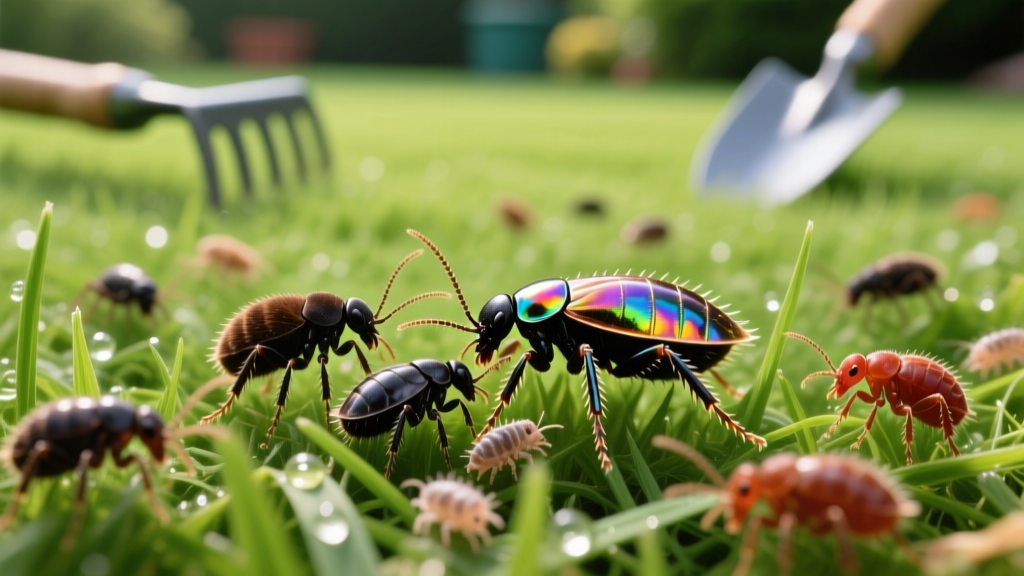
What Color Are Fleas? Identifying Lawn and Pet Flea Species
The Direct Answer: What Color Are Fleas?
Adult fleas are typically dark reddish-brown to mahogany in color. However, relying solely on color to identify a flea can be misleading due to how light interacts with their exoskeleton and their feeding status. When unfed, a flea’s flattened, chitinous body reflects light in a way that makes it appear a translucent, rusty brown. Once a flea consumes a blood meal, its abdomen expands and darkens significantly, often shifting to a deep, opaque black or dark mahogany.
Because fleas are exceptionally small—ranging from 1.5 to 3.2 millimeters in length—the human eye often struggles to process their true color when they are moving at high speeds across a lawn or pet bedding. To the naked eye, a jumping flea usually registers as a tiny black speck. Understanding the nuanced color variations across different life stages and species is critical for accurate identification and targeted pest control.
Color Variations Across Common Flea Species
While the cat flea (Ctenocephalides felis) accounts for the vast majority of infestations in North American lawns and homes, other species occasionally invade outdoor spaces. Each species exhibits subtle variations in pigmentation and morphology.
| Common Name | Scientific Name | Typical Coloration | Average Size | Primary Habitat & Host |
|---|---|---|---|---|
| Cat Flea | Ctenocephalides felis | Mahogany to dark reddish-brown | 1.5 - 3.0 mm | Lawns, carpets; cats, dogs, wildlife |
| Dog Flea | Ctenocephalides canis | Dark brown, slightly lighter than cat flea | 2.0 - 3.2 mm | Outdoor kennels, dog runs; canines |
| Human Flea | Pulex irritans | Deep, opaque dark brown | 2.0 - 3.5 mm | Crawl spaces, pig farms; humans, pigs |
| Oriental Rat Flea | Xenopsylla cheopis | Lighter, dusty brown | 1.5 - 2.5 mm | Woodpiles, sheds; rodents |
Why Do Some Fleas Look Black?
Homeowners frequently report seeing "black fleas" in their yards. This is almost never a distinct species. The black appearance is caused by two factors:
- Blood Engorgement: A female flea can consume up to 15 times her body weight in blood. As the blood fills her digestive tract, the translucent reddish-brown exoskeleton is overshadowed by the dark, oxygenated blood inside, making the entire insect appear jet black.
- Exoskeleton Thickness: Male fleas and unfed females have heavily sclerotized (hardened) back plates to protect them from being crushed by scratching hosts. This dense chitin absorbs light, creating a dark, almost black silhouette against bright surfaces.
The "White Flea" Myth: Larvae and Springtails
Adult fleas are never white. If you are seeing small, white, jumping or crawling insects in your lawn, mulch, or bathroom, you are likely looking at one of two things:
- Flea Larvae: Flea larvae are translucent, milky-white, and legless, measuring about 2 to 5 mm. They have a dark brown head capsule and a visible dark tract down their center if they have recently ingested adult flea feces (flea dirt). However, larvae do not jump; they wriggle away from light into deep soil or carpet fibers.
- Springtails (Collembola): These are tiny, white or gray hexapods that thrive in damp lawn thatch and mulch. They possess a furcula (a tail-like appendage) that allows them to snap and jump several inches, mimicking flea behavior. Springtails do not bite humans or pets and are harmless decomposers.
Field Identification: Confirming a Lawn Infestation
Because fleas are photophobic (light-avoiding) and thigmotactic (seeking tight contact), they hide in the microclimates of your yard. To confirm an infestation before deploying chemical treatments, use the White Sock Test.
The White Sock Test Protocol
Pull a pair of white, knee-high cotton socks up over your pant legs. Walk slowly through shaded areas of your lawn, particularly under shrubs, near dog houses, and along fence lines where pets rest. Pause for 10 seconds in each spot. The dark reddish-brown or black fleas will jump onto the bright white cotton, seeking the heat and carbon dioxide you emit. If you count more than 3 to 5 fleas per leg within a minute, you have an active lawn infestation requiring immediate treatment.
Targeted Treatment Protocols for Lawn Fleas
Eliminating fleas requires a multi-modal approach that targets both the adult population and the developing eggs and larvae. According to the University of California Agriculture and Natural Resources IPM, treating the environment is just as critical as treating the host animal.
1. Adulticide Application (Bifenthrin)
To knock down the jumping adult population, apply a liquid concentrate containing Bifenthrin 7.9% (e.g., Talstar P). Mixing Rate: 1 fluid ounce per gallon of water. Coverage: 1 gallon covers approximately 1,000 square feet. Cost: A pint of professional-grade Bifenthrin costs between $40 and $50, yielding 16 gallons of solution. Apply using a pump sprayer, focusing heavily on shaded soil, thatch layers, and the perimeter of the home. Keep pets and children off the lawn until the spray has completely dried (usually 2 to 4 hours).
2. Insect Growth Regulators (IGRs)
Adulticides do not kill flea eggs or pupae. You must mix an IGR like Pyriproxyfen (e.g., NyGuard IGR) into your tank spray. Pyriproxyfen mimics juvenile hormones, preventing larvae from molting into adults and causing eggs to fail during embryogenesis. It remains photostable in outdoor environments for up to 150 days, breaking the reproductive cycle. Mix at a rate of 4 to 8 ml per gallon of water.
3. Biological Control: Beneficial Nematodes
For organic lawn care, deploy Steinernema carpocapsae nematodes. These microscopic worms actively seek out flea larvae and pupae in the soil, entering their bodies and releasing bacteria that kill the pest within 48 hours. Application: Purchase from suppliers like Arbico Organics (approx. $35 for 1 million nematodes, covering 2,000 sq ft). Apply via hose-end sprayer in the early evening when UV exposure is low, and water the lawn lightly beforehand to ensure the soil is moist, allowing the nematodes to swim through the thatch layer.
⚠️ CRITICAL WARNING: Permethrin and Feline Toxicity
Many over-the-counter yard sprays contain Permethrin. While highly effective against fleas and safe for dogs once dry, Permethrin is acutely toxic to cats. If you have outdoor cats or neighborhood cats that traverse your property, avoid Permethrin-based yard treatments entirely. Opt for Bifenthrin or biological nematodes instead, and consult the Environmental Protection Agency (EPA) guidelines for pet-safe pesticide application.
Environmental Controls to Prevent Flea Rebound
Chemical and biological treatments will fail if the lawn environment remains optimized for flea survival. Flea larvae require high humidity (above 50%) and temperatures between 70°F and 85°F to thrive. Modify your lawn to create a hostile environment for them:
- Canopy Management: Prune lower branches of trees and shrubs to allow direct sunlight to penetrate the soil surface. UV radiation rapidly desiccates flea eggs and larvae.
- Mowing Height: Maintain your turf at the optimal height for your grass species (e.g., 2.5 inches for Tall Fescue, 1.5 inches for Bermuda). Overgrown grass traps moisture and blocks sunlight, creating a perfect flea nursery.
- Moisture Control: Fix leaking outdoor spigots and adjust irrigation heads so they do not overspray onto shaded soil areas. Flea larvae cannot survive in dry, sandy soil.
- Repellent Mulches: Replace standard hardwood mulch in pet resting areas with cedar or eucalyptus mulch. The natural aromatic oils (thujone in cedar) act as mild repellents to adult fleas seeking a place to drop off their hosts.
By combining accurate visual identification with targeted chemical and environmental interventions, you can permanently disrupt the flea life cycle in your outdoor spaces. Always pair lawn treatments with veterinarian-approved topical or oral preventatives (such as Fluralaner or Spinosad) for your pets, as recommended by the American Veterinary Medical Association (AVMA), to ensure pests are not continuously reintroduced from the host animal.

