
Pest Control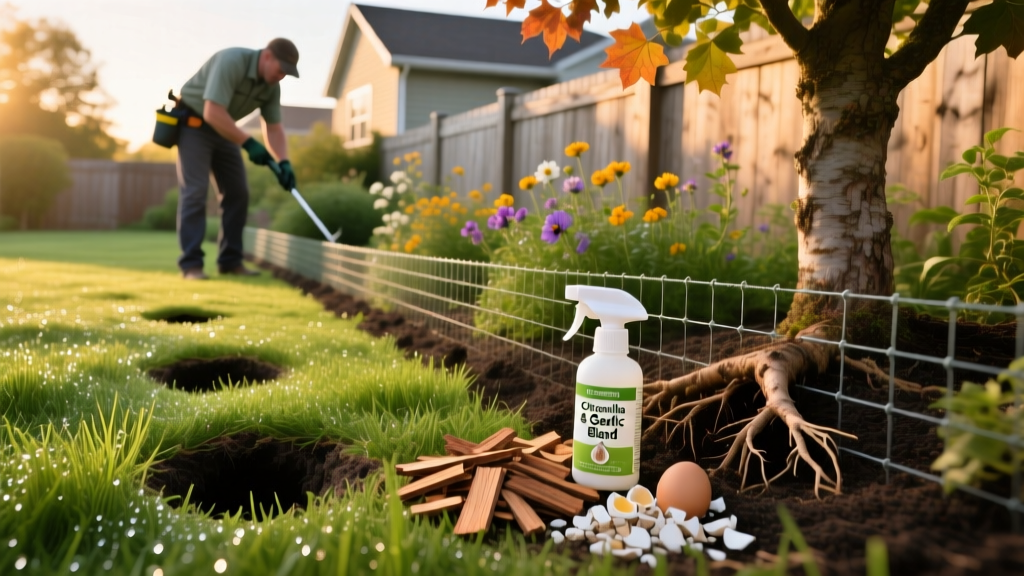
What Deters Groundhogs? Expert Fencing, Repellent & Habitat Fixes
The Groundhog Threat: Identifying Damage Before It Spreads
Groundhogs (Marmota monax), also known as woodchucks, are formidable garden pests capable of consuming up to 40 pounds of vegetation per week. Before implementing a control strategy, confirm that groundhogs are the culprits. Misidentification leads to wasted money on ineffective deterrents.
Key Identification Markers
- Burrow Entrances: Main entrances are 10 to 12 inches wide and typically feature a distinctive, fan-shaped dirt mound (apron) extending up to 2 feet outward. Secondary "plunge" holes lack these mounds and are used for quick escapes.
- Feeding Damage: Unlike deer, which tear plants leaving jagged edges, groundhogs have sharp incisors that clip stems cleanly at a 45-degree angle. They prefer tender, young vegetation like peas, beans, and clover.
- Tracks and Scat: Look for four-toed front prints and five-toed hind prints. Scat is typically deposited in underground latrine chambers, so you will rarely see droppings above ground.
According to the Internet Center for Wildlife Damage Management, a single groundhog can excavate over 700 pounds of soil to create a single burrow system, posing severe structural risks to sheds, decks, and home foundations.
Physical Exclusion: The Only 100% Effective Deterrent
When evaluating what deters groundhogs long-term, physical exclusion remains the undisputed gold standard. Groundhogs are both prolific diggers and capable climbers, meaning a standard garden fence will fail without specific modifications.
The "L-Footer" Trenching Technique
To stop digging, your fence must feature an L-footer. Bury the bottom of the fence 12 inches straight down, then bend the remaining 18 inches of wire outward at a 90-degree angle (forming an "L" pointing away from the garden). When a groundhog digs at the fence line, they hit the horizontal wire barrier and cannot dig underneath. Cover the horizontal wire with 2 inches of soil or mulch to prevent lawnmower damage.
Exact Fencing Specifications
- Material: 16-gauge galvanized welded wire. Do not use 19-gauge or lighter chicken wire; groundhogs can easily chew through or crush lighter gauges.
- Mesh Size: 2x4 inch rectangular mesh is optimal. Smaller mesh (like 1x1) is unnecessary for groundhogs and significantly increases material costs.
- Height: Minimum 4 feet above ground. To prevent climbing, leave the top 12 inches of the fence unattached to posts so it flops outward, making it unstable for the animal to scale.
- Estimated Cost: $2.50 to $4.00 per linear foot for materials, plus $1.00 per linear foot for pressure-treated 4x4 posts set in concrete.
Chemical & Natural Repellents: What Actually Works?
Repellents are a secondary line of defense. They require strict adherence to reapplication schedules and are most effective when rotated to prevent habituation. The Humane Society of the United States notes that repellents work best when applied before feeding damage becomes severe, as groundhogs will endure bad tastes if they are already accustomed to a specific food source.
| Active Ingredient | Brand Example | Cost (Approx.) | Reapplication | Efficacy & Notes |
|---|---|---|---|---|
| Capsaicin (Hot Pepper) | Miller Hot Sauce Animal Repellent | $25 / quart | 10-14 days, or after rain | High. Causes oral irritation. Must be applied directly to foliage. |
| Thiram (Fungicide) | Bonide Rabbit & Groundhog Repellent | $18 / quart | 3-4 weeks | Medium. Bitter taste. Toxic to pets if ingested wet; safe once fully dried. |
| Predator Urine | Coyote Urine Granules | $22 / 8 oz | 7-10 days | Low. Groundhogs habituate quickly. Only works as a perimeter deterrent. |
| Castor Oil | Nature's Mole & Vole Control | $35 / gallon | 3-4 weeks | Medium. Soil drench that ruins the taste of roots and makes soil uncomfortable. |
Habitat Modification: Making Your Yard Uninviting
Groundhogs are prey animals that rely on proximity to cover. Modifying the micro-habitat around your garden exploits their natural fear of predators.
Vegetation and Clearance Management
- Mowing Perimeters: Maintain a 15-foot buffer zone around your garden where grass is kept strictly at 2.5 to 3 inches. Groundhogs avoid crossing open, short grass where they are exposed to hawks and coyotes.
- Remove Debris: Clear woodpiles, brush heaps, and dense shrubbery within 20 feet of the garden perimeter. These serve as staging areas before they enter the garden.
- Deterrent Cropping: Plant a border of alliums (garlic, onions, ornamental alliums) or crown vetch. Groundhogs find the sulfur compounds in alliums highly unpalatable.
Warning on Filling Abandoned Burrows: Never fill an active burrow with dirt, as the groundhog will simply dig it back out. If a burrow is confirmed abandoned (no fresh dirt, no tracks for 5 days), fill the main shaft with 3/4-inch crushed gravel. Gravel drains well, preventing water pooling, and the sharp edges deter future occupants from re-excavating the tunnel.
Live Trapping and Relocation: Legal and Ethical Realities
If exclusion and repellents fail, live trapping is the next step. However, trapping groundhogs requires strict adherence to state wildlife laws and ethical practices.
Equipment and Baiting Specifics
Use a single-door live trap measuring at least 32x12x12 inches, such as the Havahart 1084. Smaller traps will result in tail injuries or failed captures. Place the trap directly over the main burrow entrance or along a visible runway.
Optimal Baits: Avoid lettuce or carrots, which are low-value to groundhogs. Use cantaloupe chunks, sweet corn, or apple slices. Spray the bait lightly with vanilla extract to increase olfactory attraction.
Legal Constraints: In many states, including New York and Massachusetts, it is illegal to relocate trapped groundhogs without a special nuisance wildlife permit due to the risk of spreading rabies and distemper. You must either release the animal on the same property (which defeats the purpose) or humanely euthanize it. Always check your local Department of Natural Resources (DNR) regulations before setting a trap.
Decision Framework: Choosing Your Deterrent Strategy
Use this diagnostic matrix to determine the most cost-effective approach for your specific property layout:
- If you have a small, high-value vegetable garden (under 400 sq ft): Invest entirely in a 16-gauge L-footer fence. The material cost will be under $300, and it provides a permanent, zero-maintenance solution.
- If you have a large agricultural plot or orchard: Fencing is cost-prohibitive. Rely on a combination of perimeter vegetation clearing, castor oil soil drenches, and targeted live trapping of the 2 or 3 primary burrow systems causing the most damage.
- If the damage is limited to ornamental flower beds: Apply a capsaicin-based liquid repellent every 14 days. Combine this with planting allium borders to create a natural olfactory barrier.
- If the burrow is under a shed or concrete slab: Do not trap or poison. Use one-way exclusion doors over the main entrance for 5 days to allow the animals to leave, then permanently seal the opening with 1/2-inch hardware cloth backed by concrete.

