
Pest Control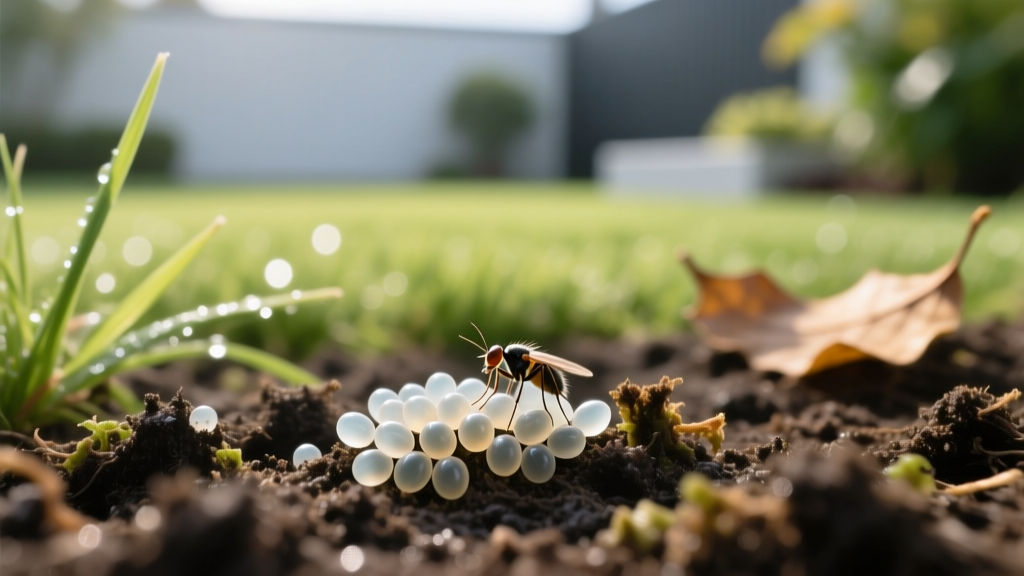
What Do Gnat Eggs Look Like? Soil Identification & Eradication Guide
The Naked Eye Problem: Identifying Fungus Gnat Eggs
When homeowners ask, "what do gnat eggs look like?", they are almost always dealing with the fungus gnat (Bradysia species), the most pervasive soil-dwelling pest in indoor potted plants and greenhouse environments. The direct answer is both simple and frustrating: individual fungus gnat eggs are virtually invisible to the naked eye.
Measuring only 0.1 to 0.15 millimeters in length, these eggs are microscopic, oval-shaped, and highly translucent. When first deposited in the top 1 to 2 inches of moist, organic-rich soil, they appear as a glossy, pale white. As the embryo develops over a 4-to-6-day incubation period, the eggs darken to a muddy brown or black just before hatching. Because they are laid in tight clusters of 10 to 30 eggs within soil crevices or near the base of plant stems, they blend seamlessly into the dark, damp organic matter.
Expert Insight: If you think you can see gnat eggs scattered across your soil surface with your bare eyes, you are likely looking at something else. Homeowners frequently misidentify slow-release fertilizer prills, perlite fragments, or springtail eggs as gnat eggs. To truly confirm the presence of eggs, you must use a 10x to 30x jeweler's loupe or a digital USB microscope to examine the soil surface and the base of the plant crown.
Soil Anomaly Identification Matrix
Before initiating a costly eradication protocol, verify what you are actually looking at. Use this comparison matrix to differentiate fungus gnat eggs from common soil additives and other pests.
| Anomaly | Size & Shape | Color & Texture | Behavior / Location |
|---|---|---|---|
| Fungus Gnat Eggs | 0.1 - 0.15 mm, oval | Translucent white turning dark brown; glossy | Clustered in damp soil crevices; invisible without magnification |
| Osmocote Fertilizer Prills | 2 - 3 mm, perfectly round | Yellowish-brown; hard, smooth resin shell | Scattered on surface or mixed in; turns translucent/empty as it releases nutrients |
| Springtail Eggs | 0.2 - 0.5 mm, spherical | Bright white to pale yellow; matte | Usually found under debris or mulch; springtails are beneficial detritivores |
| Perlite Fragments | 1 - 5 mm, irregular | Stark white; chalky, lightweight, porous | Mixed throughout soil profile; floats to the top during heavy watering |
Because the eggs are so difficult to spot, integrated pest management (IPM) professionals rely on identifying the larval stage to confirm an infestation. According to the University of California Statewide IPM Program, fungus gnat larvae are legless, thread-like maggots about 1/4 inch (5-6 mm) long with translucent white bodies and distinct, shiny black head capsules. They leave behind microscopic, silken webbing trails on the soil surface and plant stems, which is often the first visible clue of their presence.
The 28-Day Life Cycle: Why Timing Matters
Understanding the life cycle is critical because treatments targeting adults will not kill the eggs or larvae hiding in the soil. At a standard indoor temperature of 72°F (22°C), the fungus gnat life cycle progresses as follows:
- Egg Stage: 4 to 6 days (Laid in moist soil; requires high humidity to survive).
- Larval Stage: 10 to 14 days (Feeds on fungi, decaying organic matter, and fine plant root hairs, causing stunted growth and yellowing leaves).
- Pupal Stage: 3 to 4 days (Occurs in the top 1/2 inch of soil; non-feeding and highly resistant to chemical drenches).
- Adult Stage: 7 to 10 days (Emerges to mate and lay up to 200 eggs; adults do not feed and cause no direct plant damage).
Because the egg and pupal stages are largely immune to contact sprays, your eradication strategy must target the vulnerable larval stage and trap the egg-laying adults simultaneously.
The Professional Eradication Protocol
If you have confirmed an active infestation, abandon generic "home remedies" like cinnamon or chamomile tea, which lack empirical efficacy. Instead, deploy this targeted, multi-pronged biological and chemical protocol.
1. The Larval Kill: Bti "Tea" Drench
Bacillus thuringiensis israelensis (Bti) is a naturally occurring bacterium that produces proteins toxic specifically to gnat and mosquito larvae. While products like Mosquito Bits suggest sprinkling the granules on the soil surface, this method is slow and prone to surface mold growth.
The "Bti Tea" Recipe:
1. Add 4 tablespoons of Mosquito Bits (or equivalent Bti granule) to 1 gallon of room-temperature water.
2. Let the mixture steep for 24 to 48 hours, stirring occasionally to agitate the spores.
3. Strain the liquid through a fine mesh or coffee filter to remove the grain hulls.
4. Use the strained, spore-rich water to thoroughly drench your plants until it runs out of the drainage holes.
Note: The Environmental Protection Agency (EPA) classifies Bti as highly safe for humans, pets, and beneficial soil microbes, making it the gold standard for larval control.
1. Add 4 tablespoons of Mosquito Bits (or equivalent Bti granule) to 1 gallon of room-temperature water.
2. Let the mixture steep for 24 to 48 hours, stirring occasionally to agitate the spores.
3. Strain the liquid through a fine mesh or coffee filter to remove the grain hulls.
4. Use the strained, spore-rich water to thoroughly drench your plants until it runs out of the drainage holes.
Note: The Environmental Protection Agency (EPA) classifies Bti as highly safe for humans, pets, and beneficial soil microbes, making it the gold standard for larval control.
2. Biological Warfare: Beneficial Nematodes
For severe, entrenched infestations in large containers or raised garden beds, apply Steinernema feltiae nematodes (available commercially under brands like NemaShield or ScanMask). These microscopic roundworms actively hunt gnat larvae in the soil, entering their bodies and releasing lethal bacteria within 48 hours.
Application Specifics: Apply at a rate of 5 million nematodes per 100 square feet of soil surface. Crucially, nematodes are highly sensitive to UV light and desiccation. Apply the drench at dusk or on a heavily overcast day, and ensure the soil temperature is strictly between 55°F and 85°F. The soil must remain consistently moist for 7 days post-application to allow the nematodes to establish.
3. Adult Population Collapse: Horizontal Sticky Trapping
To stop the current generation of adults from laying new eggs, use yellow sticky cards. Fungus gnats are highly attracted to the yellow wavelength. However, placement is everything. Instead of hanging them vertically on plant stakes, cut 3x5 inch yellow sticky cards and place them horizontally, resting just 1 inch above the soil surface. Because adult gnats are weak fliers that prefer to scurry across the soil, horizontal traps capture up to 70% more adults than vertical stakes.
Long-Term Prevention and Soil Moisture Management
Fungus gnats cannot reproduce in dry soil. The eggs require a moisture content above 25% to hatch, and the larvae will quickly desiccate in arid conditions. Transitioning your watering habits is the ultimate preventative measure.
- Implement Bottom Watering: Place pots in a tray of water for 20 minutes, allowing the roots to wick moisture upward. This keeps the top 2 inches of soil bone-dry, creating an inhospitable zone for egg-laying.
- Use a Moisture Meter: Do not water based on a schedule. Use a digital soil moisture probe (such as the Ecowitt WH51 or a standard analog meter) and only water when the probe reads "dry" at a 3-inch depth.
- Apply a Calcined Clay Barrier: Top-dress the soil with a 0.5-inch layer of calcined clay (sold as "Gnat Nix" or Bonsai soil). This material creates a sharp, dry, and abrasive physical barrier that deters adults from penetrating the soil to lay eggs and traps emerging pupae.
Warning Regarding Hydrogen Peroxide: Many online forums recommend drenching soil with a 1:4 mixture of 3% hydrogen peroxide and water to kill gnat eggs and larvae. While this causes immediate, violent fizzing that kills larvae on contact, it is a non-selective oxidizer. It will simultaneously eradicate your soil's beneficial mycorrhizal fungi and nitrogen-fixing bacteria, leading to long-term nutrient lockout and plant stress. Use H2O2 only as an isolated spot-treatment for severely rotting root masses, never as a routine gnat preventative.
Frequently Asked Troubleshooting Questions
Can fungus gnat eggs survive in dry, bagged potting soil?
Yes. Penn State Extension notes that if potting soil is stored in a damp, unsealed bag in a greenhouse or shed, adult gnats can enter, lay eggs, and the resulting larvae can enter a state of diapause or simply pupate and wait. Always store bagged soil in sealed, airtight bins, and consider microwaving small batches of suspect soil for 3 minutes to sterilize it before planting.
Do gnat eggs float or sink when I water my plants?
The eggs themselves are coated in a mild adhesive secretion that the female uses to glue them to soil particles and root hairs. They generally will not wash away or float to the surface during standard watering. However, the hatched larvae are highly mobile and will actively swim or wriggle toward the surface if the soil becomes completely saturated and oxygen-deprived.
How long does it take to completely break the gnat life cycle?
Assuming you deploy the Bti tea drench every 7 days and use horizontal yellow sticky traps, you should see a 95% reduction in adult flying populations within 14 to 21 days. You must continue the Bti treatments for a full 4 weeks (covering at least two full reproductive cycles) to ensure no surviving pupae emerge and restart the infestation.

