
Pest Control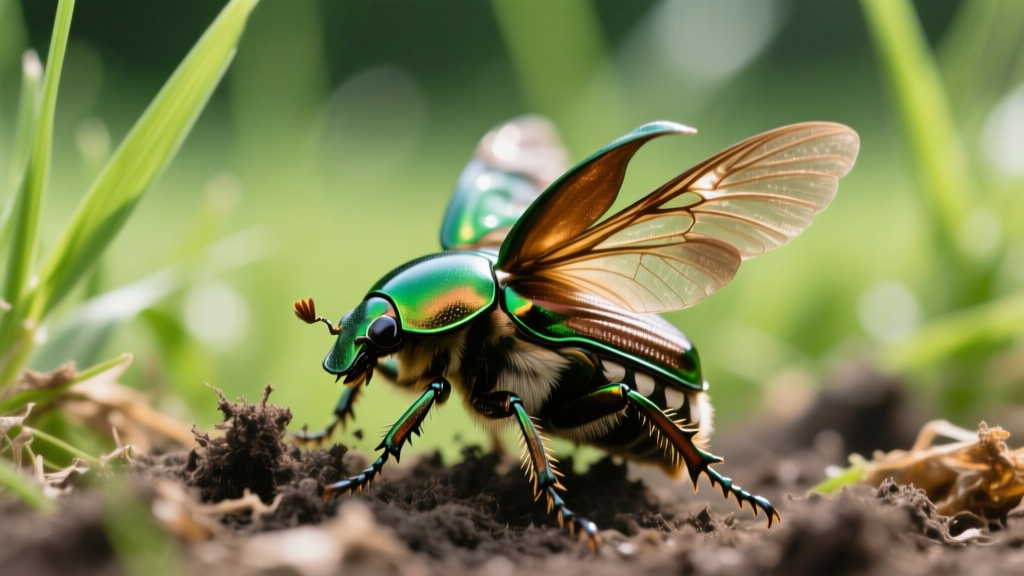
What Do Grubs Turn Into? The Lawn Beetle Lifecycle Explained
The Short Answer: Grubs Become Scarab Beetles
When homeowners ask, 'what do grubs turn into,' the direct answer is that they transform into adult scarab beetles. Grubs are not a distinct species of insect; rather, they are the larval stage of several beetle families that plague residential lawns. The most common culprits in North American turfgrass include Japanese beetles, European chafers, Asiatic garden beetles, masked chafers, and June bugs (May beetles).
Understanding this metamorphosis is critical for effective pest management. The adult beetle dictates where eggs are laid, while the larval grub stage dictates when and how you must apply chemical or biological controls to protect your root system. Treating a lawn without understanding this lifecycle inevitably leads to wasted money and dead turf.
The 4 Stages of the Scarab Beetle Lifecycle
To effectively time your grub control applications, you must understand the four distinct developmental stages of the scarab beetle. The entire cycle typically takes one year, though some species like the May/June beetle require two to three years to complete their development.
Stage 1: The Egg
Adult females lay tiny, spherical eggs in the top 2 to 4 inches of soil, usually in mid-to-late summer. A single female Japanese beetle can lay up to 60 eggs over her lifespan. These eggs require adequate soil moisture to survive; during severe summer droughts, egg mortality rates can exceed 80%.
Stage 2: The Larva (The Grub)
Upon hatching, the grub enters its feeding phase, progressing through three distinct molting stages called instars.
- 1st Instar: Newly hatched, tiny, and highly vulnerable to biological controls like beneficial nematodes.
- 2nd Instar: The primary target window for curative chemical treatments in late summer.
- 3rd Instar: The largest, most destructive stage. These grubs consume the majority of turf roots in early fall before burrowing below the frost line (12 to 18 inches deep) to overwinter.
Stage 3: The Pupa
In late spring, the 3rd instar grub stops feeding, forms an earthen cell in the soil, and pupates. During this 2 to 4 week resting phase, the insect is entirely inactive and impervious to soil-applied insecticides.
Stage 4: The Adult Beetle
The mature beetle emerges from the soil to mate and feed. While the grub destroys your lawn's root system, the adult beetle's behavior determines the secondary threat to your ornamental landscape.
5 Common Lawn Grubs and Their Adult Forms
Not all grubs are created equal. Identifying the specific adult beetle prevalent in your region allows you to predict peak egg-hatch timings and select the appropriate active ingredient for your turf type. According to Penn State Extension, the raster pattern (the arrangement of tiny hairs on the grub's tail end) is the most accurate way to identify the species before the adult emerges.
| Grub Species | Adult Beetle Form | Peak Egg Hatch | Primary Turf Threat | Adult Foliage Threat |
|---|---|---|---|---|
| Popillia japonica | Japanese Beetle | Early August | Severe root pruning in irrigated lawns | High (Roses, Lindens, Grapes) |
| Rhizotrogus majalis | European Chafer | Mid-July | Extreme; can destroy non-irrigated turf | None (Adults do not feed) |
| Maladera castanea | Asiatic Garden Beetle | Late July | Moderate; prefers sandy soils | Moderate (Perennials, Aster) |
| Cyclocephala spp. | Masked Chafer | Mid-August | Moderate; common in the Midwest | None (Adults do not feed) |
| Phyllophaga spp. | June Bug / May Beetle | Variable (2-3 yr cycle) | High; large grubs eat massive root volumes | Low (Nocturnal, minor feeding) |
Why the Adult Stage Matters for Your Lawn Strategy
Knowing what grubs turn into is vital because the adult beetle's feeding habits dictate a two-front war for homeowners. You are not just fighting a subterranean root-feeder; you are fighting an aerial defoliator.
The Foliage Feeders (Japanese & Asiatic Beetles)
If your grubs turn into Japanese beetles, your battle extends far beyond the turf. Adult Japanese beetles emerge in early summer and skeletonize the leaves of over 300 plant species, heavily targeting roses, crape myrtles, and linden trees. Furthermore, these beetles release aggregation pheromones that attract dozens of other adults to your yard, resulting in a massive, localized egg-laying event in your turfgrass. Controlling the adults with traps is widely discouraged by entomologists, as traps actually draw more beetles into your landscape than they catch.
The Non-Feeding Adults (European Chafers & Masked Chafers)
Conversely, if your grubs turn into European chafers, the adult stage poses zero threat to your ornamental plants. These beetles emerge at dusk, mate in swarms over trees or structures, and immediately return to the soil to lay eggs. Because they do not feed on foliage, foliar sprays are entirely useless against them. Your entire pest control budget must be directed at the soil-dwelling larval stage.
Timing Your Grub Control to the Lifecycle
The most common mistake homeowners make is applying grub killer at the wrong time. Because grubs change size and depth throughout the year, the active ingredient you choose must match the grub's current instar stage. Purdue University Turfgrass Science emphasizes that mis-timing applications is the leading cause of perceived product failure.
Preventative Controls (Targeting Eggs & 1st Instars)
Preventatives work slowly and must be applied before or exactly as eggs are hatching. They are absorbed by the roots and kill the grub when it takes its first bite.
- Chlorantraniliprole (e.g., Scotts GrubEx, Acelepryn): The safest option for pollinators and earthworms. Apply between April 1 and May 15. It takes 60 to 90 days to fully translocate through the root zone, providing residual control through the summer hatch.
- Imidacloprid / Clothianidin (e.g., Bayer Advanced Season Long): Apply between June 1 and July 15. These neonicotinoids act faster than Chlorantraniliprole but are highly toxic to foraging bees. Never apply to blooming clover or weeds.
Curative Controls (Targeting 2nd & 3rd Instars)
If you missed the preventative window and spot brown, dying patches in late summer that roll back like loose carpet, you need a fast-acting curative.
- Trichlorfon (e.g., Bayer 24 Hour Grub Killer Plus, Dylox): Apply in August or early September. This contact poison degrades rapidly in the soil (within 7 to 10 days) but kills active 2nd and early 3rd instar grubs within 24 hours. It is ineffective against deeply overwintered 3rd instar grubs in late fall or early spring.
Expert Warning: Never apply curative Trichlorfon in the spring. Homeowners often see large grubs in April as the soil warms and assume they are actively destroying roots. In reality, these are 3rd instar grubs that have finished feeding and are simply migrating to the surface to pupate. They will not eat your roots, and applying chemicals at this stage is both environmentally harmful and financially wasteful.
Biological Alternatives for Long-Term Management
For homeowners seeking organic routes, biological controls target the grub stage specifically, though they require patience and specific soil conditions.
- Milky Spore (Paenibacillus popilliae): A bacterium that specifically targets Japanese beetle grubs. It takes 2 to 3 years to establish in the soil but can provide 10 to 15 years of control. It is entirely ineffective against European chafers or June bugs.
- Beneficial Nematodes (Heterorhabditis bacteriophora): Microscopic worms that hunt and infect grubs. They must be applied in late summer when 1st and 2nd instar grubs are near the surface. Soil temperatures must be above 60°F, and the lawn must be kept heavily irrigated for two weeks post-application to prevent the nematodes from desiccating.
Frequently Asked Questions
Do grubs turn into moths?
No. If you are finding caterpillars in your turf that turn into moths, you are dealing with sod webworms or cutworms, not grubs. Grubs are exclusively beetle larvae. Sod webworms chew on the grass blades at night, whereas grubs sever the roots underground.
How long does it take for a grub to turn into a beetle?
For most species (Japanese beetles, European chafers), the cycle from egg to adult takes exactly one year. However, the May/June beetle (Phyllophaga) has a multi-year lifecycle. Their grubs remain in the soil feeding on roots for two to three years before finally pupating and emerging as adults, making them exceptionally destructive over consecutive seasons.
Will killing the adult beetles stop the grubs?
Only partially. While reducing the adult population decreases the number of eggs laid in your specific yard, adult Japanese beetles are strong fliers and can easily migrate a mile or more from neighboring properties to lay eggs in your irrigated, healthy turf. Soil-directed grub control remains the most reliable defense.

