
Pest Control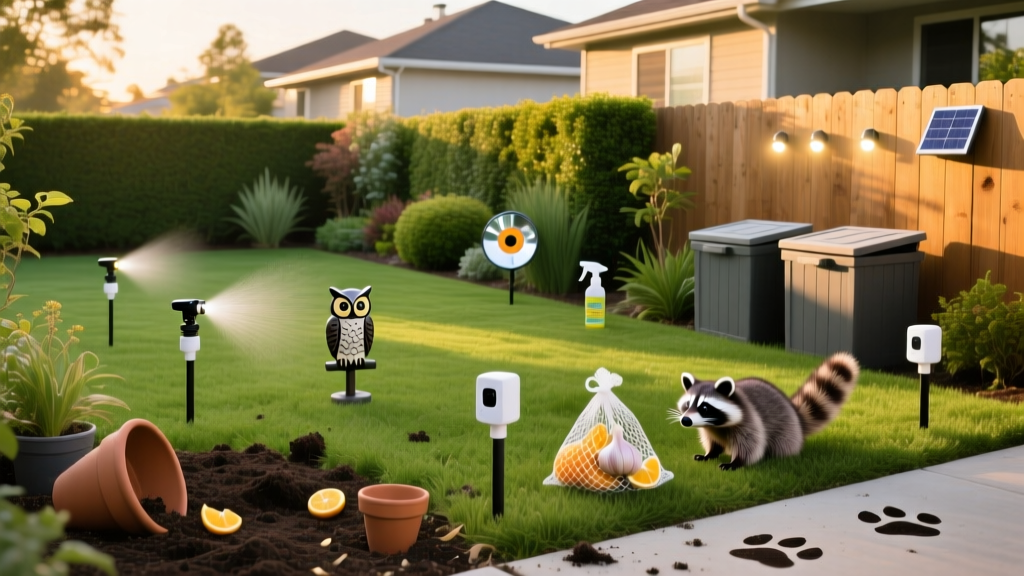
What Do Raccoons Hate? 9 Proven Deterrents to Protect Your Yard
The Sensory Profile: Why Raccoons Avoid Certain Stimuli
To effectively deter raccoons (Procyon lotor), you must first understand how they perceive the world. Raccoons possess an exceptionally acute sense of smell—estimated to be significantly more sensitive than a human's—and highly adapted night vision due to the tapetum lucidum in their eyes. Furthermore, their front paws contain four to five times more sensory cells than their back paws, making tactile feedback a primary way they investigate their environment. When formulating a pest management strategy, the goal is to overload or irritate these specific sensory pathways. According to Penn State Extension, leveraging their sensory sensitivities is the most effective non-lethal method for resolving human-wildlife conflicts in suburban landscapes.
Olfactory Deterrents: Scents Raccoons Absolutely Hate
Raccoons rely heavily on their olfactory system to locate high-calorie food sources. Introducing pungent, irritating, or predatory scents disrupts their foraging behavior and signals danger.
- Capsaicin (Hot Pepper): Raccoons despise the burning sensation of capsaicin. Create a DIY repellent by mixing 1 gallon of water, one standard bottle of hot pepper sauce, and 1 teaspoon of liquid dish soap (to help the solution adhere to plant leaves). Spray this generously around the perimeter of your garden and on non-edible ornamental plants. Reapply every 48 hours or immediately after rainfall.
- Predator Urine: The scent of coyote or bobcat urine triggers an instinctual flight response. Products like Shake-Away Coyote Urine granules (approximately $20 for a 20oz container) should be applied in small piles every 10 to 15 feet along your property line.
- Ammonia: The sharp, suffocating odor of ammonia mimics the scent of stale urine from large predators. Soak several tennis balls or heavy rags in standard household ammonia and place them in perforated plastic containers near trash enclosures or deck entry points.
⚠️ Safety Warning: Never place loose ammonia-soaked rags where pets or children can access them. Ammonia fumes are toxic in enclosed spaces and can cause severe respiratory irritation. Always use ammonia outdoors in well-ventilated areas and secure it inside punctured, animal-proof containers.
Auditory & Visual Disruptors: Startling the Masked Bandits
Because raccoons are nocturnal and rely on stealth, sudden bursts of light, water, or noise are highly effective at breaking their foraging patterns. However, raccoons are highly intelligent and will quickly habituate to static deterrents (like a radio left on a single station). You must use dynamic, motion-activated devices.
Deterrent Technology Comparison Matrix
| Device Type | Top Model (2026) | Est. Cost | Effective Range | Habituation Risk |
|---|---|---|---|---|
| Motion-Activated Sprinkler | Orbit Yard Enforcer | $65 - $75 | Up to 1,200 sq ft | Very Low |
| Solar Predator Eye Strobe | Nite Guard Solar | $35 - $45 / unit | Line of sight (300 ft) | Moderate |
| Ultrasonic Repellent | Yard Sentinel (Generic) | $40 - $60 | 30 ft radius | High (Fails often) |
Expert Insight: Avoid ultrasonic repellents for raccoons. Field studies consistently show that urban raccoons quickly ignore high-frequency sounds, especially in noisy suburban environments where ambient noise masks the ultrasonic output. Invest in the Orbit Yard Enforcer instead, setting the dial to 'Night Only' mode to conserve water while specifically targeting nocturnal foraging hours.
Tactile & Physical Barriers: Making Your Yard Uncomfortable
If a raccoon cannot comfortably walk or climb, it will move to an easier target. Modifying the physical environment is a cornerstone of integrated pest management (IPM).
- Two-Wire Electric Fencing: For protecting sweet corn patches or koi ponds, a low-impedance electric fence is the gold standard. Install a two-wire system using polywire. Place the first wire 6 inches above the ground and the second wire at 12 inches. Connect this to a solar energizer (like the Zareba 10-Mile Solar Charger, approx. $110) that outputs 4,000 to 5,000 volts. The 6-inch height targets the raccoon's nose as it sniffs the ground, while the 12-inch height catches them if they attempt to stand or climb.
- Prickly Mulching: Raccoons hate walking on sharp, uneven surfaces. Replace soft wood mulch around vulnerable garden beds with sweetgum balls, thorny rose prunings, or coarse, jagged river rock (minimum 2-inch diameter). Avoid smooth pea gravel, which they can easily traverse.
- Chimney & Vent Caps: Raccoons frequently seek out warm, dry chimneys to birth their young in the spring. Install a heavy-duty, stainless steel chimney cap with a minimum 16-gauge wire mesh and secure it with heavy-duty masonry screws, not just tension springs.
The 'Habitat Modification' Framework
Deterrents will ultimately fail if your property offers an irresistible, high-calorie reward. The Humane Society of the United States emphasizes that removing attractants is 90% of the battle. Implement this strict habitat modification protocol:
- Secure Trash Enclosures: Standard bungee cords are useless; raccoons possess the manual dexterity to untie knots and slip hooks. Upgrade to a certified bear-proof trash can, such as the Toter 64-Gallon Bear-Proof model ($150-$200), which utilizes a gravity-based locking latch that requires human-level opposable thumb mechanics to open.
- Pet Food Curfews: Never leave dry kibble or canned cat food outdoors after dusk. Raccoons will happily bypass a complex garden to eat free, protein-rich pet food on a porch.
- Compost Management: Open compost piles containing fruit scraps or meat bones act as a raccoon buffet. Switch to an enclosed, tumbling compost bin elevated at least 18 inches off the ground.
Common Deterrent Mistakes to Avoid
❌ Using Mothballs: Many homeowners mistakenly scatter mothballs (naphthalene) in their yards. Not only is this highly toxic to soil biology, pets, and local waterways, but it is also illegal to use mothballs outdoors in a manner inconsistent with their EPA-approved labeling. Furthermore, rain quickly dissolves them, rendering them useless against raccoons.
Another frequent error is relying on 'scare' decoys like plastic owls or rubber snakes. Raccoons are highly observant; if a plastic owl does not move or change position for 48 hours, the raccoon will recognize it as a non-threat and may even climb on top of it. If you must use decoys, you need to physically move them to a new location every single morning.
📋 The 5-Step Evening Raccoon Defense Checklist
- Bring all pet food and water bowls indoors by 7:00 PM.
- Lock Toter gravity-latch trash cans inside the garage or secure shed.
- Activate the Orbit Yard Enforcer sprinkler to 'Night Only' mode.
- Turn on motion-activated floodlights over the compost and garden areas.
- Ensure all crawl space vents and pet doors are locked and secured.
By combining sensory repellents with physical barriers and strict habitat modification, you create an environment that raccoons find inherently hostile. Consistency is critical; raccoons are persistent foragers, and a single night of lapsed security can undo weeks of successful deterrence training.

