
Pest Control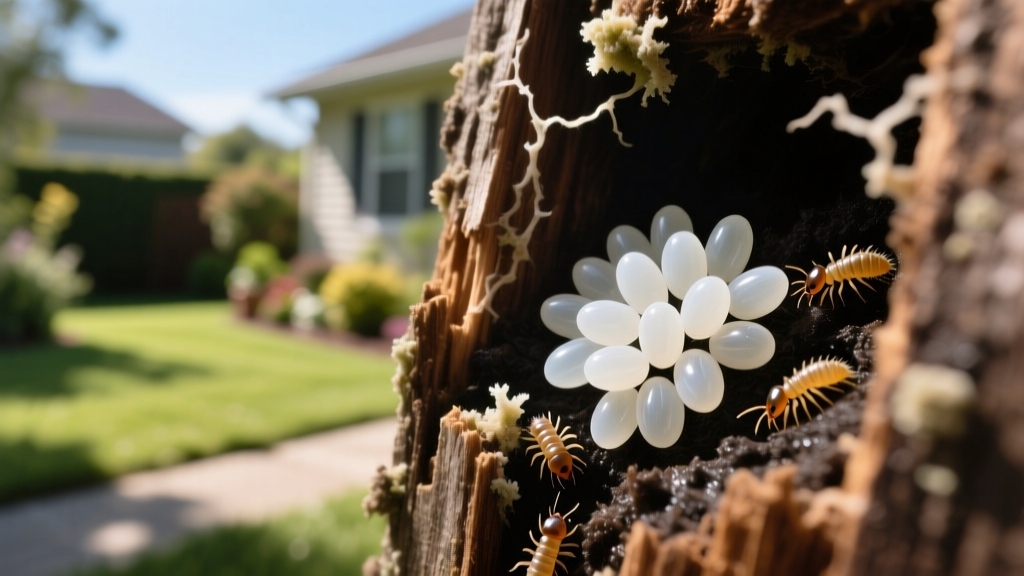
What Do Termite Eggs Look Like? A Homeowner's ID Guide
The Anatomy of a Termite Egg: Size, Shape, and Color
If you are asking what do termite eggs look like, you are likely dealing with a suspected infestation and need immediate visual confirmation. Termite eggs are exceptionally small, making them difficult to spot without magnification. They are the foundational stage of a destructive colony, and identifying them early can save thousands of dollars in structural repairs.
Unlike the hard, dark casings of some insect eggs, termite eggs are soft and delicate. They are typically laid in massive clusters deep within the colony's nursery chambers, protected by worker termites and soldiers. According to NC State Extension, the physical characteristics of these eggs remain remarkably consistent across the most common destructive species, including Eastern Subterranean, Formosan, and Drywood termites.
Termite Egg Specification Card
- Size: 0.5 mm to 1.0 mm in length (roughly the size of a grain of coarse sand or a pinhead).
- Color: Translucent, pale white, or light cream. They lack pigmentation because they develop in total darkness.
- Shape: Oval or pill-shaped, with a smooth, glossy surface.
- Texture: Soft and fragile; they will easily crush if pressed, unlike hard seed pods or frass.
- Arrangement: Found in dense, gelatinous clusters, often coated in a protective secretion from the queen.
The queen termite undergoes a biological process called physogastry, where her abdomen swells massively to accommodate her enlarged ovaries. A mature native subterranean queen can lay 100 to 300 eggs daily, while a Formosan subterranean queen can produce up to 1,000 eggs per day. This staggering output means that if you see one egg, millions more are likely hidden nearby.
Termite Eggs vs. Ant Eggs vs. Termite Frass
Homeowners frequently confuse termite eggs with ant eggs or drywood termite frass (fecal pellets). Because misidentification leads to the wrong treatment protocol, understanding the visual differences is critical. Ant eggs are visually similar but are found in entirely different micro-environments, while termite frass is a completely different biological byproduct.
| Feature | Termite Eggs | Ant Eggs | Drywood Termite Frass |
|---|---|---|---|
| Color | Translucent white/cream | Opaque white/pale yellow | Brown, black, or tan |
| Shape | Oval, pill-like | Oval, slightly elongated | Hexagonal, barrel-shaped |
| Texture | Soft, easily crushed | Soft, slightly sticky | Hard, granular, gritty |
| Location Found | Deep in soil, mud tubes, or inside wood galleries | Ant hills, under rocks, rotting surface wood | Piles on floors, windowsills, directly below kick-out holes |
If you find small, white, oval objects scattered openly on a windowsill or floor, you are almost certainly looking at drywood termite frass, not eggs. Termites never leave their eggs exposed; worker termites constantly move and groom the egg clusters to prevent fungal growth. If you are looking at exposed pellets, the UC Statewide IPM Program confirms this is a definitive sign of an active drywood termite colony pushing waste out of their galleries.
Where the Queen Hides the Nursery
You will never find termite eggs out in the open on your lawn or resting on top of a wooden beam. The colony's survival depends on keeping the eggs in a highly controlled environment with strict humidity and temperature regulation.
Subterranean Termite Nesting Zones
For Eastern and Formosan subterranean termites, the primary nest is located deep underground, often 18 to 24 inches below the frost line, near a consistent moisture source like a leaky pipe or a tree root. The eggs are kept in the central royal chamber. If a homeowner finds subterranean termite eggs, it usually means a secondary, above-ground nesting site (aerial nest) has formed inside a wall void where a chronic plumbing leak has provided enough moisture to sustain the colony away from the soil.
Drywood and Dampwood Nesting Zones
Drywood termites do not require soil contact. Their eggs are laid deep inside the heartwood of structural timbers, attic joists, or wooden furniture. The only way to visually confirm the presence of drywood termite eggs is by breaking open infested wood, which reveals smooth, hollowed-out galleries lined with eggs and nymphs. Dampwood termites similarly hide their eggs inside severely decayed, moisture-saturated wood, such as rotting fence posts or wood mulch touching the siding.
The Hatching Timeline and Colony Expansion
Understanding the incubation period explains why rapid treatment is necessary once eggs are suspected. Termite eggs hatch in 26 to 30 days under optimal conditions (soil temperatures between 75°F and 85°F). In cooler climates, this incubation can stretch to 45 days.
"A single mature Formosan subterranean termite colony can contain over 10 million individuals. Because the eggs hatch in less than a month, a localized infestation can exponentially expand its foraging radius into your home's foundation within a single season if the queen is not eliminated." — Structural Pest Control Industry Data
Once hatched, the nymphs are immediately fed by worker termites and begin molting. Within a few months, they differentiate into workers, soldiers, or alates (swarmers). This rapid lifecycle means that waiting to "see if the problem goes away" guarantees severe structural compromise.
Action Plan: What to Do If You Find Termite Eggs
If you have positively identified termite eggs, or if you have found the mud tubes and frass that indicate their hidden presence, you must initiate a targeted eradication protocol. The Environmental Protection Agency (EPA) strongly recommends professional intervention for structural infestations, but homeowners can deploy specific baiting systems for perimeter defense.
Step 1: Do Not Disturb the Nursery
If you accidentally break open a mud tube or a piece of wood and expose the eggs, do not spray them with over-the-counter aerosol insecticides (like Raid or Ortho Home Defense). Contact repellents will cause the colony to detect the threat, abandon the exposed gallery, and relocate the queen and eggs deeper into your foundation, making professional eradication significantly harder and more expensive.
Step 2: Deploy Non-Repellent Termiticides or Bait Systems
To destroy the eggs, you must eliminate the workers that feed them and the queen that lays them. You have two primary professional-grade options:
- Liquid Soil Barrier (Termidor SC): Contains 9.1% Fipronil. This is a non-repellent chemical. Termites cannot detect it, so they tunnel through the treated soil, pick up the active ingredient, and transfer it to the nest via grooming (the transfer effect). This eventually reaches the queen and stops egg production. Application rate: 4 gallons of finished solution per 10 linear feet of trench (6 inches wide by 6 inches deep) around the foundation. Cost: $1,500 to $2,500 for professional application.
- Cellulose Bait Stations (Trelona ATBS): The Advance Termite Bait System uses compressed cellulose laced with Novaluron, an insect growth regulator (IGR). When workers consume the bait and feed it to the nymphs and queen, it prevents molting and halts egg viability. Placement: Stations installed every 10 feet around the perimeter. Cost: $800 to $1,200 for installation, plus $300 annually for monitoring and bait replacement.
Step 3: Moisture and Wood-to-Soil Remediation
Termites require moisture to maintain the humidity necessary for egg survival. Divert all downspouts at least 5 feet away from the foundation. Repair leaking exterior spigots immediately. Remove any wood mulch within 6 inches of your siding, and replace it with inorganic materials like crushed stone or rubber mulch to eliminate the bridge between the soil nursery and your home's wooden framing.

