Pest Control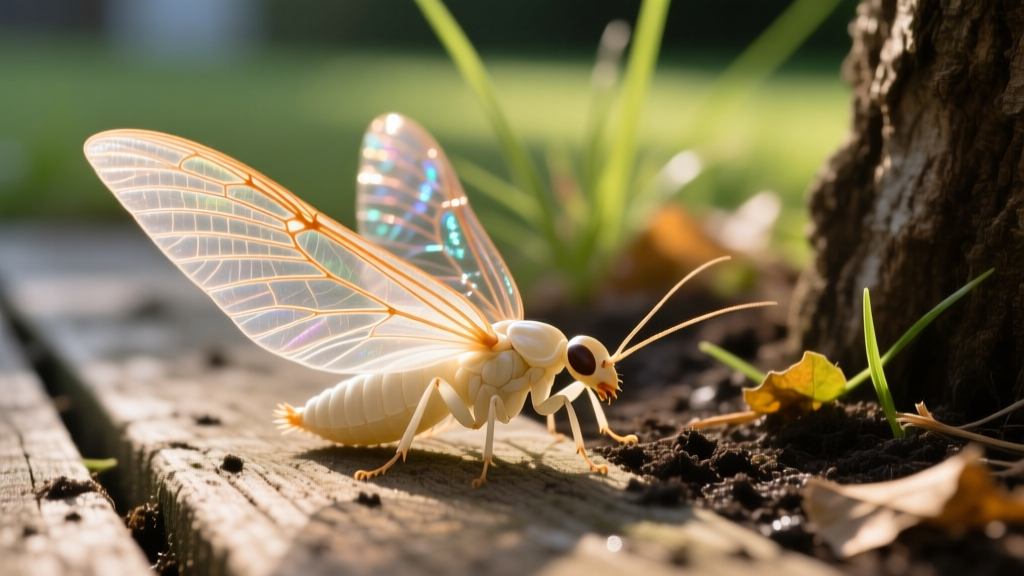
What Do Termite Wings Look Like? Spotting Swarmers Early
Homeowners often mistake discarded insect wings on windowsills for a harmless nuisance, but when those wings belong to reproductive termites (alates), they signal an active, potentially destructive colony nearby. Understanding exactly what termite wings look like is the first line of defense in protecting your property from structural damage. Unlike the foraging workers that stay hidden inside wood and soil, swarmers emerge into the open, leaving behind distinct biological evidence that trained eyes can use to identify the specific termite species threatening the home.
Core Visual Characteristics of Termite Wings
Termite wings are highly specialized for a single, brief nuptial flight. Once the reproductive alates mate and locate a suitable nesting site, they shed these wings entirely. If you are examining a pile of discarded wings, look for these four defining morphological traits:
- Uniform Length: Both the forewings and hindwings are exactly the same length. This is the most critical diagnostic feature when differentiating termites from flying ants.
- Membranous Texture: The wings are incredibly thin, fragile, and translucent. They lack the leathery or hardened texture found on beetles or true bugs.
- Faint Venation: While veins exist to provide structural support during flight, they are faint, net-like, and difficult to see without magnification. They do not feature the heavy, dark, parallel veins seen on ant wings.
- Oversized Proportions: Termite wings are disproportionately long compared to the insect's body, typically extending well past the abdomen by a factor of two to one.
Diagnostic Matrix: Termite Wings vs. Carpenter Ant Wings
Because carpenter ants also swarm in the spring and excavate wood (though they do not consume it), misidentification leads to incorrect and ineffective treatment protocols. Use this comparison matrix to accurately identify the pest based on discarded wings or captured specimens.
| Feature | Termite Wings (Alates) | Carpenter Ant Wings (Swarmers) |
|---|---|---|
| Wing Length | Equal length (fore and hind match) | Unequal (forewings significantly longer than hindwings) |
| Color & Opacity | Translucent, milky white, grayish, or smoky | Opaque, tinted brown, black, or amber |
| Wing Veins | Faint, complex, net-like (reticulate) | Prominent, dark, parallel, and distinct |
| Resting Posture | Stacked flat directly over the back | Cleft or V-shaped, angling away from the body |
| Shedding Mechanism | Snaps cleanly at the humeral suture line | Torn or pulled off irregularly, often leaving ragged stumps |
Species-Specific Wing Dimensions and Colors
Not all termite wings look identical. The exact dimensions and coloration can help pest management professionals pinpoint the specific species infesting a property, which directly dictates the chemical or baiting treatment required.
Eastern Subterranean Termites (Reticulitermes flavipes)
The most widespread and destructive species in North America. Their wings measure between 8mm and 10mm in length. They are highly translucent, appearing milky white or pale gray. Swarming typically occurs on warm, humid spring mornings following a significant rainfall event when soil temperatures reach 70°F.
Western Drywood Termites (Incisitermes minor)
Prevalent in coastal California and the Southwest. These wings are slightly larger, ranging from 10mm to 13mm. They possess a distinct smoky brown or dark gray tint. Unlike subterranean species, drywood termites often swarm in the late afternoon or evening during late summer and early autumn, frequently drawn to exterior porch lights.
Dampwood Termites (Zootermopsis species)
Found primarily in the Pacific Northwest, these are the largest termites in the US. Their wings are massive, measuring 15mm to 20mm long, with a dark, smoky appearance. They require wood with very high moisture content and are usually an indicator of severe water leaks or wood-soil contact rather than a generalized structural infestation.
Formosan Subterranean Termites (Coptotermes formosanus)
An aggressive, invasive species concentrated in the Gulf Coast and Southeast. Their wings are 12mm to 15mm long and feature a unique golden-brown or pale amber translucence. Formosan swarms are massive, often occurring at dusk in late spring, and can involve tens of thousands of alates emerging simultaneously.
The Mechanics of Shedding: Why You Find Piles of Wings
Termites do not naturally lose their wings over time like molting insects. The shedding process is a deliberate, violent mechanical action. After landing, the alate arches its back and twists its body, snapping the wings off at a biological weak point called the humeral suture.
Identifying the Humeral Suture Break
If you find a dead swarmer with wings still attached, examine the base of the wing under a magnifying glass. A clean, straight break at the suture line confirms it is a termite. If the wing is torn irregularly near the thorax, it is likely an ant. Furthermore, discarded termite wings are often found in uniform piles. Because the alates shed them immediately upon landing to crawl into tight crevices, you will frequently find dozens of wings stacked perfectly together on window tracks, near foundation vents, or caught in spider webs near exterior lighting.
CRITICAL WARNING: Never rely solely on over-the-counter aerosol sprays when you find discarded wings. Spraying the visible swarmers only kills the reproductive caste, leaving the primary worker colony—which causes 100% of the structural damage—completely untouched and active inside your framing.
Immediate Action Protocol for Homeowners
Finding termite wings means a mature colony (typically 3 to 5 years old) is located within a 100-yard radius of the discard site. Follow this exact protocol to mitigate risk and prepare for professional intervention.
- Map the Discard Sites: Do not immediately vacuum the wings. Photograph the piles in place. Note their proximity to light sources and the direction of prevailing winds. This data helps inspectors trace the flight path back to the parent colony's location.
- Inspect for Mud Tubes: Subterranean termites require moisture and build shelter tubes (about the width of a pencil) to travel from soil to wood. Check the foundation, crawl space piers, and garage perimeters for these hardened, soil-colored tunnels.
- Check for Frass: If the wings are smoky brown and found near attic vents or eaves, look for drywood termite frass (fecal pellets). These look like piles of coarse sand or coffee grounds accumulating directly beneath kick-out holes in the wood.
- Schedule a WDI Inspection: Contact a licensed pest control operator for a Wood Destroying Insect (WDI) inspection. As of 2026, a comprehensive WDI inspection typically costs between $100 and $175. Ensure the inspector uses moisture meters and, ideally, thermal imaging to detect hidden galleries behind drywall.
- Review Treatment Options: Based on the species identified via the wings, discuss targeted treatments. Subterranean termites require perimeter trenching with non-repellent termiticides (like fipronil or imidacloprid) or in-ground bait stations (like Sentricon). Drywood termites may require localized wood injections, microwave treatments, or whole-structure sulfuryl fluoride fumigation if the infestation is widespread.
Accurate identification of termite wings transforms a panic-inducing discovery into a manageable, data-driven pest control strategy. By understanding the morphological differences and species-specific traits, homeowners can ensure they deploy the correct, scientifically backed eradication methods to protect their property's structural integrity.
Sources: University of Kentucky Entomology: Subterranean Termites, EPA: Termites - How to Control and Prevent Them