
Pest Control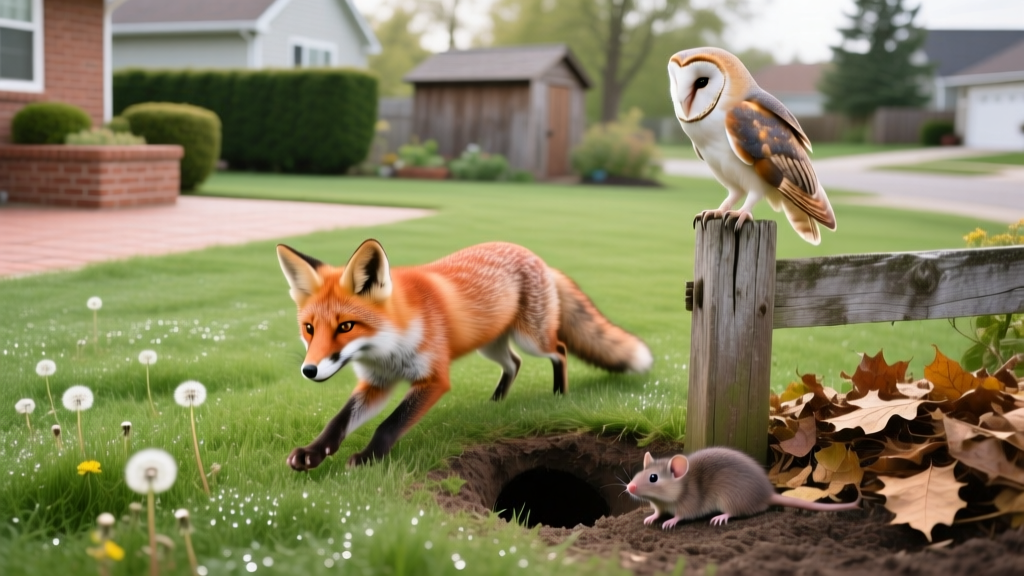
What Eats Moles? 7 Natural Predators in North American Yards
The Biological Reality of Subterranean Predation
Homeowners dealing with raised soil ridges and volcano-shaped dirt mounds frequently ask, "what eats moles?" in hopes of finding a natural, hands-off pest control solution. Moles—primarily the Eastern mole (Scalopus aquaticus) and the Hairy-tailed mole (Parascalops breweri) in North America—are highly adapted fossorial (burrowing) insectivores. They spend up to 90% of their lives beneath the soil surface, navigating via specialized Eimer's organs on their snouts that detect microscopic electrical fields generated by earthworms.
This subterranean lifestyle provides immense protection from casual predators. However, a specific tier of wildlife has evolved the sensory adaptations and physical tools required to hunt them. Understanding the difference between animals that eat moles and animals that merely destroy mole tunnels is critical for homeowners looking to leverage biological control in 2026's eco-conscious landscaping environment.
The Misconception: Tunnel Tearers vs. True Predators
Before identifying true mole predators, we must address a pervasive lawn care myth. Many homeowners assume that if skunks, raccoons, or armadillos are tearing up their yard, these animals are hunting the moles. According to the Internet Center for Wildlife Damage Management, this is largely incorrect.
Warning: The Grub Competition Factor
Striped skunks and raccoons are opportunistic omnivores. When they rip open mole tunnels, they are almost exclusively hunting white grubs (such as Japanese beetle larvae) that are exposed by the mole's digging. The mole and the skunk are actually competitors for the same food source. While a skunk will eat a mole if it corners one, the mole is not its target. Relying on skunks for mole control will result in a lawn destroyed by both grubs and scavenging mammals.
The True Apex Predators of the Mole World
True mole predators must either possess the ability to extract them from deep tunnel networks or the patience and sensory acuity to catch them during the brief moments they surface.
1. Avian Hunters (Owls and Hawks)
Moles are forced to the surface for two primary reasons: to push excavated soil out of new tunnel systems (creating molehills) and during the February-through-April mating season when males travel above ground to find females. Great Horned Owls (Bubo virginianus) and Barn Owls (Tyto alba) capitalize on these moments. Owls possess asymmetric ear placements that allow them to triangulate the exact location of a mole scratching through dry topsoil or rustling in leaf litter. Their specialized fringed flight feathers enable completely silent approaches, preventing the vibration-sensitive mole from detecting the strike.
2. Subterranean Strikers (Snakes and Weasels)
Black Rat Snakes (Pantherophis obsoletus), Gopher Snakes (Pituophis catenifer), and Long-tailed Weasels (Neogale frenata) are among the few predators that can pursue moles directly into their lateral runways. Snakes use their forked tongues to pick up chemical trails left by the mole's sebaceous gland secretions. Once a snake enters a tunnel, its elongated, limbless body allows it to navigate the 2-to-3-inch wide runways with minimal friction, striking the mole in the confined darkness.
3. Mammalian Diggers (Foxes, Coyotes, and Badgers)
Red Foxes and Coyotes possess acute hearing capable of detecting the low-frequency scratching of mole claws against soil roots from several yards away. Once located, they will rapidly excavate the tunnel system to extract the prey. In the Midwest and Great Plains, the American Badger (Taxidea taxus) is the ultimate mole predator, using its massive, specialized front claws to dig through compacted clay soils faster than the mole can retreat.
4. Domestic Companions (Cats and Terriers)
Domestic animals frequently intercept surfacing moles. Jack Russell Terriers and Rat Terriers were historically bred specifically for their high prey drive and ability to squeeze into small burrows. Outdoor domestic cats will also ambush young moles or adults crossing patios and driveways during mating season, though cats rarely consume the catch due to the mole's strong musk gland secretions.
Predator Comparison Matrix
Not all predators are viable for residential pest control. The following matrix breaks down the practical application of these predators in a suburban lawn setting.
| Predator Species | Hunting Strategy | Tunnel Penetration | Residential Viability |
|---|---|---|---|
| Barn Owl / Great Horned Owl | Ambush surfacing moles at dusk/dawn | None (Surface only) | High (via Owl Boxes) |
| Black Rat Snake | Chemical tracking and tunnel pursuit | High (Enters lateral runways) | Medium (Requires habitat) |
| Red Fox / Coyote | Acoustic detection and excavation | Medium (Digs out shallow runs) | Low (Causes lawn damage) |
| Jack Russell Terrier | Scent tracking and active digging | Medium (Digs out shallow runs) | High (Active pet ownership) |
How to Encourage Natural Mole Predators Safely
If you want to leverage biological control without resorting to toxic baits, you must create an environment that supports apex predators. The most effective and measurable method for residential properties is the installation of a Barn Owl nesting box.
Step-by-Step: Installing a Barn Owl Box for Mole Control
Barn owls consume roughly 1,000 rodents and small mammals per year. A single breeding pair can decimate a localized mole and vole population. Follow these exact specifications for a 2026-compliant installation:
- Dimensions: Construct or purchase a box measuring exactly 15 inches wide, 15 inches deep, and 25 inches high. The entrance hole must be 3 inches in diameter to exclude larger, predatory raptors.
- Mounting Height: Install the box on a dedicated steel pole or the side of a barn at a height of 12 to 15 feet above the ground.
- Orientation: Face the entrance hole East or Southeast. This protects the owlets from prevailing Western winds and allows the morning sun to warm the box.
- Bedding: Do not use sawdust, which can cause fatal respiratory infections in owlets. Use 2 to 3 inches of pine wood shavings or dry grass at the bottom of the box.
Critical Rule: Halt All Rodenticide Use
If you are encouraging snakes or owls to eat moles, you must immediately cease the use of chemical mole baits containing bromethalin, zinc phosphide, or anticoagulants. When a predator consumes a poisoned mole, the toxin bioaccumulates, leading to fatal secondary poisoning. According to the National Wildlife Federation, secondary poisoning from residential rodenticides is a leading cause of raptor and snake mortality in suburban zones.
Why Biological Control Isn't a Silver Bullet
While understanding what eats moles provides excellent ecological context, relying solely on predators has distinct limitations. Moles are fiercely territorial and solitary. The Penn State Extension notes that a single acre of healthy, irrigated lawn can support a carrying capacity of 3 to 5 moles.
Predators operate on energetic thresholds. A Great Horned Owl or a Rat Snake will hunt moles in your yard only as long as the caloric expenditure of hunting is outweighed by the caloric gain of the catch. Once the predator reduces the mole population to 1 or 2 individuals per acre, the remaining moles become too difficult and time-consuming to locate. The predator will simply move on to a neighboring property with a denser infestation, leaving you with the final, most stubborn survivors. For complete eradication of these final territorial holdouts, targeted mechanical trapping (such as the Victor Out O'Sight or Trapline harpoon traps) remains the most reliable protocol.
Frequently Asked Questions
Do moles have any natural defenses against predators?
Yes. Moles possess powerful, outward-turned front claws capable of inflicting severe lacerations on a snake or weasel in a confined tunnel. Additionally, their fur lacks a distinct grain, allowing them to move backward through tight tunnels just as fast as they move forward to escape pursuit. They also emit a strong, garlic-like musk from their anal glands when threatened, which deters many mammalian predators from consuming the kill.
Will planting castor beans keep moles away without harming predators?
Castor oil-based repellents are widely marketed, but they do not kill moles or harm predators. They simply attempt to make the soil environment unpalatable. However, their efficacy is highly variable and usually limited to a few weeks before the moles acclimate or the oil degrades in the soil microbiome.
Are bullfrogs a threat to moles?
American Bullfrogs are opportunistic ambush predators that will eat almost anything that fits in their mouths, including small mice and insects. If a young mole surfaces near the edge of a backyard pond or water feature, a large bullfrog may ambush and consume it. However, bullfrogs are entirely aquatic/semi-aquatic and pose zero threat to the vast majority of the mole population living in dry lawn zones.

