
Pest Control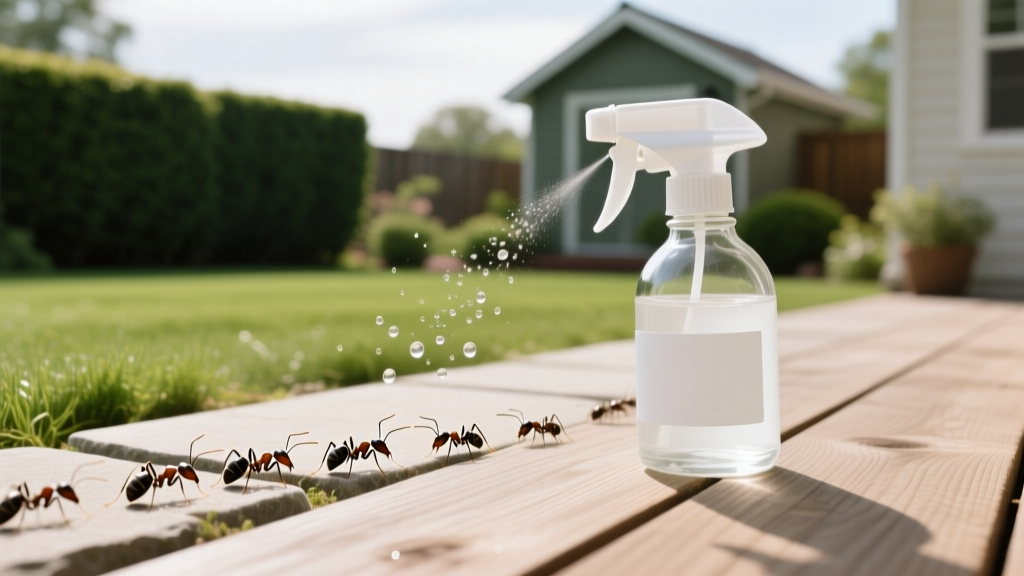
What Household Item Kills Ants? 7 Proven DIY Remedies
When an ant colony invades your kitchen or patio, the immediate instinct is to reach for chemical sprays. However, understanding what household item kills ants effectively requires looking past the visible foragers and targeting the colony's reproductive engine. Spraying visible ants with standard cleaners only kills a fraction of the population, often triggering a survival response called 'budding,' where the colony splits into multiple new nests.
To achieve permanent eradication using items already in your pantry or garage, you must leverage the ants' biology—specifically their grooming habits, respiratory systems, and social feeding networks (trophallaxis). Below is an entomological breakdown of the most effective household ant killers, exact mixing ratios, and the specific failure modes that cause DIY treatments to fail.
The Biology of the Colony: Why Contact Killers Fail
For every ant you see foraging, there are roughly 100 to 500 more hidden inside the nest. Household items generally fall into two categories: contact killers (which destroy the exoskeleton or suffocate the insect) and slow-acting baits (which exploit trophallaxis to poison the queen). Relying solely on contact killers like vinegar or boiling water provides instant gratification but zero long-term control. According to the University of California Integrated Pest Management program, baits are the most effective long-term strategy because foraging workers carry the toxicant back to the brood and the queen.
7 Household Items That Kill Ants (Ranked by Efficacy)
1. Borax (Sodium Tetraborate) and Sugar
- Mechanism: Borax disrupts the ant's digestive system and metabolism. Because it acts slowly (24-48 hours), foragers survive long enough to share the toxic sugar water with the colony.
- Exact Recipe: Dissolve 1 part 20 Mule Team Borax into 3 parts granulated white sugar. Add enough warm water to create a thin syrup. Soak cotton balls in the mixture and place them near trails.
- Failure Mode: Making the mixture too concentrated. If the borax ratio is too high, the forager dies before returning to the nest. Furthermore, some ant species (like protein-loving grease ants) will ignore sugar baits entirely.
2. Food-Grade Diatomaceous Earth (DE)
- Mechanism: DE consists of fossilized diatoms with microscopic sharp edges. It does not poison ants; instead, it abrades the waxy lipid layer of their exoskeleton, causing fatal desiccation (dehydration).
- Application: Apply a barely visible dusting of food-grade DE using a bulb duster into wall voids, under baseboards, and along patio cracks.
- Failure Mode: Moisture. DE completely loses its mechanical killing properties when wet. It must be applied in dry, protected areas. Never use 'pool-grade' DE, which is chemically treated and hazardous to inhale.
3. Liquid Dish Soap and Water
- Mechanism: Soap breaks the surface tension of water and strips the protective oils from the ant's exoskeleton, causing it to suffocate as water enters its spiracles (breathing pores).
- Exact Recipe: Mix 2 tablespoons of Dawn Ultra dish soap into a 32-ounce spray bottle filled with water.
- Failure Mode: This is strictly a contact killer. It will not eliminate the nest and leaves a sticky residue that can actually attract more pests if not wiped clean with a damp cloth afterward.
4. White Vinegar (Acetic Acid)
- Mechanism: Vinegar does not reliably kill ants on contact unless they are fully submerged. Its true value is as a pheromone disruptor. Ants navigate using invisible chemical trails; vinegar dissolves these trails, blinding the foragers.
- Application: Spray a 50/50 mix of white vinegar and water on entry points and wipe dry.
- Failure Mode: Using it as a standalone 'killer.' Once the vinegar evaporates, the colony will simply send out scouts to establish a new pheromone trail.
5. Baking Soda and Powdered Sugar
- Mechanism: Baking soda (sodium bicarbonate) reacts with the acidic environment inside the ant's gut, producing carbon dioxide gas that the insect cannot expel, leading to internal rupture.
- Exact Recipe: Mix equal parts baking soda and powdered sugar. The powdered sugar masks the alkaline taste of the baking soda.
- Failure Mode: Bait aversion. Many entomologists note that ants are highly adept at sorting food particles and may separate the baking soda from the sugar, or simply avoid the bait if the colony has alternative food sources.
6. Cornstarch
- Mechanism: When ants ingest large quantities of cornstarch and then drink water, the starch expands and hardens inside their digestive tract, causing a fatal blockage.
- Application: Sprinkle heavily over outdoor ant mounds or indoor entryways.
- Failure Mode: Extremely slow and highly dependent on the ants having access to water immediately after ingestion. It is better used as a physical barrier than a primary eradication tool.
7. Boiling Water (Outdoor Mounds Only)
- Mechanism: Thermal shock. Water at 212°F (100°C) instantly cooks the ants and destroys the structural integrity of the soil nest.
- Application: Boil 2 to 3 gallons of water. Pour it directly and slowly into the main entrance hole of an outdoor fire ant or pavement ant mound.
- Failure Mode: Pouring too quickly causes the water to pool on the surface rather than penetrating deep into the queen's chamber. It is also highly destructive to surrounding turfgrass and plant roots.
Household Ant Killers: Comparison Matrix
| Household Item | Action Type | Speed of Kill | Pet/Child Safety | Best Target Species |
|---|---|---|---|---|
| Borax + Sugar | Slow-Acting Bait | 3 - 14 Days | Moderate (Toxic if ingested in large amounts) | Sugar ants, Argentine ants, Odorous house ants |
| Diatomaceous Earth | Contact / Desiccant | 12 - 48 Hours | High (Food-grade only) | Carpenter ants, Pavement ants |
| Dish Soap Spray | Contact / Suffocant | Instant | High | Any visible foraging ant |
| White Vinegar | Pheromone Disruptor | N/A (Repellent) | High | Trail-following species |
| Boiling Water | Contact / Thermal | Instant | High (Burn hazard) | Fire ants, Outdoor mound builders |
⚠️ CRITICAL WARNING: Carpenter Ants
If you identify large (1/2 inch or more), black or reddish ants with smoothly rounded thoraxes and see piles of 'frass' (sawdust-like debris) near wooden structures, you are dealing with Carpenter Ants. DIY household baits rarely penetrate their deep, satellite wall-void colonies. Carpenter ants cause severe structural damage; abandon DIY methods and consult a licensed pest control professional immediately.
The 48-Hour DIY Eradication Protocol
To maximize the efficacy of household items, follow this sequential protocol rather than applying random remedies simultaneously.
- Hour 0-2: Sanitation and Trail Disruption. Remove all competing food sources. Wipe down counters, sweep floors, and seal pantry items in airtight glass or hard plastic containers. Spray existing ant trails with a 50/50 vinegar solution and wipe clean to erase pheromone maps.
- Hour 2-4: Perimeter Defense. Apply a light dusting of food-grade Diatomaceous Earth into cracks, crevices, and weep holes where ants are entering the structure. Do not apply where it will get wet.
- Hour 4-48: Strategic Baiting. Place your Borax-sugar cotton balls near the areas where ants were previously trailing. Do not kill the ants eating the bait. You want them to return to the nest. According to Texas A&M AgriLife Extension, allowing foragers to consume and share the bait is the only way to achieve colony collapse using low-toxicity household materials.
- Day 7: Assessment. If ant activity has ceased, remove the baits and clean the area. If activity persists but the ants are ignoring the sugar bait, switch to a protein-based bait (mixing borax with peanut butter instead of sugar).
Common Troubleshooting: When DIY Baits Fail
Even with perfect execution, household ant killers can fail due to biological edge cases:
- Bait Aversion: Ant colonies cycle their nutritional preferences based on the queen's reproductive cycle. If they need protein to feed larvae, they will completely ignore your sugar-borax bait. Always offer both a sugar-based and a protein-based (peanut butter/borax) bait station simultaneously to determine their current preference.
- Colony Budding: If you use a fast-acting household contact killer (like heavy soap sprays or aerosol cleaners) near the nest entrance, the colony senses a massive threat. Species like Pharaoh ants will respond by splitting the colony into multiple smaller nests, spreading the infestation throughout your walls.
- Moisture Interference: Liquid borax baits dry out and crystallize within 48 hours in low-humidity environments, rendering them unpalatable to ants. Refresh liquid baits every two days, or add a few drops of vegetable oil to the mixture to slow evaporation.
'The most common mistake homeowners make is treating the symptom rather than the disease. Killing 50 foragers with vinegar does nothing to stop a queen that lays 800 eggs a day. Patience with slow-acting baits is the cornerstone of integrated pest management.' — Principles of Urban Entomology

