
Pest Control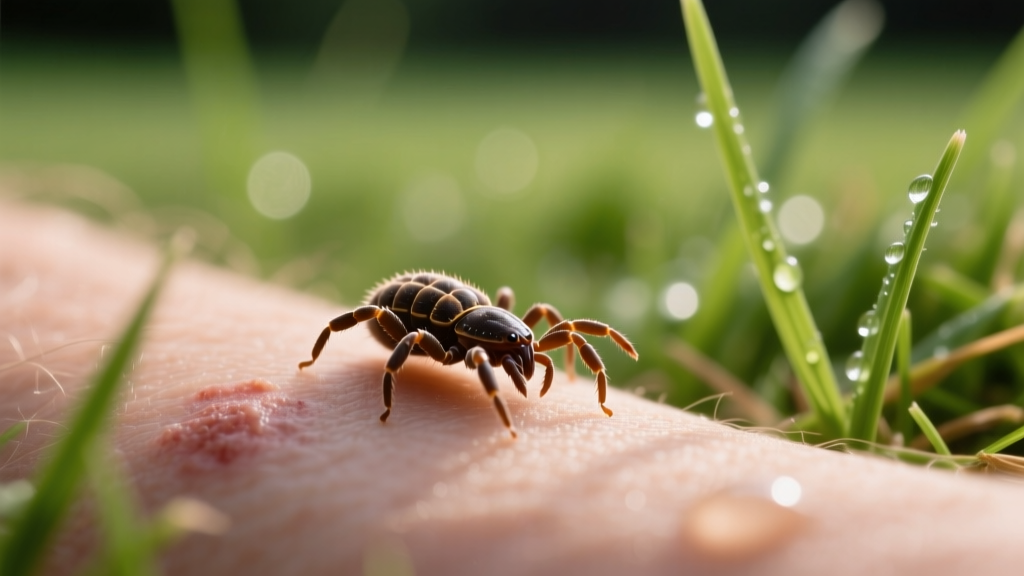
What Is a Chigger? Biology, Bite Mechanics, and Yard Eradication
The Biological Reality: What Is a Chigger Exactly?
When homeowners ask, "what is a chigger," the answer often contradicts popular folklore. Chiggers are not insects, nor are they a type of tick. They are the larval stage of mites belonging to the Trombiculidae family, making them arachnids. While adult chiggers and nymphs are harmless to humans—feeding primarily on plant material and small soil insects—the six-legged larval stage is a parasitic pest that targets mammals, birds, and reptiles.
Measuring a mere 0.15 to 0.3 millimeters in length, chigger larvae are nearly invisible to the naked eye, appearing as microscopic, bright red or orange specks moving across the skin. They thrive in transitional zones where sunlight meets shade, specifically in tall grasses, weed patches, berry brambles, and the damp edges of wooded areas. According to entomological data from the Texas A&M AgriLife Extension, chigger populations peak in late spring through early autumn when soil temperatures consistently hover between 77°F and 86°F.
⚠️ The Burrowing Myth vs. The Stylostome Reality
A pervasive myth claims chiggers burrow under the skin and lay eggs. This is biologically false. Chiggers do not burrow, nor do they suck blood. Instead, they inject digestive enzymes into the skin that dissolve cellular tissue. The skin reacts by hardening around the feeding site, forming a tube-like structure called a stylostome. The chigger uses this stylostome as a straw to consume the liquefied skin cells. When you scratch a chigger bite, you are usually dislodging the mite, but the stylostome remains embedded in your skin, which is why the intense itching persists for days or even weeks.
Chigger vs. Tick vs. Flea: Field Identification Matrix
Proper identification dictates your treatment protocol. Because chiggers, ticks, and fleas all cause pruritic (itchy) dermatitis, homeowners frequently misidentify the culprit. Use this matrix to confirm the pest before purchasing yard treatments.
| Feature | Chigger (Larva) | Tick (Seed Tick/Nymph) | Flea |
|---|---|---|---|
| Size | 0.15 - 0.3 mm (Pinpoint) | 1.0 - 2.0 mm (Poppy seed) | 1.5 - 3.0 mm |
| Color | Bright red, orange | Brown, black, translucent | Dark brown, mahogany |
| Legs | 6 (Larval stage) | 8 | 6 |
| Movement | Slow crawling | Slow crawling, questing | Rapid jumping |
| Bite Pattern | Clusters around tight clothing (ankles, waist) | Single bites, often attached to skin | Random clusters, often on lower legs |
The Bite Mechanics and Symptom Timeline
Understanding the timeline of a chigger bite explains why immediate post-exposure action is critical to preventing severe dermatitis.
- Hour 0 (Attachment): Chiggers wander the skin for 30 to 60 minutes seeking a protected feeding site, typically where clothing restricts their movement (sock lines, waistbands, behind knees).
- Hour 1-2 (Enzyme Injection): The larva pierces the epidermis and injects proteolytic enzymes. At this stage, you feel no pain.
- Hour 3-6 (Stylostome Formation & Itching): The skin reacts to the foreign enzymes. The stylostome forms, and histamine release triggers intense, localized pruritus (itching). The chigger may detach naturally or be brushed off.
- Day 1-3 (Papule Eruption): Red, raised welts appear. The itching peaks due to the retained stylostome and localized allergic reaction.
- Day 7-14 (Resolution): The body slowly breaks down the stylostome tube, and the welts flatten, provided secondary bacterial infection from scratching is avoided.
Targeted Yard Eradication: Chemical and Organic Protocols
If chiggers are established in your lawn, localized spot treatments will fail. You must target the micro-habitats where they quest for hosts. Focus applications on the perimeter of your property, shaded brush lines, and unmowed transitional zones.
Conventional Chemical Control: Bifenthrin
For severe infestations, Bifenthrin (the active ingredient in professional-grade products like Talstar P) is the industry standard. It provides up to 30 days of residual control.
- Dilution Rate: Mix 1 fluid ounce of Talstar P per gallon of water to treat 1,000 square feet.
- Application Method: Use a pump sprayer or hose-end sprayer. Do not water the lawn for 24 hours post-application to allow the chemical to bind to the grass blades and thatch layer.
- Cost: A 3/4 pint bottle of Talstar P costs approximately $45 and treats up to 12,000 square feet.
- Safety Note: Bifenthrin is highly toxic to aquatic life and bees. Never apply near ponds, streams, or blooming clover. Keep pets off the treated area until completely dry.
Organic Alternative: Cedarwood Oil
For homeowners with pets or organic gardens, cedarwood oil acts as a potent contact killer and repellent by blocking the pests' octopamine receptors. Products like Cedarcide Yard Safe are effective but lack the residual longevity of synthetics.
- Application: Attach the hose-end sprayer bottle directly to your garden hose. Apply a heavy mist to shaded areas and tall grass.
- Frequency: Reapply every 7 to 10 days, or immediately after heavy rainfall exceeding 0.5 inches.
- Cost: Approximately $35 per quart, treating roughly 4,000 square feet per application.
Personal Defense: Repellents That Actually Work
Yard treatment takes 24-48 hours to reach peak efficacy. When entering untreated areas, personal defense is mandatory. According to the National Pesticide Information Center (NPIC), specific active ingredients provide verified protection against mite larvae.
The Two-Tier Defense System
Tier 1: Clothing Treatment (Permethrin 0.5%)
Permethrin is an insecticide, not just a repellent. It kills chiggers on contact. Purchase a 0.5% aerosol spray (e.g., Sawyer Products Premium Permethrin) and treat your pants, socks, and boots. Allow to dry for 2 hours before wearing. One treatment survives up to 6 washes. Warning: Permethrin is highly toxic to cats while wet. Apply outdoors and keep felines away until fully dry.
Tier 2: Skin Repellent (Picaridin 20% or DEET 30%)
Apply to exposed skin, specifically the ankles, wrists, and neck. Picaridin 20% (e.g., Sawyer Picaridin or Natrapel) is preferred over DEET because it does not degrade plastics, synthetic fabrics, or watch crystals, and it lacks the heavy, greasy feel of DEET. DEET 30% (e.g., OFF! Deep Woods) remains a highly effective backup but requires thorough washing with soap and water post-exposure.
Post-Exposure Triage: Stop the Itch
If you suspect chigger exposure after walking through tall grass, immediate action can prevent the stylostome from fully forming and mitigate the allergic response.
- The Hot Shower Protocol: Within one hour of exposure, take a shower using water as hot as you can safely tolerate, combined with a heavy lather of sulfur-based soap or standard antibacterial soap. The physical friction of a washcloth will dislodge unattached or recently attached larvae before they inject enzymes.
- Topical Corticosteroids: Apply 1% Hydrocortisone cream (e.g., Cortizone-10) directly to the welts to suppress the localized histamine response.
- Systemic Antihistamines: For severe, multi-site reactions, an oral second-generation antihistamine like Cetirizine (Zyrtec) or Fexofenadine (Allegra) will reduce systemic itching without causing the drowsiness associated with first-generation options like Diphenhydramine (Benadryl).
- What to Avoid: Never apply clear nail polish, bleach, or rubbing alcohol to the bites. Because the chigger is not burrowing and does not remain in the skin, these "suffocation" remedies are entirely useless and will only cause chemical burns or contact dermatitis on already compromised skin.
Frequently Asked Questions
Can chiggers infest my house or bed?
No. Chiggers require high humidity and specific soil micro-climates to survive. If a chigger is brought indoors on clothing, it will quickly desiccate (dry out) and die within 24 to 48 hours. They cannot reproduce in indoor environments, carpets, or bedding.
Do chiggers transmit diseases to humans?
In North America, chiggers are primarily a nuisance pest and do not vector diseases to humans. However, in parts of East Asia and the South Pacific, specific species of Leptotrombidium chiggers can transmit scrub typhus, a potentially severe bacterial infection. For North American homeowners, the primary medical risk is secondary bacterial infection (like staph or impetigo) caused by excessive scratching of the bites.
How short should I mow my lawn to prevent chiggers?
While keeping your turf mowed to a height of 2.5 to 3 inches reduces the damp, shaded micro-habitats chiggers prefer, mowing alone will not eliminate them if your property borders wooded areas or unmowed municipal easements. You must combine proper mowing with perimeter brush clearing and targeted chemical barrier treatments.

