
Pest Control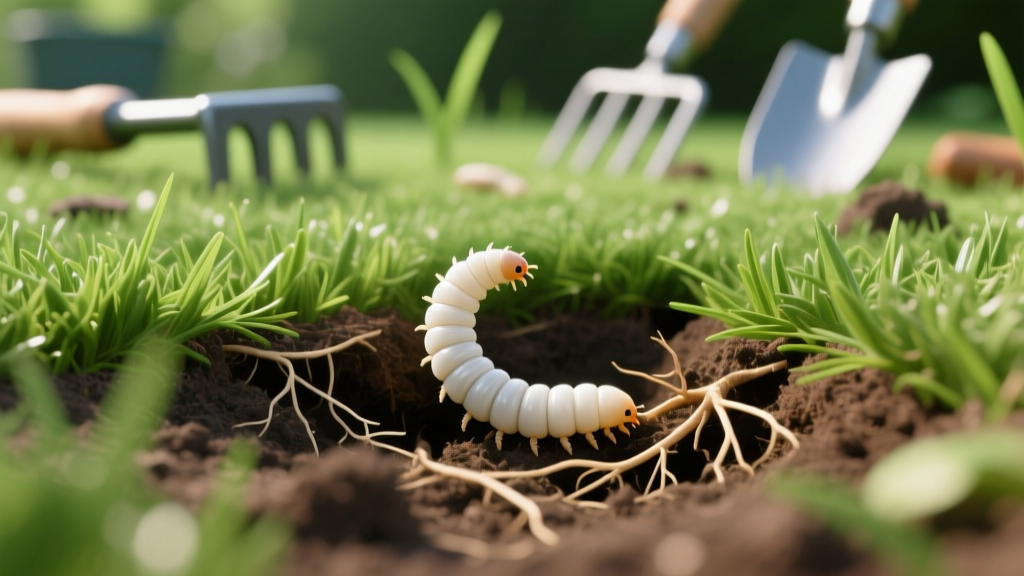
What Is a Grub? Lawn Identification, Life Cycle, and Damage Guide
The Anatomy of a Grub: Beyond the Basics
When homeowners ask, 'what is a grub,' the simplest answer is that grubs are the larval stage of scarab beetles. However, from a turf management perspective, they are subterranean root-feeding machines capable of severing the entire root system of a lawn in a matter of weeks. Grubs live just beneath the thatch layer, chewing through the grassroots that anchor your turf and deliver water and nutrients.
Physically, all turf-destroying grubs share a few traits: a creamy white, segmented body, a distinct brown head capsule, and six jointed legs near the head. They naturally curl into a 'C' shape when disturbed. But to effectively manage them, you must look past the generic C-shape and examine the raster pattern—the specific arrangement of microscopic bristles and bare patches on the grub's rear end (the raster). This pattern is the definitive key to identifying the exact beetle species invading your soil, which directly dictates your treatment timeline.
Pro Tip: The Raster Pattern Test
To view the raster pattern, place the grub on a flat surface with its belly facing up. Use a magnifying glass to inspect the last abdominal segment. You are looking for the anal slit and the surrounding bristles. This step is non-negotiable for professional-grade IPM (Integrated Pest Management) because different species peak in their feeding cycles at slightly different times.
To view the raster pattern, place the grub on a flat surface with its belly facing up. Use a magnifying glass to inspect the last abdominal segment. You are looking for the anal slit and the surrounding bristles. This step is non-negotiable for professional-grade IPM (Integrated Pest Management) because different species peak in their feeding cycles at slightly different times.
Common Turf-Destroying Grub Species
Not all white grubs are created equal. While dozens of scarab species exist, four primary culprits cause 95% of residential lawn damage in North America. Identifying your specific species prevents mistimed pesticide applications and wasted money.
| Species | Raster Pattern | Size at Maturity | Peak Damage Season |
|---|---|---|---|
| Japanese Beetle | V-shaped bristle pattern | Up to 1 inch | Late August - October |
| European Chafer | Y-shaped anal slit | Up to 3/4 inch | September - November |
| June Bug (May Beetle) | Zipper-like median line | Up to 1.5 inches | Spring & Fall (2-3 year cycle) |
| Oriental Beetle | Transverse (straight) slit | Up to 1 inch | August - October |
According to Penn State Extension, the European Chafer has become the most destructive species in the Northeast and Midwest because its larvae feed later into the fall and earlier in the spring than other species, extending the damage window significantly.
The Grub Life Cycle: Timing Your Interventions
Understanding what a grub is requires understanding its annual biological clock. Most turf grubs operate on a one-year life cycle, heavily dictated by soil temperature.
- Adult Flight & Mating (June - July): Adult beetles emerge, mate, and lay eggs in the top 2 inches of moist soil.
- Egg Hatch (Late July - August): Eggs hatch into first-instar grubs. They are tiny and highly vulnerable but cause minimal damage.
- Heavy Feeding (August - October): Grubs molt into second and third instars. This is the danger zone. Third-instar grubs consume 80% of their total lifetime root mass during this window.
- Overwintering (November - March): As soil temperatures drop below 50°F, grubs burrow 4 to 8 inches deep to avoid freezing, entering diapause.
- Spring Return (April - May): Grubs migrate back to the surface to feed briefly before pupating into adult beetles.
Soil temperature is your ultimate trigger. Preventative grub controls must be applied when soil temperatures at a 2-inch depth consistently reach 60°F to 65°F, ensuring the active ingredient is in the root zone exactly when eggs hatch.
Diagnosing Grub Damage vs. Environmental Stress
Homeowners frequently misdiagnose grub damage as drought stress, brown patch fungus, or dog urine spots. Before spending money on curative insecticides, perform these two field tests to confirm a grub infestation.
1. The Tug Test (Carpet Roll)
Walk to the margin where green grass meets the brown, dying patch. Grab a handful of turf and pull upward. If the turf rolls back like a loose carpet with no root resistance and exposes the soil beneath, grubs have severed the root system. If the turf resists and breaks at the blade, you are likely dealing with a fungal disease or drought.
2. The Soap Flush Test
Mix 2 tablespoons of lemon-scented dish soap into 1 gallon of water. Pour this solution over a 1-square-foot area at the edge of the damaged zone. Wait 5 to 10 minutes. The soap irritates the grubs' spiracles (breathing pores), forcing them to the surface. Count the grubs that emerge to determine your population density.
Treatment Thresholds and Actionable Control Strategies
Not every grub requires chemical intervention. A healthy, deeply rooted lawn can tolerate low grub populations. The economic threshold for treatment is 5 to 7 grubs per square foot for highly maintained, irrigated lawns, and up to 10 to 15 grubs per square foot for unirrigated, low-maintenance turf. If your soap flush reveals numbers below these thresholds, focus on turf health rather than pesticides.
When populations exceed the threshold, you must choose between preventative and curative control strategies. The University of Minnesota Extension emphasizes that matching the chemical to the grub's life stage is the most common point of failure for DIY applicators.
Preventative Controls (The Long Game)
Preventatives target first- and second-instar grubs before they cause significant damage. They do not kill mature, third-instar grubs.
- Active Ingredient: Chlorantraniliprole (e.g., Scotts GrubEx1). This is the safest option for pollinators and earthworms.
- Application Window: April to early June.
- Cost: Approximately $25 for a 5,000 sq ft bag ($5.00 per 1,000 sq ft).
- Alternative: Imidacloprid (e.g., Bayer Advanced Season-Long). Apply in June. Note: Imidacloprid is highly toxic to bees; never apply to flowering weeds or clover.
Curative Controls (The Rescue Mission)
If you discover severe damage in late August or September, preventatives will not work. You need a fast-acting curative contact killer.
- Active Ingredient: Trichlorfon (e.g., Bayer Advanced 24 Hour Grub Killer or professional Dylox).
- Application Window: Late August through October, when grubs are large and feeding near the surface.
- Cost: Approximately $35 for a 5,000 sq ft bag ($7.00 per 1,000 sq ft).
- Constraint: Trichlorfon degrades rapidly in high-pH soils (above 7.2) and requires immediate, heavy irrigation (at least 1/2 inch of water) to move the chemical past the thatch layer into the soil.
Organic Biological Control
For homeowners avoiding synthetic chemicals, beneficial nematodes (Heterorhabditis bacteriophora) are highly effective. These microscopic worms seek out grubs, enter their bodies, and release bacteria that kill the host within 48 hours. Apply at a rate of 1 billion nematodes per acre (roughly 25,000 per square foot) in late summer. Cost is higher—roughly $40 to $60 per 3,000 sq ft—and the soil must remain consistently moist for two weeks post-application for the nematodes to survive.
Frequently Asked Questions
Do birds and skunks eating my lawn mean I have grubs?
Yes. If you notice flocks of starlings, crows, or evidence of skunks and raccoons digging small, cone-shaped holes (3-4 inches deep) in your turf, they are foraging for grubs. The secondary damage from wildlife foraging often causes more aesthetic destruction to the lawn than the grubs themselves.
Can I use milky spore to kill grubs?
Milky spore (Paenibacillus popilliae) is a biological bacteria, but it only works on Japanese beetle grubs. It is completely ineffective against European chafers, June bugs, and Oriental beetles. Furthermore, milky spore takes 2 to 4 years to build up sufficient spore counts in the soil to provide meaningful control, making it a poor choice for active infestations.
Does watering my lawn attract grubs?
Adult beetles seek out moist, irrigated soil to lay their eggs in July because dry soil causes the eggs to desiccate and die. Ironically, maintaining a perfectly irrigated lawn during a summer drought can make your yard the primary target for egg-laying females, concentrating the grub population in your turf while neighboring dry lawns remain unaffected.

