
Pest Control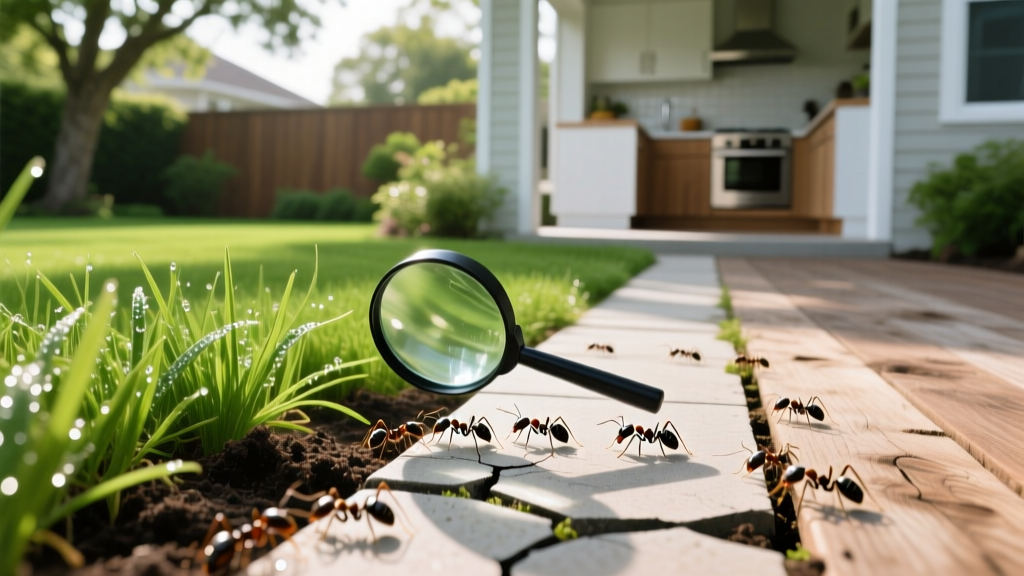
What Kills Ants in House: Yard-to-Indoor Defense Strategy
The Repellent Trap: Why Indoor Sprays Fail
When a trail of odorous house ants or pavement ants marches across a kitchen counter, the immediate instinct is to reach for an aerosol contact spray. This is the single most counterproductive action a homeowner can take. Over-the-counter pyrethroid sprays (containing active ingredients like bifenthrin, permethrin, or cypermethrin) are potent neurotoxins that kill on contact, but they possess a strong repellent effect.
While you kill the 50 foraging ants you see, the remaining 50,000 ants in the hidden colony detect the chemical barrier. According to the University of California Integrated Pest Management (UC IPM) program, this chemical stress triggers a survival mechanism known as 'budding.' The colony splinters into multiple sub-colonies, effectively multiplying your infestation and pushing ants deeper into your wall voids. To understand what kills ants in house environments permanently, you must abandon repellents and adopt a delayed-action, yard-to-indoor transfer strategy.
The Active Ingredient Matrix: Transfer vs. Contact
Effective ant eradication relies on 'trophallaxis'—the social behavior where ants share food and grooming fluids with the queen and brood. By utilizing non-repellent chemicals and slow-acting baits, foraging ants unknowingly carry the lethal dose back to the nest.
| Active Ingredient | Product Example | Transfer Effect | Speed of Kill | Best Application Zone |
|---|---|---|---|---|
| Fipronil (9.1%) | Taurus SC | High (Domino Effect) | 24 - 72 Hours | Exterior Perimeter Trench |
| Indoxacarb (0.05%) | Advion Ant Gel | High (Bioactivation) | 48 - 96 Hours | Interior Baiting |
| Borax (5.4%) | Terro T300B | Moderate | 24 - 48 Hours | Interior / Sugar Feeders |
| Bifenthrin (0.3%) | Ortho Home Defense | None (Repellent) | Immediate | Avoid for Ants (Causes Budding) |
Step 1: Exterior Perimeter Trenching (The First Line)
Ants invading your home are usually foraging from a satellite or main colony located in the yard. Stopping them before they cross the foundation is the most efficient defense. The industry standard for this is Taurus SC (Fipronil), a non-repellent liquid termiticide and insecticide.
Taurus SC Application Specifications
- Cost: $55 to $65 for a 20 oz bottle (yields roughly 25 gallons of finished solution at the ant rate).
- Mixing Ratio: 0.8 fluid ounces of Taurus SC per 1 gallon of water.
- Application Method: Dig a continuous trench 6 inches deep and 6 inches wide directly against the home's concrete foundation. Pour 1 gallon of the mixed solution per 10 linear feet of trench, then backfill with soil.
- Frequency: Apply twice per year (early spring and late fall). Fipronil binds tightly to soil organic matter, providing a 6-month residual barrier.
Because Fipronil is undetectable to insects, foraging ants walk through the treated soil, pick up microscopic particles on their tarsi (feet), and carry it back to the yard colony. The 'domino effect' ensures the entire colony, including the queen, is eliminated within a week.
Step 2: Interior Baiting (Targeting the Satellite Colonies)
If ants have already established a satellite nest inside your wall voids or under the slab, exterior trenching won't reach them. You must deploy interior baits that exploit their digestive biology.
Advion Ant Gel: The Bioactivation Advantage
Syngenta's Advion Ant Gel utilizes Indoxacarb, a pro-insecticide. In its gel form, it is relatively non-toxic. However, once ingested by an ant, the insect's specific metabolic enzymes cleave the molecule, converting it into a highly potent sodium channel blocker. This 'bioactivation' delays the lethal effect just long enough for the forager to return to the nest and regurgitate the bait to the larvae and queen. Place dime-sized drops every 12 inches along baseboards, under sinks, and near window casings. A 4-tube box retails for roughly $25 to $30.
Terro T300B: The Borax Classic
For liquid-sugar feeding ants, Terro's borax-based stations remain highly effective. Borax disrupts the ant's digestive tract and metabolism. However, it acts faster than Indoxacarb, meaning it occasionally kills the forager before it can share the bait. Use Terro for minor, localized trails rather than massive structural infestations.
CRITICAL WARNING: The 72-Hour Baiting Rule
When you place Advion or Terro bait, the ant trail will visually worsen within 12 to 24 hours. Hundreds of ants will swarm the bait. Do not kill them. Do not spray them. Do not wipe up the bait. You must allow them to harvest the poison undisturbed for a minimum of 72 hours. Premature cleaning aborts the trophallaxis cycle and guarantees failure.
Troubleshooting: Bait Aversion and Seasonal Shifts
A common failure mode in DIY ant control is 'bait aversion,' where ants completely ignore the gel or liquid stations. This is rarely because the chemical failed; it is almost always due to a mismatch in macronutrient requirements.
According to research published by Penn State Extension, ant colonies shift their dietary preferences based on the reproductive cycle and the season:
- Spring / Early Summer: Colonies require carbohydrates (sugars) to fuel high-energy foraging and worker activity. Sugar-based baits like Terro or Advion work exceptionally well here.
- Mid-to-Late Summer / Fall: The colony shifts focus to brood rearing (larvae development) and winter fat storage. They aggressively seek proteins and lipids (fats). Sugar baits will be ignored.
The Fix: If your Advion gel is drying up untouched in August, switch to a protein-based granular bait like Advance 375A (Abamectin) or a protein gel like Maxforce Quantum. Rotate the baits until you observe active harvesting.
Physical Exclusion: Sealing the Perimeter
Chemical defenses degrade over time due to UV exposure and soil microbial activity. Physical exclusion is the permanent capstone to your yard-to-indoor strategy. Once the chemical baits have eradicated the active trails (usually day 7 to 10), seal the ingress points.
- Identify Entry Vectors: Inspect where plumbing penetrations, HVAC lines, and electrical conduits enter the exterior siding.
- Seal with Copper Mesh: Stuff large gaps (over 1/4 inch) with coarse copper mesh. Ants and rodents cannot chew through copper, and it will not rust like steel wool.
- Apply Silicone Caulk: Inject clear, 100% silicone sealant over the mesh and into smaller cracks. Avoid acrylic latex caulk on exterior foundations, as it degrades rapidly under UV light and moisture.
- Trim Vegetation: Cut back all tree branches and shrubs so they maintain a minimum 18-inch clearance from the roofline and siding. Ants frequently use 'aerial bridges' to bypass treated soil perimeters entirely.
By combining a non-repellent Fipronil soil trench with targeted Indoxacarb interior baiting and rigorous physical exclusion, you dismantle the colony's reproductive core rather than merely wiping away the visible foragers. This integrated approach is the definitive answer to what kills ants in house environments for good.

