
Pest Control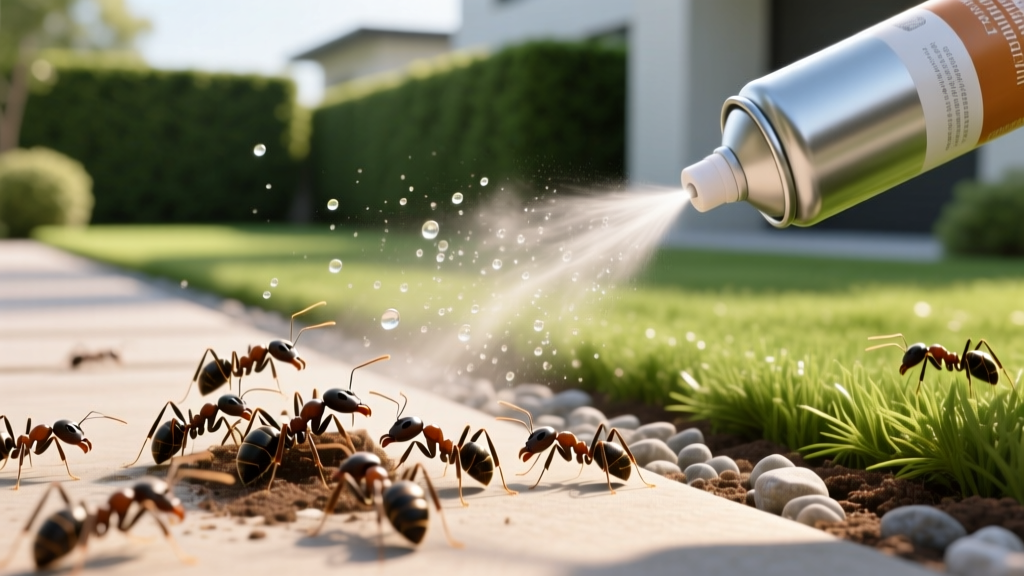
What Kills Ants Instantly? Fast-Acting Contact Treatments
When a trail of carpenter ants invades your kitchen or a fire ant mound erupts in your lawn, the immediate goal is rapid elimination. Homeowners frequently search for solutions that kill foraging ants on contact. However, the pest control industry draws a strict physiological line between contact killers (which kill individual ants in seconds) and ingestion baits (which eradicate the colony over days). Understanding what kills ants instantly requires examining the active ingredients that disrupt the insect nervous system or destroy their exoskeleton upon physical contact.
The Physiology of an Instant Kill
To kill an ant instantly, a substance must bypass the insect's hardened exoskeleton and trigger immediate biological failure. This happens through two primary mechanisms:
- Neurotoxic Shock: Chemicals like pyrethroids bind to the sodium channels in the ant's nerve cells, keeping them open. This causes continuous nerve firing, immediate paralysis, and death within seconds to minutes.
- Suffocation and Desiccation: Substances like horticultural oils, d-limonene, or soapy water strip the protective waxy cuticle of the exoskeleton or block the spiracles (breathing pores), causing the ant to suffocate or rapidly dehydrate.
According to the Environmental Protection Agency (EPA), pyrethrins and pyrethroids are the most widely used contact insecticides for rapid pest knockdown, derived from chrysanthemum flowers or synthesized for longer residual effects.
Chemical Contact Killers: Aerosols and Liquid Sprays
For immediate elimination of visible ants, synthetic pyrethroids and natural pyrethrins are the gold standard. These are available in pressurized aerosols and pump sprays.
1. Imiprothrin and Cypermethrin (e.g., Raid Ant & Roach Killer 27)
This specific dual-active-ingredient formulation is engineered for instant knockdown. Imiprothrin acts as the rapid paralytic agent, while cypermethrin provides a residual barrier. When sprayed directly on an ant trail, the insects curl up and die within 10 to 15 seconds. A standard 17.5 oz can costs between $8 and $11. It is highly effective for indoor baseboards and window sills but should not be used near food preparation surfaces.
2. Bifenthrin and Zeta-Cypermethrin (e.g., Ortho Home Defense Max)
Sold in 24 oz trigger sprayers or gallon jugs ($12 to $18), this formulation is designed for outdoor perimeter defense and direct mound treatment. While slightly slower than aerosolized imiprothrin, direct drenching of an ant trail will kill foragers within 60 seconds. Bifenthrin also leaves a microscopic crystalline residue that continues to kill ants crossing the treated threshold for up to 12 months.
Warning: Pyrethroid Toxicity to Aquatic Life
While pyrethroids degrade quickly in sunlight and are relatively safe for mammals once dry, they are highly toxic to fish and aquatic invertebrates. Never apply liquid bifenthrin or cypermethrin near koi ponds, storm drains, or natural waterways.
While pyrethroids degrade quickly in sunlight and are relatively safe for mammals once dry, they are highly toxic to fish and aquatic invertebrates. Never apply liquid bifenthrin or cypermethrin near koi ponds, storm drains, or natural waterways.
Natural and DIY Instant Killers
If you prefer to avoid synthetic neurotoxins, several natural and household compounds will kill ants on contact through physical rather than chemical means.
Boiling Water (Thermal Shock)
Pouring 2 to 3 gallons of boiling water directly into the center of an outdoor fire ant mound kills the ants it touches instantly via thermal destruction of their proteins. Research from university extension programs indicates this method successfully eliminates about 60% of treated mounds. The primary failure mode is the queen surviving in deep, insulated lateral tunnels if the water volume is insufficient.
d-Limonene (Orange Oil Extract)
Products like Orange Guard Insect Control ($18 for 32 oz) utilize d-limonene, a compound extracted from citrus peels. d-Limonene is a powerful solvent that dissolves the waxy respiratory coating on the ant's exoskeleton. Upon direct contact, the ant suffocates and dies within minutes. It leaves a strong citrus scent that also acts as a temporary trail-pheromone disruptor, confusing surviving foragers.
The Dish Soap Suffocation Method
A heavily concentrated soap solution is a highly effective, zero-cost contact killer. The surfactants in dish soap break the surface tension of water, allowing the liquid to coat the ant completely and block its spiracles. The Recipe: Mix 2 tablespoons of Dawn Ultra dish soap with 1 quart of water in a spray bottle. Spray directly on the insects. Death occurs via suffocation in 30 to 60 seconds. Wipe away the dead ants and clean the surface with vinegar to erase the pheromone trail.
Contact Killers vs. Colony Eradication: A Comparison Matrix
Choosing the right method depends on whether your goal is immediate visual relief or long-term pest management. The University of California Integrated Pest Management (UC IPM) program emphasizes that contact sprays alone rarely solve structural ant infestations.
| Treatment Method | Speed of Kill | Colony Impact | Best Use Case |
|---|---|---|---|
| Pyrethroid Aerosol | 10 - 30 seconds | None (Only foragers) | Indoor trail elimination |
| Boiling Water | Instant | Moderate (60% success) | Isolated outdoor mounds |
| Soapy Water Spray | 30 - 60 seconds | None | Kitchen/bathroom surfaces |
| d-Limonene Spray | 1 - 3 minutes | None | Organic garden perimeters |
| Borax Liquid Bait (Terro) | 24 - 48 hours | Total Colony Collapse | Hidden nests & sweet ants |
The 'Instant Kill' Trap: Understanding Colony Budding
The most common mistake homeowners make is relying exclusively on instant contact killers for indoor infestations. When you spray a trail of odorous house ants or Argentine ants with a pyrethroid aerosol, you kill the 5% of the colony that is currently foraging. The remaining 95%—including the queens—detect the chemical distress signals and the sudden loss of workers.
In response to sudden, massive worker die-offs caused by contact sprays, multi-queen ant species will initiate 'budding.' The colony splits into two or more satellite nests, effectively multiplying your infestation and spreading it deeper into your wall voids.
Therefore, instant killers should only be used for immediate sanitation and perimeter defense, never as the sole strategy for an established indoor colony.
The 2-Step Eradication Protocol
To achieve the satisfaction of an instant kill while ensuring long-term eradication, professional exterminators utilize a two-step protocol. This method satisfies the need for immediate visual relief while deploying a delayed-action payload to the nest.
- Step 1: The Perimeter Intercept (Day 1)
Use a soapy water solution or a targeted d-limonene spray to instantly kill the visible foraging trails inside your home. Wipe the surfaces clean with a 50/50 white vinegar and water solution to destroy the pheromone highways the ants use to navigate. - Step 2: The Trojan Horse (Day 1 through 5)
Place slow-acting ingestion baits (such as Terro T300B Liquid Ant Bait or Advion Ant Gel) near the entry points where the foragers were previously entering. Because the instant contact spray was not used at the exact entry point, surviving workers will find the bait, consume the delayed-action Borax or Indoxacarb, and carry it back to the queens before the toxic threshold is reached. - Step 3: The Exterior Barrier (Day 6)
Once indoor baiting has ceased (indicating the colony is dead), apply a liquid bifenthrin perimeter spray around the foundation of your home, extending 12 inches up the siding and 12 inches out into the soil. This creates a residual contact-kill barrier that stops future outdoor foragers from entering.
Identifying When to Use Which Tool
If you are dealing with carpenter ants (large, black, and often seen at night), contact sprays are largely ineffective because their nests are deep inside structural timber. You must use protein-based granular baits or inject dusts like Tempo Dust directly into the gallery holes. For pavement ants (small, brown, nesting under driveways), a direct drench of boiling water or a pyrethroid liquid mound drench will provide the instant kill you are looking for while sufficiently saturating the shallow nest to eliminate the queen.

