
Pest Control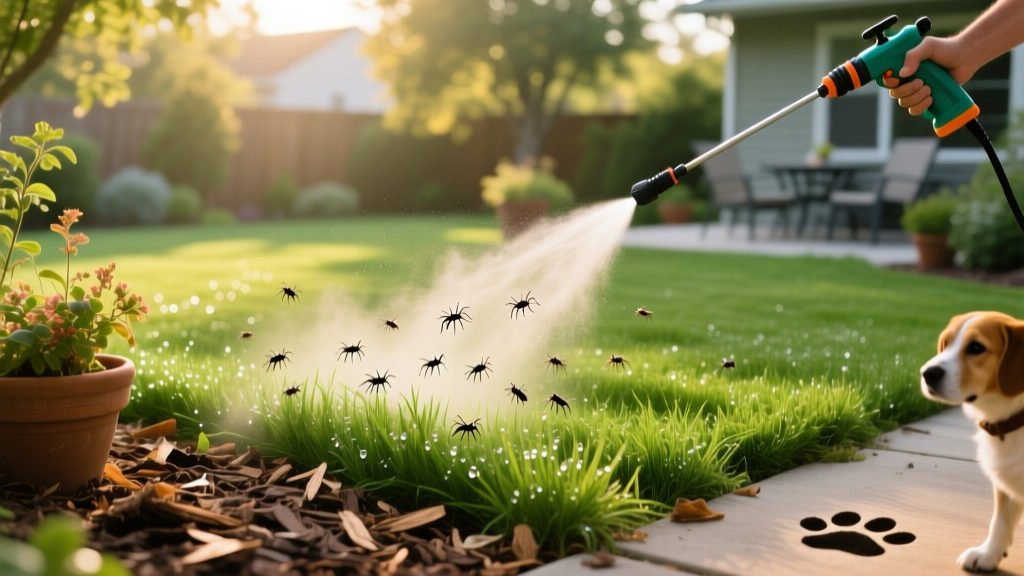
What Kills Fleas in the Yard Instantly? Fast-Acting Treatments Guide
The Reality of 'Instant' Flea Knockdown
When homeowners ask what kills fleas in the yard instantly, they are usually dealing with a severe outdoor infestation that is actively biting them and their pets. In the pest control industry, 'instant' refers to contact knockdown—the time it takes for an active ingredient to paralyze and kill an adult flea upon direct exposure. No broadcast yard treatment kills fleas in literal seconds. The fastest synthetic pyrethroids achieve complete knockdown within 1 to 4 hours of contact.
To achieve this rapid kill, you must target the adult flea stage. However, adult fleas represent only about 5% of the total flea population in your yard. The remaining 95% consists of eggs, larvae, and pupae hiding in the thatch layer and soil. Understanding this biological distribution is critical because the pupal stage is encased in a sticky, protective cocoon that is entirely impervious to chemical sprays.
⚠️ The Pupal Cocoon Barrier: No chemical on the market penetrates the flea pupal cocoon instantly. Pupae can remain dormant for up to 140 days waiting for vibrations or carbon dioxide. Fast-acting adulticides will kill emerging adults within hours, but you must pair them with an Insect Growth Regulator (IGR) to prevent the next generation from maturing.
Top Fast-Acting Chemical Adulticides
For the most rapid eradication, synthetic pyrethroids are the industry standard. These neurotoxins disrupt the flea's sodium channels, causing immediate hyperexcitation, paralysis, and death. Below are the most effective active ingredients for rapid outdoor knockdown, along with their specific application metrics.
Bifenthrin (7.9% Suspension Concentrate)
Bifenthrin is widely regarded as the most reliable fast-acting outdoor flea killer. It binds tightly to soil particles and organic matter, providing both an immediate contact kill and a long residual barrier. Products like Bifen I/T and Talstar P typically cost between $55 and $70 per pint in 2026. The standard mixing rate for severe flea infestations is 1 fluid ounce per gallon of water, applied to 1,000 square feet of turf. Under optimal conditions, bifenthrin achieves a 90% knockdown rate within 2 hours of application.
Esfenvalerate (6.65% Microencapsulated)
Found in products like Onslaught, esfenvalerate is formulated with microencapsulation technology. The active ingredient is trapped in microscopic polymer spheres that cling to the tiny hairs on a flea's legs. When the flea grooms itself, it ingests the toxin, accelerating the kill time. Esfenvalerate is particularly effective in yards with heavy thatch buildup where standard liquid sprays might get trapped before reaching the soil surface.
Permethrin (10% Emulsifiable Concentrate)
Permethrin offers the most aggressive initial knockdown, often paralyzing adult fleas within 45 to 60 minutes. Martins Permethrin 10% is a common choice for agricultural and severe residential applications. However, permethrin is highly toxic to aquatic life and is lethal to cats if applied directly or if they walk on wet treated surfaces. It must be used with extreme caution and strictly allowed to dry completely before re-entry.
Active Ingredient Comparison Matrix
Use this matrix to select the right fast-acting adulticide based on your specific yard conditions, budget, and pet safety requirements.
| Active Ingredient | Brand Examples | Time to Knockdown | Residual Life | Cost per 1,000 sq ft |
|---|---|---|---|---|
| Bifenthrin 7.9% | Bifen I/T, Talstar P | 1 - 3 Hours | 30 - 45 Days | $0.15 - $0.25 |
| Esfenvalerate 6.65% | Onslaught | 2 - 4 Hours | 21 - 30 Days | $0.20 - $0.35 |
| Permethrin 10% | Martins Permethrin 10% | 45 - 90 Minutes | 14 - 21 Days | $0.10 - $0.18 |
| Lambda-Cyhalothrin | Demand CS | 2 - 5 Hours | 60 - 90 Days | $0.30 - $0.45 |
Natural Alternatives: Do They Kill Instantly?
Many homeowners seek organic solutions, but it is vital to manage expectations regarding speed. Natural remedies do not offer the immediate neurotoxic knockdown of synthetic pyrethroids.
Diatomaceous Earth (DE)
Food-grade DE kills fleas mechanically by absorbing the lipids from their exoskeletons, causing them to dehydrate. However, this process takes 24 to 48 hours. Furthermore, DE is completely ineffective when wet. If your yard has high humidity, morning dew, or recent rainfall, DE will not work until it dries out completely.
Beneficial Nematodes (Steinernema carpocapsae)
Nematodes are microscopic worms that hunt flea larvae in the soil. They are an excellent long-term biological control method, but they do not kill adult fleas, nor do they act instantly. Once a nematode enters a flea larva, it releases bacteria that kill the host within 48 to 72 hours. According to the UC Agriculture and Natural Resources IPM program, nematodes are best used as a preventative soil drench rather than an emergency rapid-response treatment.
Cedar Oil Sprays
Cedar oil acts as a contact repellent and can kill adult fleas on direct impact by blocking their octopamine receptors. While the kill time on direct contact is relatively fast (within a few hours), cedar oil has virtually zero residual effect. Once the oil evaporates, the yard is immediately susceptible to re-infestation.
The 4-Step Rapid Eradication Protocol
To achieve the fastest possible results and prevent the infestation from rebounding, follow this exact application sequence.
- Identify Hotspots with the White Sock Test: Pull on a pair of tall white cotton socks and walk slowly through shaded areas, under decks, and near shrubbery. Fleas will jump onto the white fabric, allowing you to map the exact perimeter of the infestation. Focus 80% of your chemical application on these specific zones.
- Alter the Microclimate: Mow the lawn to a height of 2 inches and bag the clippings. Trim overhanging branches to allow direct sunlight to hit the soil. Flea larvae require high humidity and shade to survive; exposing them to UV radiation and dry soil naturally accelerates their mortality rate.
- Apply the Adulticide + IGR Tank Mix: Mix your chosen pyrethroid (e.g., 1 oz Bifen I/T per gallon) with an Insect Growth Regulator like Nyguard or Archer IGR (1 oz per gallon). The IGR mimics juvenile hormones, preventing larvae from molting into biting adults. Spray the mixture evenly over the mapped hotspots, ensuring the soil surface is moist but not pooling.
- Execute the Day-14 Retreat: Because the pupal cocoon protects developing fleas from the initial spray, a second application is mathematically required. Retreat the yard exactly 14 days after the first application to kill the newly emerged adults before they can lay a new batch of eggs.
Safety, Pets, and Environmental Runoff
Speed and efficacy must be balanced with environmental safety. Pyrethroids are highly toxic to fish and aquatic invertebrates. When treating your yard, maintain a strict 10-foot buffer zone between the application area and any storm drains, ponds, or waterways. The Centers for Disease Control and Prevention (CDC) notes that improper pesticide use poses significant risks to local ecosystems and non-target wildlife.
If you own cats, avoid permethrin-based products entirely. Cats lack the liver enzymes necessary to metabolize permethrin, and even secondary exposure from walking on treated grass can lead to severe neurological tremors. For households with feline companions, stick to bifenthrin or esfenvalerate, and strictly enforce a 'no re-entry' rule until the treated grass is 100% dry to the touch, which typically takes 2 to 4 hours depending on ambient temperature and humidity.

