
Pest Control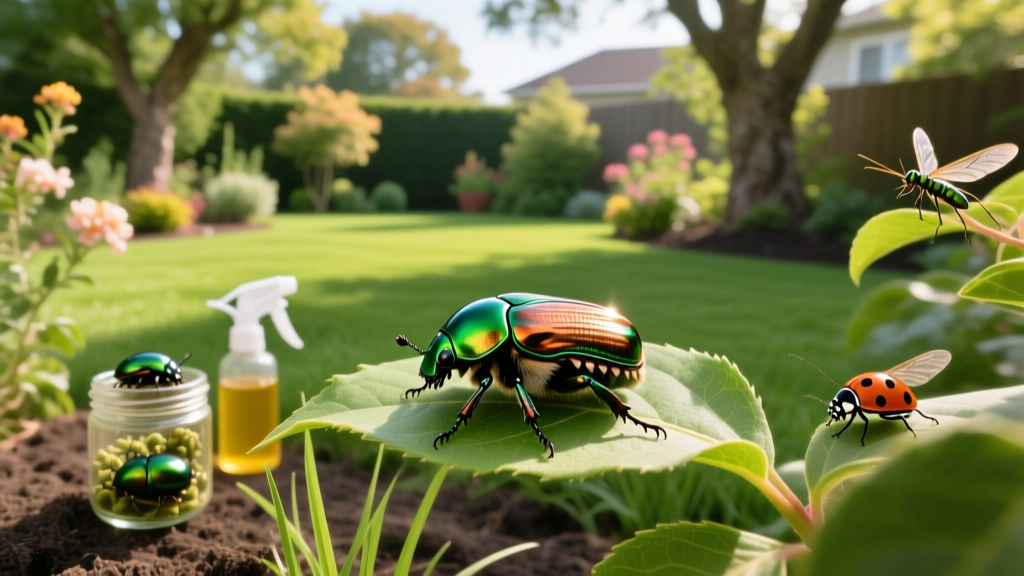
What Kills Japanese Beetles? Proven Organic & Chemical Fixes
The Japanese Beetle Threat: Identification and Life Cycle
The Japanese beetle (Popillia japonica) is a highly destructive turf and ornamental pest. Adults are easily identified by their metallic green thorax, copper-brown wing covers, and five distinct patches of white hair along each side of the abdomen. They skeletonize leaves by eating the tissue between the veins, leaving a lace-like structure behind. Below ground, their C-shaped white grubs devour grassroots, causing turf to roll back like loose carpet.
To understand what kills Japanese beetles effectively, you must target them at the correct life stage. Their one-year life cycle dictates your treatment window:
- July - August: Adults mate and lay eggs in the soil.
- August - October: Grubs hatch and feed aggressively on roots.
- November - April: Grubs burrow deep to overwinter, then pupate in spring.
- June - July: Adults emerge when soil temperatures reach 60°F at a 2-inch depth.
Expert Timing Tip: Do not treat for grubs in May. The grubs are in the pupal stage, forming a protective earthen cell, making them virtually immune to both chemical and biological controls. Target grubs in late August (curative) or use long-residual preventatives in April/May.
What Kills Japanese Beetle Adults? (Foliar Stage)
Adult beetles emerge in late June and feed for 4 to 6 weeks. Because they are highly mobile and emit aggregation pheromones, killing adults requires immediate contact or short-residual repellents.
The Pheromone Trap Controversy
Commercial traps use a combination of floral lures and female sex pheromones. While they catch thousands of beetles, university research consistently shows that traps attract more beetles into your yard than they actually capture. According to University of Kentucky Entomology, placing traps near susceptible plants like roses or grapes will increase localized defoliation. If you must use traps, place them at least 100 feet away from your prized ornamentals and property lines.
Hand-Picking: The Most Reliable Organic Method
For small infestations, hand-picking remains the most effective organic control. Beetles are sluggish in the early morning (6:00 AM to 8:00 AM) when temperatures are below 65°F. Knock them into a wide-mouthed jar containing water mixed with 2 tablespoons of liquid dish soap per gallon. The soap breaks the water's surface tension, preventing them from floating and escaping.
Chemical and Botanical Sprays for Adults
When hand-picking is impossible, foliar sprays provide temporary relief. Azadirachtin (the active compound in neem oil) acts as an antifeedant and growth disruptor. Ensure you purchase a clarifed neem extract containing at least 4.5% Azadirachtin; standard 'cold-pressed' neem oil (0.5%) is largely ineffective against heavy beetle pressure.
| Active Ingredient | Product Example | Target Stage | Cost per 1,000 sq ft | Pollinator Impact |
|---|---|---|---|---|
| Azadirachtin (4.5%) | AzaMax / Neemix | Adults | $12 - $18 | Low (apply at dusk) |
| Pyrethrin + PBO | Bonide Eight / PyGanic | Adults | $8 - $12 | High (toxic to bees) |
| Carbaryl | Sevin SL | Adults | $5 - $9 | Extreme (avoid blooms) |
| Chlorantraniliprole | Scotts GrubEx1 / Acelepryn | Grubs | $4 - $6 | Very Low |
| H. bacteriophora | NemaSeek Hb / Arbico | Grubs | $3 - $5 | None |
What Kills Japanese Beetle Grubs? (Root Stage)
Killing the grubs is the only way to reduce the localized population for the following year. Because adult beetles can fly up to 5 miles to find food, treating your lawn for grbs won't stop neighbors' beetles from visiting your roses, but it will save your turf from destruction.
Biological Controls: Nematodes vs. Milky Spore
Beneficial Nematodes (Heterorhabditis bacteriophora): These microscopic worms actively hunt grubs in the soil, entering their bodies and releasing a bacteria that kills the grub within 48 hours.
Application Rules: Apply when soil temperatures are between 60°F and 85°F. Nematodes are highly sensitive to UV light; apply at dusk or on heavily overcast days and water them in immediately with at least 1/4 inch of water. They cost roughly $35 for 10 million nematodes (covering 2,000 sq ft) and must be kept refrigerated before use.
Milky Spore (Paenibacillus popilliae): This is a naturally occurring bacterium that specifically targets Japanese beetle grubs. When ingested, it multiplies in the grub's blood, turning it a milky white before killing it. As the grub decays, billions of new spores are released into the soil.
Application Rules: Apply using a grid pattern (1 teaspoon per 4x4 foot square). Milky spore takes 2 to 3 years to build up to effective levels in the soil, but once established, it can provide control for 15 to 20 years. It is entirely harmless to earthworms, pets, and humans. According to Penn State Extension, milky spore is most effective when applied to large, contiguous areas (like entire neighborhoods) rather than isolated single lawns.
Chemical Grub Preventatives
For immediate, reliable grub control, synthetic preventatives are the industry standard. The modern standard is Chlorantraniliprole (found in Scotts GrubEx1 and professional Acelepryn). Unlike older neonicotinoids (like Imidacloprid) which have faced severe EPA restrictions due to their systemic toxicity to pollinators, Chlorantraniliprole has an excellent environmental profile and very low toxicity to bees and earthworms.
Curative vs. Preventative Timing: Chlorantraniliprole must be applied in April or May. It takes 60 to 90 days to fully translocate in the soil and reach peak efficacy. If you wait until August when you see dead brown patches of grass, Chlorantraniliprole will not work fast enough. For August/September curative treatment, use Trichlorfon (Dylox), which kills grubs within 24 hours but has a very short residual life of only 7 days.
Decision Matrix: Choosing Your Eradication Strategy
Select your treatment protocol based on your lawn size, budget, and tolerance for chemical inputs.
| Scenario | Recommended Grub Treatment | Recommended Adult Treatment | Estimated Annual Cost (5,000 sq ft) |
|---|---|---|---|
| Strict Organic / Eco-Friendly | Hb Nematodes (Late August) | Hand-picking + Neem Oil (4.5%) | $90 - $120 |
| Long-Term Biological Investment | Milky Spore (One-time application) | Hand-picking + Kaolin Clay (Surround WP) | $250 (Year 1), $0 (Years 2+) |
| Conventional / Maximum Efficacy | Chlorantraniliprole (May application) | Pyrethrin sprays on high-value ornamentals | $30 - $45 |
| Emergency Curative (August) | Trichlorfon (Dylox) + Water deeply | Carbaryl (Sevin) on non-blooming plants | $40 - $55 |
Landscaping Tactics: Repellents and Trap Crops
Modifying your plant palette is a passive but highly effective way to manage adult beetle pressure. Japanese beetles rely heavily on olfactory cues to find food.
Plants That Attract Japanese Beetles (Remove or Isolate)
- Roses (especially light-colored and fragrant varieties)
- Grapes and Virginia Creeper
- Japanese and Norway Maples
- Linden (Basswood) and Birch trees
- Raspberry and Sassafras
Plants That Repel Japanese Beetles (Use as Borders)
- Garlic, Chives, and Onions (Allium family)
- Rue, Tansy, and Catnip
- Larkspur and Marigolds
- White Oak and Red Maple (highly resistant tree alternatives)
Common Mistakes and Troubleshooting
Mistake 1: Spraying Blooming Plants. Applying Carbaryl or Pyrethrins to roses or fruit trees while they are in active bloom will decimate local bee populations. Always wait until petals drop before applying broad-spectrum insecticides, or use targeted biologicals like Bt (Bacillus thuringiensis) galleriae, a newly developed strain specifically engineered to target adult scarab beetles without harming pollinators.
Mistake 2: Shallow Watering After Grub Treatment. Both chemical and biological grub controls require moisture to move into the root zone. If you apply GrubEx or Nematodes and only water for 5 minutes, the product remains on the thatch layer, breaking down in the sun without ever reaching the grubs. Always apply 1/2 to 1 inch of water immediately after soil-applied treatments.
For comprehensive regulatory updates and quarantine maps regarding the spread of Popillia japonica, consult the USDA APHIS Japanese Beetle Harmonization Plan. Successful eradication relies on disrupting the life cycle at the soil level; focusing solely on killing the adults you see in July will only result in a recurring infestation year after year.

