
Pest Control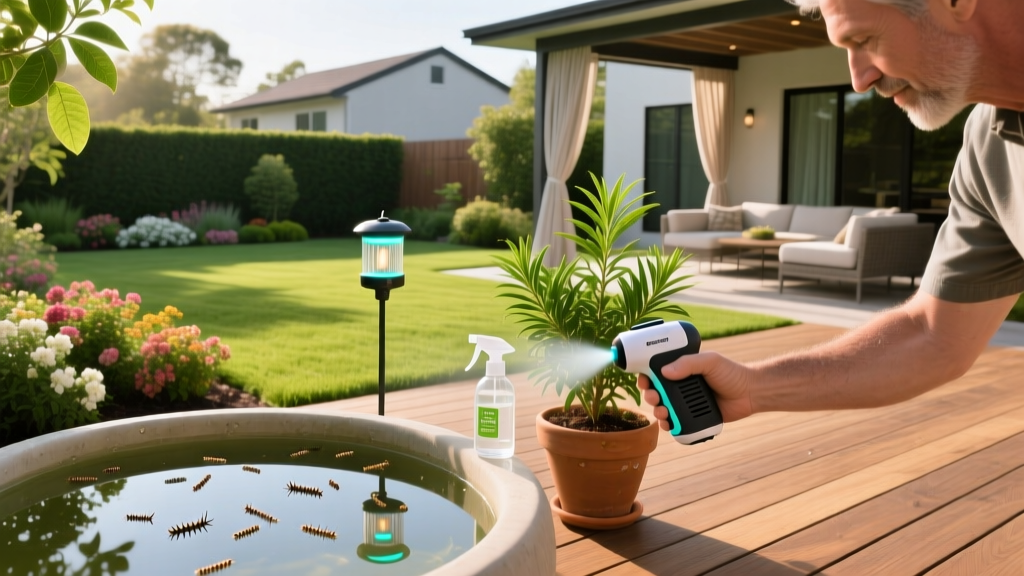
What Kills Mosquitoes? Science-Backed Yard Control Methods
The Core Question: What Actually Kills Mosquitoes?
When homeowners ask "what kills mosquitoes," the answer requires a bifurcated approach. Mosquitoes spend 75% of their life cycle in water and only 25% as flying adults. Therefore, no single product eradicates them. Effective yard control demands larvicides to destroy aquatic juveniles and adulticides to eliminate flying, biting females. Relying solely on bug zappers or citronella candles yields a 0% mortality rate for the breeding population.
This guide breaks down the exact chemical and biological agents that kill mosquitoes at every life stage, complete with specific product models, mixing ratios, and application protocols for residential yards.
The Mosquito Life Cycle: Why Timing Dictates Treatment
According to the Centers for Disease Control and Prevention (CDC), the mosquito life cycle consists of four stages: egg, larva, pupa, and adult. In optimal summer temperatures (80°F to 85°F), this cycle completes in just 7 to 10 days.
- Eggs: Laid in stagnant water or damp soil. Hatch in 24–48 hours when submerged.
- Larvae (Wigglers):strong> Aquatic stage. Molt four times over 4–14 days. This is the most vulnerable stage for targeted killing.
- Pupae (Tumblers):strong> Non-feeding, resting stage. Lasts 2–4 days. Highly resistant to most chemical treatments.
- Adults: Emerge to mate and feed. Females require a blood meal to produce eggs.
Pro Tip: Because the pupal stage is practically immune to larvicides, you must treat standing water before day 5 of the breeding cycle to prevent adults from emerging.
What Kills Mosquito Larvae? (Source Reduction & Larvicides)
Killing larvae is the most cost-effective and environmentally sound method of mosquito control. The Environmental Protection Agency (EPA) highly recommends targeting breeding sites before deploying broad-spectrum adulticides.
1. Bti (Bacillus thuringiensis israelensis)
Bti is a naturally occurring soil bacterium that produces proteins toxic only to mosquito, black fly, and fungus gnat larvae. When larvae ingest Bti, the proteins crystallize in their alkaline guts, causing fatal ruptures.
- Top Product: Summit Mosquito Dunks or Mosquito Bits.
- Cost: Approximately $12 for a 6-pack of dunks (treats 600 sq ft of water surface).
- Application: Drop one dunk per 100 square feet of water surface. For smaller containers (birdbaths, plant saucers), break a dunk into quarters. Dunks remain active for 30 days. Mosquito Bits (granular) act faster (within 24 hours) but only last 7–14 days.
2. Methoprene (Insect Growth Regulators)
Methoprene mimics juvenile insect hormones, preventing larvae from molting into adults. It does not kill them immediately but halts their development.
- Top Product: Altosid Pro-G (Granular) or Clarke MetaLarv.
- Cost: ~$45 for a 2.5 lb bag.
- Application: Ideal for large, permanent water features like retention ponds or deep ditches where Bti dunks might wash away. Lasts up to 30 days in flowing water and 150 days in static water.
What Kills Adult Mosquitoes? (Barrier Sprays & Adulticides)
When larvae hatch into adults, or when neighboring properties fail to treat their yards, you must target the flying insects. Adulticides work primarily through contact toxicity and residual surface poisoning.
Synthetic Pyrethroids: The Industry Standard
Pyrethroids are synthetic derivatives of chrysanthemum flowers. They attack the insect's nervous system, causing rapid paralysis and death. They bind to foliage, creating a lethal barrier that kills mosquitoes when they land to rest during the heat of the day.
| Active Ingredient | Brand Example | Mix Rate (per Gallon) | Residual Life | Cost Estimate |
|---|---|---|---|---|
| Bifenthrin (7.9%) | Talstar P | 1.0 fl oz | 21–30 days | $50 / 3/4 gal |
| Permethrin (36.8%) | Permethrin SFR | 1.6 fl oz | 14–21 days | $40 / quart |
| Lambda-Cyhalothrin | Demand CS | 0.4 fl oz | 30+ days | $65 / pint |
⚠️ Pollinator & Pet Warning: Pyrethroids are highly toxic to bees and aquatic life. Never spray near koi ponds, streams, or blooming flowers. Apply treatments at dusk when bees have returned to their hives. Keep pets and children off treated lawns until the spray has completely dried (usually 1–2 hours). Once dry, the residue is generally safe for mammals.
Natural & Biological Controls: Separating Fact from Fiction
Many homeowners seek organic alternatives to synthetic chemicals. While some biological controls are highly effective, the market is also flooded with pseudoscientific gadgets.
What Works:
- Mosquitofish (Gambusia affinis): A single fish can consume up to 500 mosquito larvae per day. Highly effective for large, permanent ponds. Note: Check local wildlife regulations, as they are considered invasive in some states and cannot be legally released into public waterways.
- Beneficial Nematodes (Steinernema feltiae): Microscopic worms applied to damp soil that hunt and kill pupating mosquitoes and other soil-dwelling pests. Apply at a rate of 1 million nematodes per 2,000 sq ft.
- Oil of Lemon Eucalyptus (PMD): The only plant-based EPA-registered repellent that rivals DEET for personal protection, though it does not kill the insects.
What Does NOT Work (The Myths):
- Bug Zappers (UV Light Traps): Studies from the University of Delaware show that bug zappers kill less than 1% mosquitoes, while decimating beneficial pollinators and predatory insects.
- Ultrasonic Apps & Plug-ins: Mosquitoes do not have the auditory anatomy to be repelled by high-frequency sound. These devices are universally debunked by entomologists.
- Citronella Candles: Provide a localized, 3-foot radius of mild repellency in zero-wind conditions. They do not kill mosquitoes or protect a whole patio.
Your 4-Step Yard Eradication Protocol
For comprehensive control, follow this integrated pest management (IPM) sequence every 30 days during the active season (when nighttime temperatures consistently exceed 50°F).
- The "Tip and Toss" Audit: Walk your property after a rainstorm. Empty water from corrugated downspout extensions, folded tarps, clogged gutters, tire swings, and plant saucers. Mosquitoes can breed in a bottle cap full of water.
- Deploy Larvicide: Drop Bti dunks into any standing water you cannot drain (birdbaths, rain barrels, French drain catch basins, pond edges).
- Mix and Apply Barrier Spray: Using a 1-gallon or 2-gallon pump sprayer, mix Bifenthrin at 1 oz per gallon. Spray the undersides of leaves on dense shrubs, tall grasses, and the perimeter of your property where adults rest in the shade. Avoid spraying open lawn areas where mosquitoes rarely rest.
- Maintain Airflow: Trim back overgrown vegetation to increase sunlight and wind penetration. Mosquitoes are weak fliers and avoid areas with wind speeds above 10 mph.
Frequently Asked Questions
Does spraying for mosquitoes kill beneficial insects like butterflies?
Yes. Broad-spectrum pyrethroids like bifenthrin will kill butterflies, moths, and bees if sprayed directly on them or their host plants. To minimize collateral damage, restrict barrier sprays strictly to the shaded, non-blooming perimeter shrubs and avoid spraying pollinator gardens entirely.
How long after rain do I need to reapply mosquito barrier spray?
Pyrethroids bind tightly to plant cuticles once they dry. If the spray has fully dried (usually 2 hours) before it rains, light to moderate rainfall will not wash it away. However, heavy, driving rain or continuous irrigation can degrade the residual barrier. Inspect your foliage after severe storms and reapply if mosquito activity returns prematurely.
Are there any plants that kill mosquitoes?
No plant actively kills mosquitoes. While plants like lavender, marigolds, and lemongrass contain essential oils that mildly repel them, the oils are only released when the leaves are crushed. Simply growing these plants in your yard will not reduce the local mosquito population.

