
Pest Control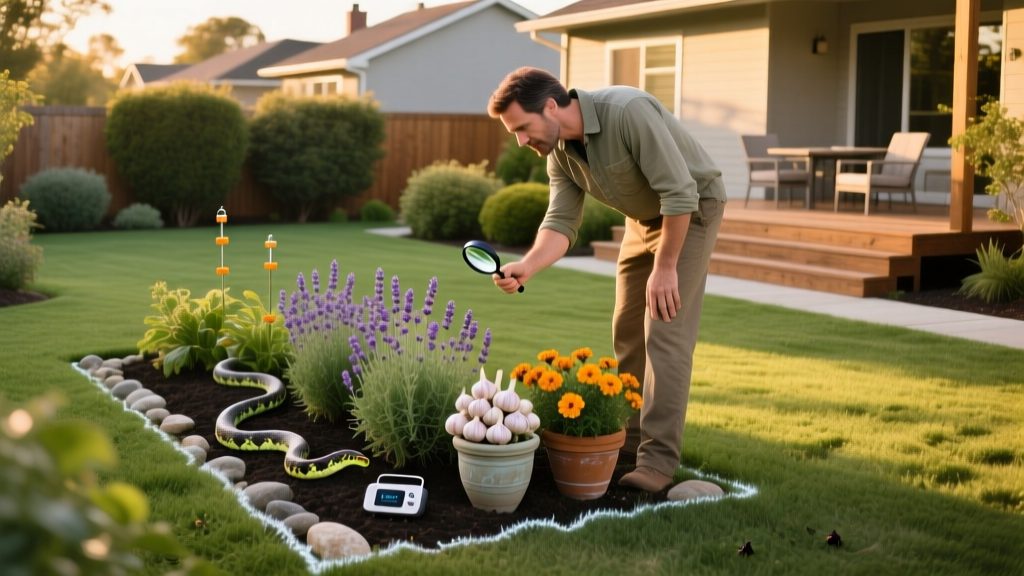
What Repels Snakes From Yards? Science-Backed Deterrents
The Reality of Snake Repellents: What Actually Works?
When homeowners ask what repels snakes, the internet is flooded with anecdotal remedies ranging from mothballs to human hair. However, herpetological science paints a vastly different picture. The truth is that no chemical spray, granular powder, or ultrasonic device offers a 100% guaranteed snake-free yard. Snakes are highly adaptable predators driven by two primary biological imperatives: thermoregulation and caloric intake. To effectively repel them, you must manipulate the environment to make your property inhospitable to both their comfort and their prey.
This guide cuts through the marketing noise of commercial repellents and details the exact habitat modifications, physical exclusion metrics, and biological controls required to deter snakes from residential landscapes.
The Biology of Snake Avoidance: Why Most Repellents Fail
Snakes do not have external ears and rely heavily on chemoreception to navigate their environment. They use their forked tongues to collect airborne and surface chemical particles, transferring them to the vomeronasal organ (Jacobson's organ) in the roof of their mouth. Many commercial repellents attempt to overwhelm this organ with strong volatile organic compounds (VOCs) like cinnamon, clove, or cedar oils.
The failure point of these chemical repellents in outdoor environments is atmospheric dissipation. While a concentrated clove oil spray might deter a snake in a closed terrarium, outdoor airflow, UV degradation, and soil absorption reduce the efficacy of these VOCs within 24 to 48 hours. Furthermore, a hungry snake tracking the scent of a rodent will willingly cross a foul-smelling chemical barrier to secure a meal.
⚠️ Regulatory Warning: The Mothball Myth
Using mothballs (naphthalene or paradichlorobenzene) outdoors to repel snakes is a persistent myth that violates federal law. The EPA strictly regulates mothballs as pesticides, and using them in a manner inconsistent with their labeling (such as scattering them across a lawn) is illegal. Furthermore, naphthalene rapidly vaporizes outdoors, offering zero snake deterrence while contaminating soil and groundwater, and posing severe toxicity risks to children and domestic pets.
Habitat Modification: The Primary Deterrent Strategy
The most scientifically validated answer to what repels snakes is removing the microclimates they require for hiding and thermoregulation. According to the Internet Center for Wildlife Damage Management, snakes seek out areas that provide cover from aerial predators and proximity to prey. Implement the following exact measurements to eliminate these harborages:
- Turf Management: Maintain lawn grass at a height of 2.5 to 3.5 inches. Snakes avoid crossing open, short grass because it exposes them to predation from hawks and owls. Never allow turf to go dormant and overgrown near the home's foundation.
- Mulch Limits: Keep mulch layers no deeper than 2 inches. Thick mulch beds (4+ inches) retain moisture and harbor insects, which attract frogs and lizards, which in turn attract snakes. Maintain a strict 12-inch bare soil or gravel buffer between mulch beds and your home's foundation.
- Debris Elevation: Store firewood, lumber, and compost bins on pallets elevated at least 18 inches off the ground. This removes the dark, humid ground-level gaps that snakes use for shedding and resting.
- Groundcover Removal: Eliminate dense, creeping groundcovers like English ivy, creeping juniper, or pachysandra near the house. Replace them with low-growing, open-structured succulents or hardscaping.
Commercial Snake Repellents: Efficacy and Cost Analysis
If habitat modification is not immediately feasible, homeowners often turn to commercial granular repellents. Below is a data-driven comparison of the active ingredients found in big-box store snake repellents, evaluating their actual field efficacy and safety profiles.
| Active Ingredient | Field Efficacy | Cost per 1,000 sq ft | Safety & Environmental Notes |
|---|---|---|---|
| Cinnamon/Clove Oil Blend | Low to Moderate (Requires weekly reapplication) | $25 - $35 | Safe for pets and plants; washes away in heavy rain. |
| Sulfur Powder | Zero (Debunked by university studies) | $10 - $15 | Skin irritant; alters soil pH negatively. |
| Predator Urine (Fox/Coyote) | Very Low (Snakes do not naturally fear mammalian predators) | $30 - $45 | Attracts actual mammalian predators to your yard. |
| Naphthalene (Mothballs) | Zero outdoors | $5 - $10 | Illegal for outdoor use; highly toxic to groundwater and pets. |
Physical Exclusion: Building a Snake-Proof Barrier
For properties adjacent to wooded areas, wetlands, or tall grass prairies, physical exclusion is the only permanent answer to what repels snakes. A properly installed snake fence alters the snake's physical ability to enter the space, regardless of its hunger or temperature needs.
Exact Specifications for Snake Fencing
Do not use standard chicken wire, as the hexagonal gaps are too large and the wire is too flimsy. You must use galvanized hardware cloth with specific dimensions:
- Mesh Size: Use 1/4-inch (0.6 cm) hardware cloth. This prevents even juvenile snakes and small rodent prey from passing through.
- Height: The fence must stand at least 24 to 30 inches above the ground to prevent climbing species (like rat snakes) from scaling it.
- Burial Depth: Bury the bottom edge 3 to 4 inches deep in the soil to stop burrowing species from sliding underneath.
- The 30-Degree Rule: Angle the entire fence outward at a 30-degree angle away from the protected area. Snakes are poor climbers of angled surfaces; this outward slant defeats their ability to gain upward traction.
- Gate Seals: Install heavy rubber weather stripping along the bottom of any gates within the fenced perimeter to eliminate gaps larger than 1/4 inch.
Biological Control: Starving the Food Web
Snakes only reside where they can eat. By managing the lower tiers of the local food web, you indirectly repel snakes. According to Penn State Extension, controlling rodent and insect populations is a critical component of integrated pest management for reptiles.
- Grub and Insect Control: Apply preventative grub treatments (like chlorantraniliprole) in late spring. Fewer grubs mean fewer earthworms and ground insects, which reduces the population of frogs, toads, and lizards—the primary food source for garter and water snakes.
- Rodent Exclusion: Seal all foundation cracks larger than 1/4 inch with copper mesh and expanding foam. Use snap traps in bait stations around the perimeter to control mouse and vole populations, removing the caloric draw for rat snakes and copperheads.
- Bird Feeder Management: Move bird feeders at least 30 feet away from the home. Spilled seed attracts mice, which in turn attracts snakes. Use catch-trays under feeders to minimize ground spillage.
The 5-Step Perimeter Audit Checklist
Conduct this audit every spring and late summer to ensure your deterrent strategies remain intact:
- Foundation Sweep: Walk the perimeter with a flashlight. Check for gaps around HVAC lines, plumbing penetrations, and crawl space vents. Seal any opening larger than a pencil.
- Vent Screening: Verify that all soffit, gable, and crawl space vents are backed with 1/4-inch hardware cloth, not just standard fiberglass mesh.
- Vegetation Pruning: Trim all shrub branches so they do not touch the home's exterior walls. This eliminates aerial bridges for arboreal snakes.
- Hardscape Inspection: Fill in any eroded gaps between retaining wall stones or patio pavers with polymeric sand to remove subterranean hiding spots.
- Water Source Audit: Fix leaky outdoor spigots and adjust sprinkler heads to prevent pooling water, which attracts amphibians and the snakes that hunt them.
Expert FAQ on Snake Deterrence
Q: Do ultrasonic snake repellents work?
A: No. Snakes lack external ears and do not hear airborne sounds the way mammals do. They sense ground vibrations. Ultrasonic devices emit high-frequency airborne sound waves that snakes physically cannot perceive, making these products entirely ineffective.
Q: Will planting lemongrass or marigolds repel snakes?
A: While these plants have strong scents that deter some insect pests, their natural VOC emissions are far too dilute to affect a snake's Jacobson's organ. Planting them provides zero measurable snake deterrence and should only be done for aesthetic or insect-control purposes.
Q: What should I do if I find a snake in my yard despite these deterrents?
A: The vast majority of yard snakes are non-venomous and beneficial, eating disease-carrying ticks and rodents. If the snake poses no immediate threat, use a garden hose to gently spray water near its tail to guide it off the property. Never attempt to handle or kill the snake, as most snakebites occur during unprovoked handling attempts.

