
Pest Control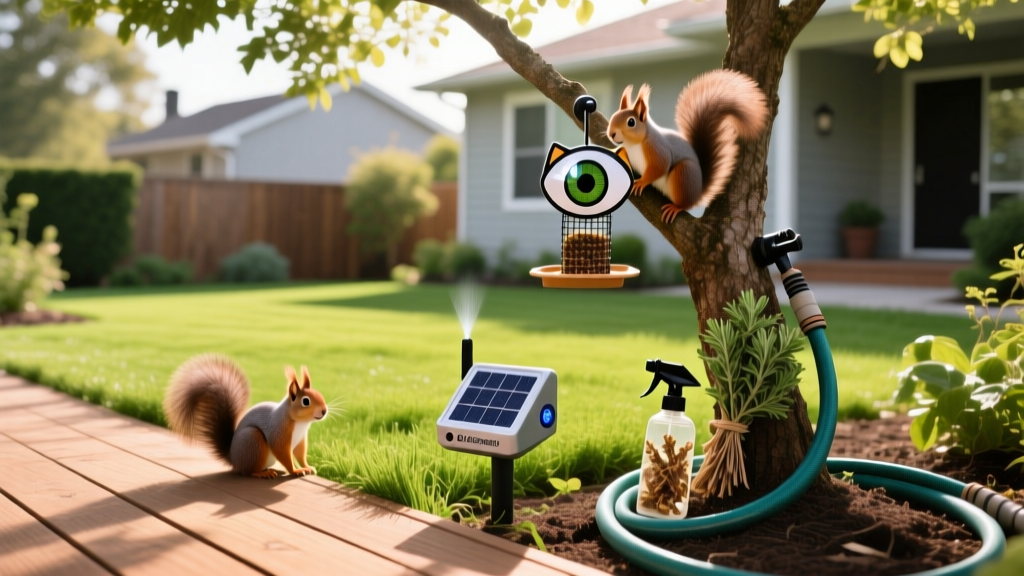
What Scares Squirrels Away: 7 Proven Yard & Garden Deterrents
Gray squirrels (Sciurus carolinensis) and Eastern fox squirrels are highly adaptable foragers capable of consuming up to 1.5 pounds of birdseed per week, stripping bark from young ornamental trees, and decimating vegetable gardens. When homeowners ask what scares squirrels away, the answer requires moving beyond generic repellents and understanding squirrel risk-assessment behavior. Squirrels are initially neophobic (fearful of new objects) but habituate rapidly to static threats. Effective deterrence relies on combining sensory disruption, physical exclusion, and habitat modification.
The Biology of Squirrel Deterrence
To exploit a squirrel's survival instincts, you must target their primary sensory inputs: olfaction (smell), gustation (taste), and their acute startle response. Squirrels possess a highly developed vomeronasal organ used to detect predator pheromones and spoiled food. Furthermore, their TRPV1 receptors—the proteins responsible for detecting heat and pain—react strongly to capsaicin, a chemical defense mechanism found in chili peppers. Interestingly, birds lack these specific TRPV1 receptors, making capsaicin an ideal targeted deterrent for protecting bird feeders without harming avian species.
Chemical and Natural Repellents That Actually Work
Not all commercial repellents are created equal. Many rely on essential oils that evaporate within hours. For lasting protection, you need formulations with binding agents that withstand UV degradation and light rainfall.
Capsaicin-Based Sprays
Products utilizing high concentrations of capsaicinoids create an immediate burning sensation on a squirrel's paws and mouth. Hot Pepper Wax Animal Repellent (typically priced around $20 for a 32-ounce ready-to-use bottle) combines capsaicin with a paraffin wax base. The wax allows the active ingredient to adhere to plant leaves and withstand up to three weeks of weather exposure. Apply this directly to the foliage of hostas, tulips, and young tree saplings. Reapplication is strictly required after heavy, prolonged downpours.
Putrescent Egg and Garlic Formulations
For broader area coverage, putrescent whole egg solids trigger a squirrel's instinctual avoidance of decaying organic matter and predator markers. Bonide Repels-All (approximately $18 for a 32-ounce concentrate) blends putrescent egg solids with garlic and rosemary oils. According to the Humane Society of the United States, scent-based repellents are most effective when rotated every 30 days to prevent olfactory habituation. Alternate between capsaicin and putrescent egg formulas monthly to maintain the element of surprise.
Warning for Pet Owners: While capsaicin and putrescent egg solids are safe for the environment, they can cause severe gastrointestinal distress if ingested in large quantities by dogs or cats. Keep pets away from treated garden beds until the liquid spray has completely dried (usually 2 to 4 hours).
Technological and Physical Barriers
When chemical repellents are impractical—such as near edible vegetable crops or high-traffic bird feeding stations—technological and physical barriers provide a non-toxic alternative.
| Deterrent Type | Specific Model / Spec | Avg. Cost | Mechanism of Action | Habituation Risk |
|---|---|---|---|---|
| Motion-Activated Sprinkler | Orbit Yard Enforcer (Model 621000) | $65 - $75 | Sudden burst of water + mechanical clicking noise | Low (Unpredictable physical stimulus) |
| Ultrasonic Repellent | Aspectek Predator Guard | $35 - $45 | Emits 13.5 to 45.5 kHz frequencies + LED flash | High (Squirrels adapt within 2-3 weeks) |
| Stovepipe Baffle | 24-inch Galvanized Steel Cylinder | $25 - $40 | Physical slip barrier preventing upward climbing | None (Physical impossibility) |
| Weight-Activated Feeder | Droll Yankees Yankee Flipper | $110 - $130 | Motorized perch spins when squirrel weight is detected | Low (Physical ejection) |
The Orbit Yard Enforcer Advantage
The Orbit Yard Enforcer (Model 621000) remains the industry standard for active garden protection. It features a 40-foot detection range and a highly specific passive infrared (PIR) sensor that differentiates between animal body heat and wind-blown foliage. Set the device to 'Day Only' or 'Night Only' modes to conserve battery life and water pressure. The sudden mechanical 'clack' of the valve opening, combined with a 5-second burst of water, triggers the squirrel's flight response far more effectively than ultrasonic sound waves, which are easily blocked by dense summer foliage.
Habitat Modification and Feeder Proofing
Deterrents fail if the reward outweighs the risk. Squirrels are acrobatic, capable of leaping 4 to 5 feet vertically and 8 to 10 feet horizontally from elevated surfaces. Proper habitat modification removes the launchpads they use to bypass your defenses.
- The 8-Foot Rule: Prune tree branches so they maintain a minimum 8-foot clearance from your roofline, bird feeders, and garden fencing. Use a pole saw for branches up to 2 inches in diameter.
- Baffle Placement: A physical baffle must be at least 18 inches in diameter (wider is better) and mounted on a smooth metal pole. Crucially, the bottom of the baffle must be installed exactly 4.5 to 5 feet off the ground. If placed lower, squirrels will simply jump over it; if placed higher, they can reach past it.
- Seed Selection: Swap standard black oil sunflower seeds for safflower seeds or white proso millet. Squirrels find the bitter taste of safflower unpalatable, while cardinals, chickadees, and finches readily consume it. Alternatively, use Nyjer (thistle) seed, which is too small and difficult for squirrels to forage efficiently.
Ineffective Methods to Avoid
The pest control market is saturated with anecdotal remedies that waste time and money. According to research summarized by the University of Minnesota Extension, the following methods consistently fail in real-world scenarios:
- Mothballs (Naphthalene): Not only do squirrels ignore the smell once it dissipates outdoors, but using mothballs outside is a violation of federal pesticide regulations and poses severe toxicity risks to groundwater and pets.
- Plastic Owls and Snakes: Squirrels possess excellent spatial memory and pattern recognition. They will investigate a static plastic owl, realize it does not move or hunt, and often use it as a resting perch within 48 hours.
- Dryer Sheets: The scent of fabric softener is entirely unnatural and does not trigger any predatory or avoidance instincts in rodents.
Scenario-Based Decision Matrix
Use this framework to select the exact combination of deterrents based on your specific property layout and the areas being targeted.
If You Are Protecting Bird Feeders:
Action Plan: Install a smooth metal pole (no wooden posts). Mount an 18-inch stovepipe baffle at 5 feet high. Fill the feeder with 100% safflower seed. Ensure the feeder is 10 feet away from any tree trunk or fence.
If You Are Protecting Vegetable Gardens:
Action Plan: Deploy the Orbit Yard Enforcer motion sprinkler at the perimeter, angled slightly downward to catch ground-level foragers. Apply Hot Pepper Wax directly to the leaves of vulnerable crops like tomatoes and squash every 21 days.
If You Are Protecting Rooflines and Attics:
Action Plan: Scent repellents will not stop a squirrel seeking shelter. Trim all branches 8 feet back from the roof. Install heavy-duty 1/2-inch galvanized steel hardware cloth over soffit vents and chimney openings. Apply a dab of Bonide Repels-All near the entry points as a secondary psychological barrier during the initial exclusion phase.
Understanding what scares squirrels away is ultimately about consistency. Squirrels are relentless testers of boundaries. By layering physical exclusions with rotating sensory deterrents and removing easy food sources, you can successfully retrain local squirrel populations to bypass your property in favor of less fortified environments.

