
Pest Control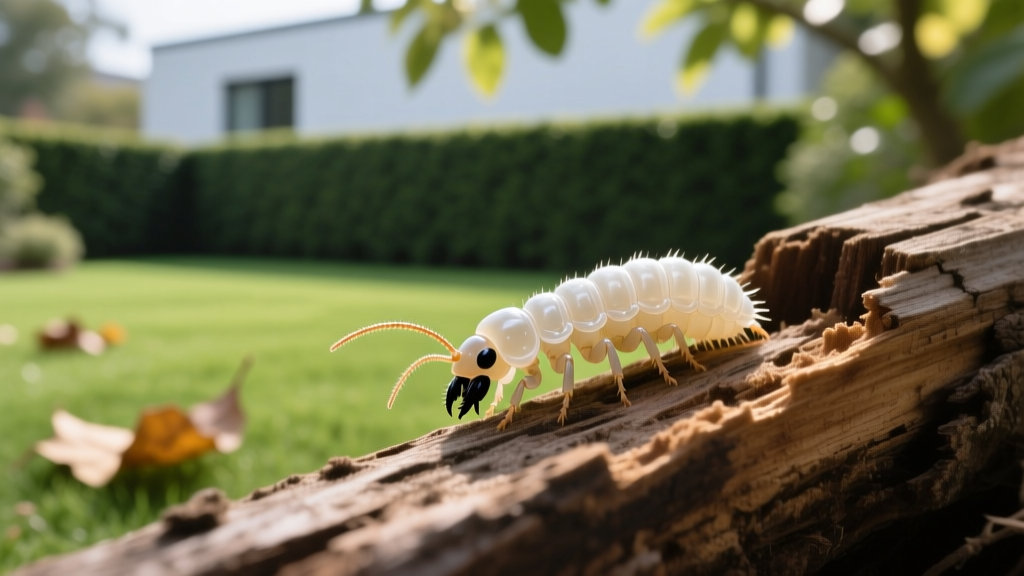
What Does Termite Larvae Look Like? Visual ID Guide
The Anatomy of Termite Larvae: Core Visual Traits
When homeowners ask, "what does termite larvae look like?", they are usually referring to the early developmental stages of a termite colony. Entomologically speaking, termites undergo incomplete metamorphosis (hemimetabolous), meaning they do not have a true "larval" stage like ants or beetles. Instead, they hatch from eggs as early instar nymphs. However, in the pest control industry, these young nymphs are frequently colloquially termed larvae.
Identifying these young termites requires a close look, as they measure a mere 1 to 3 millimeters in length—roughly the size of a grain of coarse sand. Here are the precise physical characteristics you will observe under magnification:
- Coloration: Translucent to pale milky white. Because their exoskeletons have not yet hardened or pigmented, you can often see the dark contents of their digestive tract through their abdomens.
- Body Shape: Elongated and somewhat cylindrical, lacking the distinct, pinched "waist" (petiole) found in adult ants.
- Head Capsule: Slightly darker than the body, usually a pale yellow or light amber, equipped with tiny, forward-facing mandibles used for grooming and receiving regurgitated food from worker termites.
- Appendages: Unlike true insect larvae, termite nymphs possess six tiny, fully formed legs immediately after hatching. They also feature short, bead-like antennae.
Termite Nymphs vs. Ant Larvae: The Critical Differences
The most common misidentification occurs when homeowners find pale, soft-bodied insects near wood or soil and mistake them for ant larvae. Because ants undergo complete metamorphosis (holometabolous), their true larval stage looks entirely different from termite nymphs. Understanding this distinction is vital for selecting the correct pesticide protocol.
| Feature | Termite Nymphs (Colloquial "Larvae") | Ant Larvae (True Larvae) |
|---|---|---|
| Legs | 6 distinct, jointed legs present | Completely legless (maggot-like) |
| Body Shape | Elongated, relatively straight | C-shaped, curled, grub-like |
| Mobility | Can crawl slowly when disturbed | Immobile; rely on workers for transport |
| Head Visibility | Distinct, pale yellow head capsule | Small, often retracted, brown/black capsule |
| Habitat Context | Found inside mud tubes, galleries in wood | Found in underground ant chambers, rotting logs |
Where to Find Termite Nymphs in Your Home and Yard
You will rarely see termite nymphs out in the open. They are highly susceptible to desiccation (drying out) and predation, so the colony keeps them sequestered in high-humidity environments. If you are actively trying to answer the question of what termite larvae look like in the wild, you must inspect the following specific micro-environments:
1. Inside Subterranean Mud Tubes
Subterranean termites (like the Eastern Subterranean Termite, Reticulitermes flavipes) build shelter tubes from soil, saliva, and feces. These tubes are typically 1/4 to 1 inch wide. Break open a tube near the foundation wall; if the colony is active, you will see workers, soldiers, and the pale, 2mm nymphs huddled in the humid center.
2. Within Moisture-Damaged Wood Galleries
Termites require wood with a moisture content exceeding 20%. Inspect subflooring, crawl space joists, and window sills where condensation accumulates. Termites consume wood along the grain, leaving behind a honeycomb pattern packed with a soil-like fecal material. Nymphs are usually kept in the deepest, most protected chambers of these galleries.
3. Behind Drywall and Baseboards
Formosan subterranean termites (Coptotermes formosanus) are notorious for building "carton nests" inside wall voids. If you notice baseboards that sound hollow when tapped or drywall that feels blistered and damp, carefully pry the baseboard away from the wall to expose the foraging galleries where nymphs are reared.
⚠️ Warning: The Desiccation Factor
If you expose termite nymphs to open, dry air, they will die from moisture loss within 15 to 30 minutes. Finding dead, dried-out pale insects on a windowsill usually indicates they were carried there by predators (like ants or spiders) or were blown out of a wall void during a renovation, rather than actively foraging.
Action Plan: Eradicating the Colony at the Source
Spotting termite nymphs confirms an active, breeding colony on your property. Killing the visible nymphs is useless; the queen, hidden deep underground or within a massive carton nest, can lay up to 30,000 eggs per day. You must deploy a transfer effect or colony-elimination strategy.
Liquid Termiticide Trenching (The Barrier Method)
For immediate, long-lasting protection, a non-repellent liquid termiticide like Termidor SC (Fipronil 9.1%) is the industry standard. Because it is non-repellent, termites cannot detect it. They tunnel through the treated soil, pick up the chemical, and transfer it to the nymphs and queen via grooming and trophallaxis (food sharing).
- Dilution Rate: Mix 0.8 fluid ounces of Termidor SC per gallon of water.
- Application Volume: Apply 4 gallons of the finished solution per 10 linear feet of trench.
- Trench Dimensions: Dig a trench 6 inches wide and 6 inches deep directly against the foundation.
- Cost: A 20 oz bottle costs approximately $65 and treats about 60 linear feet. Professional application for an average 2,000 sq ft home ranges from $1,200 to $2,500.
Bait Station Systems (The Interception Method)
If trenching is impossible due to concrete patios or landscaping, use bait stations containing a chitin synthesis inhibitor like Noviflumuron (found in the Trelona Compressed Termite Bait system). This chemical prevents nymphs from molting. When they attempt to shed their exoskeleton to grow into workers or soldiers, they die, eventually collapsing the colony's demographics.
- Placement: Install stations every 10 to 20 feet around the perimeter of the structure.
- Monitoring: Inspect stations every 60 days. Once foraging workers are detected, replace the monitoring base with the active Noviflumuron bait cartridge.
For comprehensive regulatory guidelines on handling subterranean termites and approved chemical classes, consult the Environmental Protection Agency's termite control protocols. Additionally, regional extension offices, such as the NC State Extension Entomology Department, provide localized data on termite swarming seasons and soil treatment specifications.
Frequently Asked Questions
Do termite larvae have wings?
No. Early instar nymphs do not have wings. Wing pads only begin to develop in later nymphal stages if the colony is preparing to produce alates (swarmers) for reproduction. If you see pale insects with distinct wing pads, they are mature secondary reproductives or late-stage swarmer nymphs, not early larvae.
Can I use over-the-counter ant bait on termite nymphs?
No. Ant baits typically use attractants tailored to the dietary preferences of ants (sugars or specific proteins) and active ingredients like Borax or Indoxacarb that do not trigger the necessary transfer effect across a termite colony's complex caste system. Using ant bait on termites will only kill the few workers that eat it, leaving the queen and nymphs unharmed.
What do termite eggs look like compared to larvae?
Termite eggs are even smaller than the nymphs, measuring about 0.5 mm. They are translucent, oval-shaped, and resemble tiny grains of white rice or caviar. They are always found in tight, protected clusters deep within the primary royal chamber, heavily guarded by worker termites.

