
Pest Control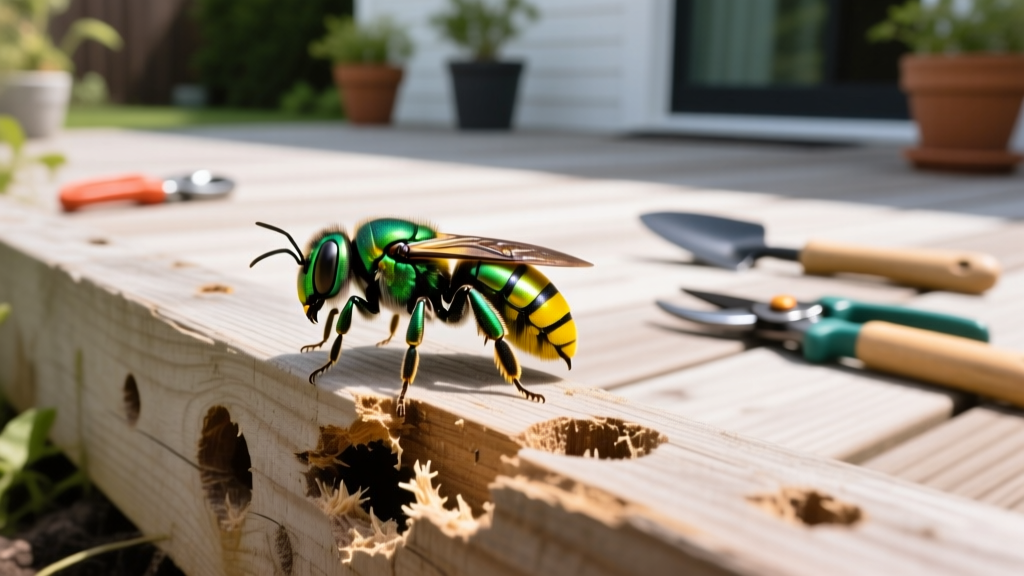
What to Do About Carpenter Bees: Identification and Control
The Real Threat of Carpenter Bees to Home Exteriors
Carpenter bees (Xylocopa species) are large, solitary insects that excavate tunnels in wood to rear their young. Unlike termites or carpenter ants, they do not eat the wood; they bore through it, creating structural galleries that compromise fascia boards, deck railings, and eaves. Over successive generations, these tunnels can extend several feet into a timber, leading to moisture intrusion, rot, and costly structural repairs. Understanding what to do about carpenter bees requires a methodical approach: accurate identification, targeted chemical or physical intervention, and long-term exclusion.
Carpenter Bee Identification Matrix
Homeowners frequently misidentify carpenter bees as bumblebees. However, their nesting habits and physical markers are distinct. Bumblebees nest underground in abandoned rodent burrows, while carpenter bees nest exclusively in dead or decaying wood. Use the comparison matrix below to confirm your pest before applying any treatment.
| Feature | Carpenter Bees | Bumblebees | Honeybees |
|---|---|---|---|
| Abdomen | Hairless, shiny black or metallic | Fuzzy, covered in dense yellow/black hairs | Striped, moderately fuzzy |
| Size | Large (1 to 1.5 inches) | Medium to Large (0.75 to 1 inch) | Medium (0.5 to 0.75 inches) |
| Nesting Site | Bored holes in wood, eaves, decks | Underground burrows, grassy banks | Aerial hives, tree cavities, man-made boxes |
| Flight Pattern | >Rapid, erratic, aggressive hovering near woodSlow, heavy, deliberate flight | Direct, purposeful flight to flowers |
Assessing the Damage: Tunnels, Frass, and Secondary Pests
The hallmark of a carpenter bee infestation is the entrance hole. According to University of Kentucky Entomology, these holes are perfectly round and measure exactly 1/2 inch in diameter. The female bee drills straight into the wood for about one to two inches, then makes a sharp 90-degree turn to tunnel parallel to the wood grain. This initial short tunnel serves as a barrier against rain and predators.
Warning: The Woodpecker Multiplier Effect
The primary damage from carpenter bees is often secondary. Woodpeckers and flickers can hear the larvae moving inside the wood. In their attempt to extract the protein-rich grubs, woodpeckers will tear open fascia boards and siding, causing exponentially more cosmetic and structural damage than the bees themselves. If you see large, jagged gashes near 1/2-inch round holes, woodpeckers have already found your carpenter bee colony.
Beneath the entrance holes, you will find piles of frass—a coarse, sawdust-like material mixed with bee excrement. The presence of fresh, light-colored frass indicates an active nest. Additionally, abandoned carpenter bee tunnels are highly attractive to secondary invaders, including yellow jackets, wasps, and moisture-loving fungi.
What to Do About Carpenter Bees: The Treatment Protocol
Eradicating an active colony requires delivering an insecticide deep into the gallery. Surface sprays are entirely ineffective because they cannot penetrate the 90-degree bend of the tunnel. Follow this specific protocol for maximum efficacy.
Step 1: Apply Insecticidal Dust
Dust formulations are superior to liquids for carpenter bees because they cling to the bee's body as it crawls through the tunnel, transferring the toxin to the larvae and other adults.
- Delta Dust (Deltamethrin 0.05%): The industry standard for bee voids. It is moisture-resistant, meaning it will not clump or lose efficacy inside damp exterior wood. A 1-pound bottle costs between $28 and $35 and will treat dozens of holes.
- Drione Dust (Silica Aerogel + Pyrethrins): An excellent alternative that combines a desiccant (silica) with a natural nerve toxin. Priced around $40 for a 10oz container.
Application Method: Use a specialized bulb duster (like the JT Eaton 365 Duster) or a bellows hand duster. Insert the duster tip about one inch into the hole and puff 2 to 3 times. Do not pack the hole tightly; the bees need space to enter and contact the dust.
Step 2: Liquid Residual Perimeter Treatment
For heavy infestations on large expanses of unpainted wood (like a cedar pergola or fence), apply a microencapsulated liquid residual. Onslaught FastCap or Cyzmic CS ($45 to $60 per pint) provides a 60-day residual barrier that kills bees landing on the treated surface. Mix at the label rate of 0.8 fl oz per gallon of water and apply using a pump sprayer at dusk when bees are inactive.
Step 3: Seal the Tunnels (Timing is Critical)
Do not seal the holes immediately after dusting. Penn State Extension recommends waiting 48 to 72 hours. This allows foraging bees to return to the nest, track the dust deep into the gallery, and eliminate the larvae. After the waiting period, plug the holes using:
- Cork Stoppers: 1/2-inch natural corks provide a tight, weather-resistant seal and can be painted over.
- Exterior Wood Putty: For a seamless finish, use a high-quality, paintable exterior wood filler like Minwax High Performance Wood Filler ($12 per tub).
- Dowel Rods: Cut 1/2-inch wooden dowels to size, coat them in exterior wood glue, and tap them into the hole with a mallet.
Preventative Wood Treatments and Exclusion
Carpenter bees strongly prefer untreated, unpainted, and weathered softwoods like cedar, redwood, and cypress. The most permanent solution to prevent future nesting is altering the wood's surface profile.
- Paint vs. Stain: Solid-body exterior paint (e.g., Sherwin-Williams Duration or Benjamin Moore Aura Exterior) completely masks the wood grain and deters boring. Transparent or semi-transparent stains offer zero protection against carpenter bees, as they can still detect and penetrate the wood fibers.
- Polyurethane Coatings: If you wish to maintain the natural wood look, apply two heavy coats of marine-grade spar urethane. The thick, glossy plastic barrier prevents the bees' mandibles from gripping the wood.
- Borate Treatments: Products like Bora-Care ($85 per gallon) penetrate deeply into raw wood. While primarily used for termites and wood decay fungi, the borate salts make the wood unpalatable and toxic to a wide range of wood-destroying organisms, offering a secondary line of defense.
Natural Deterrents and the Decoy Nest Myth
Many online guides suggest hanging "decoy nests" (paper or wood structures mimicking wasp or bee hives) to deter carpenter bees through territorial intimidation. From an entomological standpoint, this is ineffective. Carpenter bees are solitary and do not exhibit the same aggressive territorial defense mechanisms as social wasps or honeybees; they will readily nest inches away from a decoy.
For non-lethal, organic deterrence on outdoor furniture or small decor, pure almond oil or citrus oil extracts can be rubbed into the wood. The strong volatile organic compounds mask the scent of the wood and irritate the bees' sensory receptors. However, these oils evaporate quickly and require reapplication every 7 to 10 days during the spring mating season.
Pollinator Preservation and Legal Considerations
While carpenter bees can damage property, they are also vital native pollinators, particularly for open-faced flowers and crops like tomatoes and eggplants (via buzz pollination). Male carpenter bees are entirely harmless; they lack stingers and only exhibit aggressive hovering behavior to defend mating territories. Female bees possess stingers but are highly docile and will only sting if physically crushed or handled. When deciding what to do about carpenter bees, target only the structural nests threatening your home, and leave foraging bees in the garden undisturbed.

