
Pest Control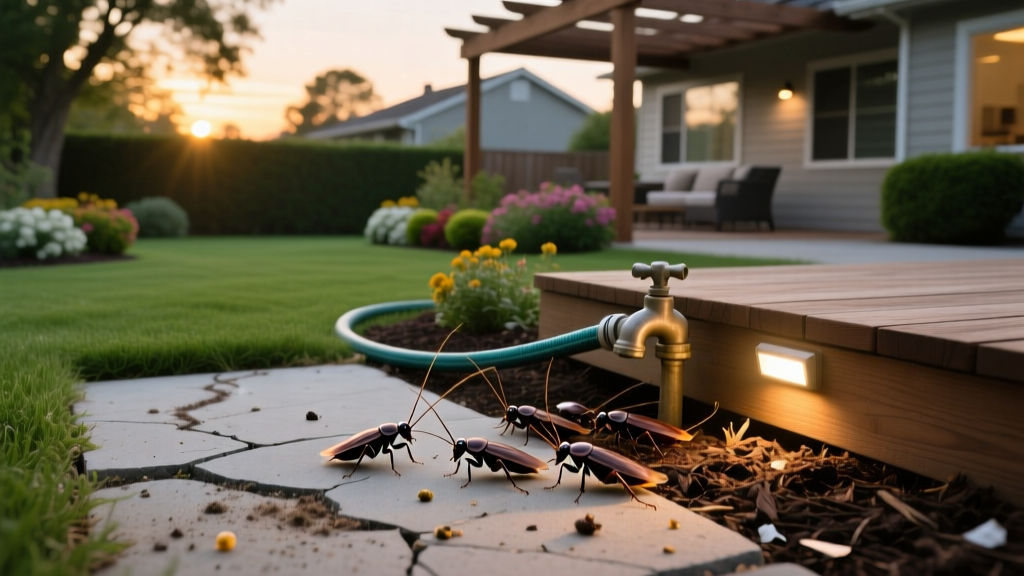
When Do Roaches Come Out? Yard Defense & Activity Peaks
The Circadian and Seasonal Clock: When Do Roaches Come Out?
Understanding when do roaches come out requires looking at both daily light cycles and seasonal temperature shifts. Peridomestic cockroaches—primarily the American, Smokybrown, and Oriental species that thrive in yards—are strictly nocturnal. Their peak surface activity begins approximately two hours after sunset and tapers off just before dawn. During daylight hours, they remain hidden in moist, dark harborage sites to avoid desiccation and predators.
Seasonally, yard roach activity is entirely dictated by ambient temperature and soil moisture. As ectotherms, their metabolic rate and foraging aggression scale directly with the heat. While you might spot a stray roach on a warm winter evening, true population-level emergence and migration toward your home’s foundation occur when nighttime temperatures consistently exceed 65°F (18°C).
| Ambient Nighttime Temp | Activity Level | Behavioral Shift & Yard Impact |
|---|---|---|
| Below 50°F (10°C) | Dormant | Seek deep harborage in municipal sewer lines, septic tanks, or heated crawlspaces. Surface yard activity is virtually zero. |
| 50°F - 65°F (10-18°C) | Low to Moderate | Slow foraging near immediate harborage sites like compost bins. Minimal migration toward the home structure. |
| 65°F - 85°F (18-29°C) | Peak Activity | Aggressive nocturnal foraging. High migration rates from yard mulch beds and woodpiles directly toward foundation cracks and weep holes. |
| Above 85°F (29°C) | Heat & Moisture Stress | Desperation for water increases. Roaches are frequently pushed indoors through HVAC weep holes and door sweeps seeking condensation and AC drip lines. |
Yard Hotspots: Where They Emerge Before Entering Your Home
Before a roach breaches your interior, it establishes a perimeter outpost in your landscaping. According to entomologists at the University of Florida IFAS Extension, Smokybrown cockroaches are strong fliers and are highly attracted to specific yard features that retain moisture and organic debris.
- Overgrown Mulch Beds: Hardwood mulch decaying against the foundation holds moisture and provides an endless food source.
- Compost Bins & Leaf Piles: The fermentation heat and decaying plant matter create an ideal incubator for egg cases (oothecae).
- Woodpiles and Lumber Stacks: Stacked firewood resting directly on soil offers tight, dark crevices that mimic their natural tree-hole habitats.
- Clogged Gutters and Downspouts: Accumulated wet leaves in gutters provide an elevated, protected highway straight to your roofline and attic vents.
⚠️ Critical Landscaping Warning: The Mulch Trap
Applying mulch thicker than 2 inches or piling it directly against your siding creates a perfect, moisture-retaining microclimate. Maintain a strict 6-inch bare-soil or gravel buffer between any organic ground cover and your foundation wall to expose migrating roaches to open, dry ground where they are vulnerable to desiccation and predators.
Perimeter Defense Protocol: Stopping the Migration
Effective yard defense relies on a layered approach combining moisture management, non-repellent baits, and residual barriers. As of 2026, relying solely on over-the-counter repellent sprays is considered an outdated practice that often pushes yard populations indoors. Follow this professional-grade protocol to secure your perimeter.
Step 1: Moisture and Harborage Elimination
Roaches cannot survive long without water. Inspect your yard for leaky hose bibs, poorly graded soil that pools against the foundation, and AC condensation lines dripping onto mulch. Extend downspouts at least 4 feet away from the house. Elevate firewood on metal racks at least 18 inches off the ground and move stacks a minimum of 20 feet away from the home’s exterior.
Step 2: Strategic Non-Repellent Baiting
Instead of spraying chemicals that repel roaches (causing them to scatter and find new entry points), use non-repellent baits that they willingly consume and carry back to their harborage. Alpine WSG (active ingredient: Dinotefuran) is a water-soluble granule that leaves no visible residue and does not trigger avoidance behavior.
- Cost: Approximately $45 for a box of 5 packets.
- Mixing Rate: 1 packet per gallon of water.
- Application: Spray a 3-foot band up the foundation wall and a 3-foot band out onto the soil/mulch. Apply in the late evening so the liquid dries overnight, leaving a microscopic toxic residue that roaches walk through and ingest during their peak 2-hour post-sunset emergence.
Step 3: Targeted Gel Baiting in Hardscape Cracks
For cracks in patios, retaining walls, and sewer cleanout caps, use Advion Cockroach Gel Bait (active ingredient: Indoxacarb). This product exploits a biochemical delay in the roach's metabolism, allowing the forager to return to the nest and excrete the toxicant, which is then consumed by nymphs (coprophagy).
- Cost: Roughly $35 for a 4-tube box.
- Application: Apply small, pea-sized dots every 12 inches inside deep hardscape cracks and under the lips of concrete slabs. Do not apply in broad streaks.
Step 4: The Repellent Barrier (Used Correctly)
Repellents like Talstar P (Bifenthrin) still have a place in yard defense, but never apply them over or adjacent to your baits. Use Talstar P ($55 for a 3/4 gallon jug, mixed at 1 fl oz per gallon) strictly on the outer edges of your property line, around detached sheds, and near municipal sewer grates to create a "kill zone" that reduces the overall neighborhood population before they reach your home.
Species-Specific Yard Behavior Matrix
Identifying the specific roach in your yard dictates your defense strategy. The NC State Extension notes distinct behavioral differences among the three primary peridomestic species.
| Species | Primary Yard Habitat | Mobility & Flight | Targeted Defense Tactic |
|---|---|---|---|
| American Cockroach | Sewer grates, septic tanks, damp crawlspaces, steam tunnels. | Strong runners; capable of short, gliding flights when extremely hot. | Focus on sewer cleanout caps and plumbing penetrations. Use heavy-duty mesh screens over weep holes. |
| Smokybrown Cockroach | Tree holes, roof soffits, clogged gutters, dense ivy on walls. | Exceptional, strong fliers; highly attracted to porch lights at night. | Trim tree branches 6 feet from the roofline. Treat gutters and upper soffits with Alpine WSG. |
| Oriental Cockroach | Cool, damp soil, leaf litter, basement window wells, under concrete slabs. | Flightless; slow-moving scavengers that rely on high ground moisture. | Improve drainage. Treat window wells and foundation bases with granular baits and Bifenthrin barriers. |
Troubleshooting: Why Your Yard Defense Failed
If you are still seeing large roaches migrating across your patio at night despite treatment, you are likely falling victim to one of these common application errors:
Common Failure Modes & Corrections
- Error: Spraying Repellents Over Bait. If you spray Talstar P (Bifenthrin) on a patio crack where you previously placed Advion Gel, the bitter, repellent nature of the Bifenthrin will mask the bait. The roaches will avoid the crack entirely.
Fix: Maintain a strict 3-foot physical separation between repellent liquid barriers and non-repellent baits. - Error: Ignoring the Neighbor's Property. Peridomestic roaches easily migrate across property lines. If your neighbor has an untamed, mulch-heavy yard, your perimeter will face constant pressure.
Fix: Heavily bait the shared property line using granular baits (like Intice) and establish a dense liquid barrier on your side of the fence. - Error: Treating at the Wrong Time of Day. Applying liquid sprays at noon in July causes rapid UV degradation and evaporation before the active ingredient can bind to the soil.
Fix: Always apply liquid perimeter treatments between 6:00 PM and 8:00 PM, allowing the product to dry undisturbed in the dark just as the roaches begin their nightly emergence.
Mastering yard defense requires aligning your treatment schedule with the biological rhythms of the pest. By targeting their peak nocturnal emergence windows and eliminating the specific microclimates they rely on during the day, you can effectively break the migration cycle and keep peridomestic cockroaches outside where they belong. For comprehensive guidelines on safe pesticide handling around the home, always consult the Environmental Protection Agency's pest control resources before beginning any chemical application.

