
Pest Control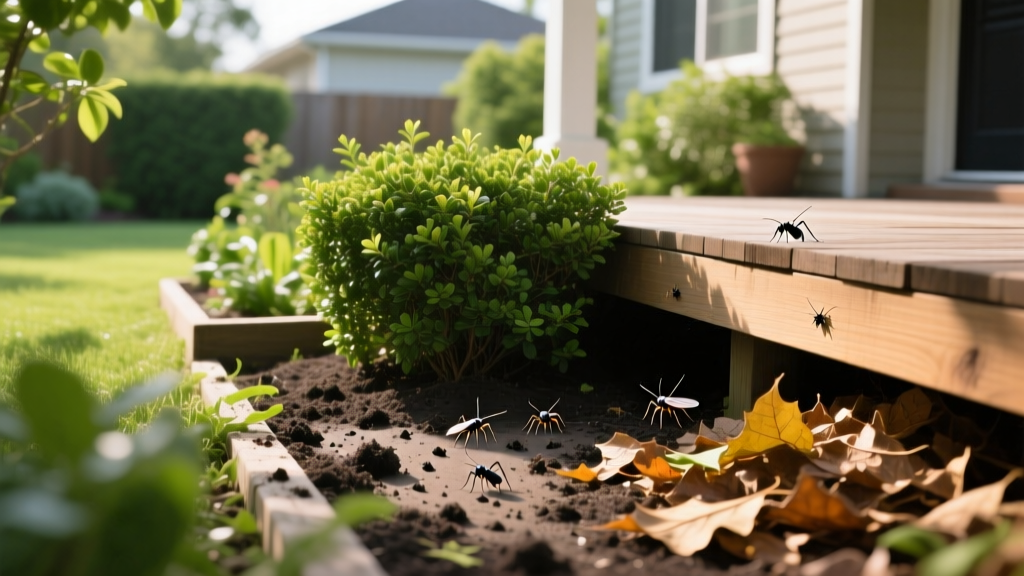
Where Do Fleas Live Outdoors? Mapping Yard Hotspots for Defense
While most homeowners associate fleas with indoor carpets and pet bedding, up to 95% of a flea infestation exists off the host in the surrounding environment. If your dog or cat is constantly scratching despite topical treatments, your yard is likely harboring a massive outdoor colony. Understanding exactly where do fleas live outdoors is the first critical step in breaking the reproductive cycle and reclaiming your lawn.
Fleas are not random lawn invaders; they are highly specialized parasites that require specific microclimates to survive their vulnerable larval and pupal stages. By mapping these microclimates and understanding the wildlife vectors that deliver them, you can transition from reactive pet treatments to proactive, targeted yard defense.
The Science of Flea Microclimates: Why Your Yard is a Haven
Adult fleas spend their entire lives on a host, but they only account for about 5% of the total flea population. The remaining 95%—eggs (50%), larvae (35%), and pupae (10%)—fall off the host into the environment. According to the University of California Integrated Pest Management (UC IPM) program, flea larvae are photophobic (light-avoiding) and highly susceptible to desiccation. They cannot survive in direct sunlight or dry soil.
The 85°F and 70% Humidity Rule
Flea larvae thrive in temperatures between 70°F and 85°F with a relative humidity of 70% to 85%. If the soil surface drops below 50% relative humidity, larvae will dehydrate and die within days. Consequently, outdoor flea colonies are strictly confined to shaded, moisture-retaining zones where direct UV radiation cannot penetrate.
Mapping the Hotspots: Exactly Where Do Fleas Live Outdoors?
To effectively treat your property, you must stop broadcasting insecticides across the entire lawn. Fleas do not live in the middle of a sunny, mowed Bermuda or Kentucky Bluegrass lawn. Instead, they cluster in specific perimeter and structural hotspots.
- The Drip Line and Foundation Shrubs: The soil directly beneath foundation bushes and along the home's drip line retains high moisture and offers deep shade. If your dog sleeps near the back door or patrols the fence line, this is ground zero for egg deposition.
- Under Decks, Porches, and Sheds: These structures block UV light and rainfall, creating a permanent, humid microclimate. The soil here remains undisturbed, allowing pupae to safely develop or remain dormant for months.
- Overgrown Ornamental Grasses and Leaf Litter: Thatch exceeding 0.5 inches and un-raked leaf litter act as a sponge, trapping humidity at the soil level while providing physical cover from predators and sunlight.
- Shaded Fencelines and Crawlspace Vents: Fences create wind shadows that reduce evaporation, keeping the soil moist. Crawlspace vents often expel humid air from under the house, creating an ideal incubation zone for flea larvae.
Rodent & Wildlife Vectors: The Hidden Delivery System
Fleas do not just appear in your yard; they are delivered. While your pets contribute to the problem, wild animals are the primary vectors introducing new genetic lines and massive egg loads into your landscape. As noted by Texas A&M AgriLife Extension, wildlife management is inseparable from flea control.
| Wildlife Vector | Preferred Yard Habitat | Flea Species Carried | Defense Strategy |
|---|---|---|---|
| Opossums & Raccoons | Under decks, crawlspace openings, compost bins | Ctenocephalides felis (Cat Flea) | Install 1/4-inch steel hardware cloth over crawlspace vents and under-deck openings. |
| Norway & Roof Rats | Dense ivy, woodpiles, burrows near foundations | Xenopsylla cheopis (Rat Flea) | Remove ground-level woodpiles; use tamper-resistant bait stations along fencelines. |
| Stray & Feral Cats | Under shrubs, shaded garden beds, sheds | Ctenocephalides felis (Cat Flea) | Apply motion-activated sprinklers; secure trash can lids with bungee cords. |
| Eastern Gray Squirrels | Tree canopies, attics, roof intersections | Orchopeas howardi (Squirrel Flea) | Trim tree branches 8 feet away from the roofline; seal attic soffit vents. |
Targeted Yard Defense Protocol: Eradicating Outdoor Colonies
Once you have identified the hotspots and secured the perimeter against wildlife vectors, you must treat the soil. Because flea pupae are encased in a sticky, debris-covered cocoon that makes them entirely immune to insecticides, treatments must be timed and selected carefully to target larvae and emerging adults.
1. Chemical Control: Bifenthrin Suspension
For severe infestations, a professional-grade pyrethroid is required. Bifenthrin (available in products like Talstar P) provides rapid knockdown and a 30-to-90-day residual barrier in shaded soils.
- Mixing Ratio: 1 fluid ounce of Talstar P per 1 gallon of water.
- Coverage: 1 gallon treats 1,000 square feet.
- Application: Use a pump sprayer to drench the soil in identified hotspots (under decks, fencelines, and foundation shrubs). Do not treat the entire sunny lawn.
- Cost: Approximately $45 to $55 per gallon concentrate, yielding up to 4,000 sq ft of coverage per bottle.
⚠️ Pet & Pollinator Safety Warning: Pyrethroids are highly toxic to aquatic life and cats when wet. Keep all pets off treated surfaces until the application is completely dry (usually 2 to 4 hours). Avoid spraying near koi ponds, birdbaths, or blooming flowers where foraging bees are active.
2. Biological Control: Beneficial Nematodes
For organic lawns or homes with highly sensitive pets, beneficial nematodes (Steinernema carpocapsae) offer a lethal, non-chemical alternative. These microscopic worms actively hunt and infect flea larvae in the soil, killing them within 48 hours.
- Application Rate: 1 million nematodes per 1,000 square feet.
- Timing: Apply in the early morning or late evening when UV light is low.
- Moisture Requirement: The soil must be kept consistently moist for 7 days post-application; water the area lightly before and after spraying.
- Cost: $30 to $40 for a 10-million pack (brands like Arbico Organics or BioLogic), sufficient for 10,000 sq ft.
Environmental Modifications to Break the Life Cycle
Chemical and biological treatments will fail if the yard's microclimate remains conducive to flea survival. You must alter the environment to expose the soil to lethal UV radiation and reduce humidity.
- Aggressive Thatch Removal: Rent a power dethatcher if your lawn's thatch layer exceeds 0.5 inches. Thatch acts as a humidity blanket, protecting larvae from desiccation and chemical penetration.
- Canopy Pruning: Trim the lower branches of foundation shrubs and trees up to 18 inches from the ground. This allows sunlight to penetrate the soil surface, naturally killing photophobic larvae.
- Eliminate Ground-Level Clutter: Remove stacked firewood, unused terracotta pots, and dense ivy beds near the home's perimeter. These are prime resting spots for flea-carrying rodents and feral cats.
- Optimize Irrigation: Switch from frequent, shallow daily watering to deep, infrequent soakings (e.g., 1 inch of water twice a week). This allows the top inch of soil to dry out between cycles, fatally dehydrating flea eggs and larvae.
Frequently Asked Questions
Can fleas survive in the yard during winter?
Yes. While freezing temperatures kill exposed fleas, the Ctenocephalides felis (cat flea) can survive winter in protected outdoor microclimates, such as inside rodent burrows, under insulated sheds, or in deep leaf litter where the ground temperature remains above freezing. Additionally, flea pupae can remain dormant in the soil for up to 155 days waiting for the vibrations and carbon dioxide of a passing host.
Does cedar wood chips repel fleas?
Cedar contains natural aromatic oils (thujone) that act as a mild repellent to adult fleas. Replacing standard mulch with cedar chips in shaded dog runs and foundation beds can deter adult fleas from settling. However, cedar chips will not kill existing larvae or pupae already established in the soil beneath the mulch.
How long does it take to eliminate an outdoor flea infestation?
Because of the pupal stage's resistance to insecticides, expect a 3-to-6 week eradication timeline. Initial treatments will kill larvae and emerging adults, but you must wait for the dormant pupae to hatch and contact the residual insecticide or nematodes. Consistent follow-up treatments every 14 to 21 days are required to break the cycle completely.

