
Pest Control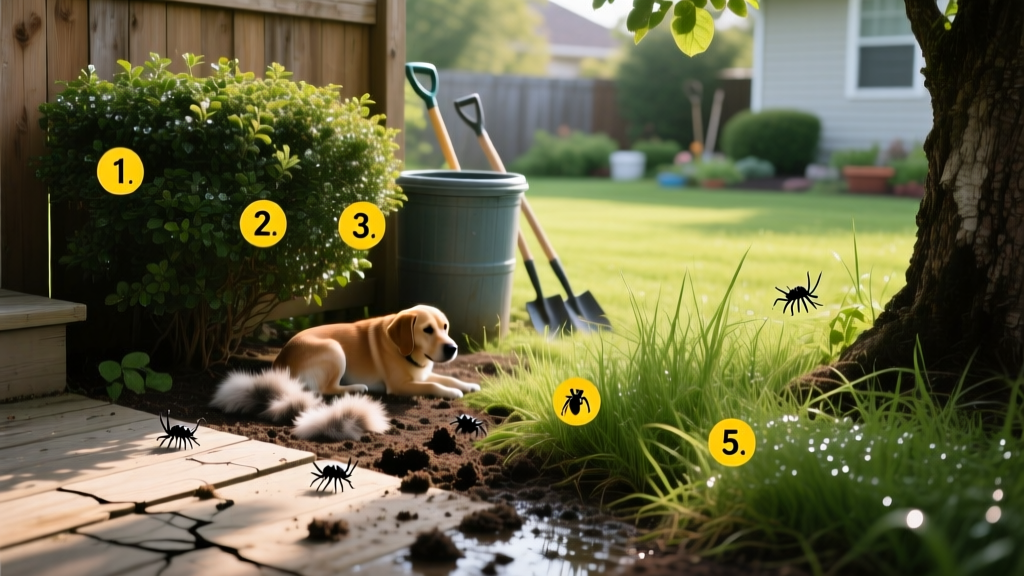
Where Do Fleas Live Outside? 5 Yard Hotspots and How to Treat Them
When pets scratch incessantly, most homeowners immediately treat the animal and vacuum the living room. Yet, treating the indoor environment only addresses a fraction of the problem. To break the reproductive cycle, you must understand where do fleas live outside. Adult fleas represent only about 5% of the total population; the remaining 95% consists of eggs, larvae, and pupae developing in your yard's microclimates.
Flea larvae are highly susceptible to desiccation and ultraviolet (UV) radiation. They cannot survive in open, sun-baked lawns. Instead, they seek out specific outdoor refuges that offer high humidity, moderate temperatures, and organic debris. Identifying and treating these precise zones is the most cost-effective way to reclaim your yard.
The Microclimate Requirement: Why Fleas Choose Specific Zones
Flea larvae thrive in environments where the temperature remains between 70°F and 85°F, and relative humidity stays above 70%. Direct sunlight is lethal to them, killing larvae within hours by drying out their exoskeletons. Therefore, outdoor flea populations are never distributed evenly across a property. They cluster in transitional zones where moisture is trapped and sunlight is blocked. According to the University of California Statewide IPM Program, targeting these specific microclimates with localized treatments is vastly more effective than broadcasting insecticides across an entire sunlit lawn.
5 Primary Outdoor Flea Hotspots in Your Yard
If you are mapping your property for treatment, focus your time, budget, and active ingredients on these five high-risk areas.
1. Under Decks, Porches, and Stairs
The crawl spaces beneath elevated wooden structures provide the ultimate flea sanctuary. These areas are shielded from UV rays, retain ground moisture, and often accumulate wind-blown organic debris. Furthermore, wildlife (like opossums, raccoons, and feral cats) frequently use these spaces for shelter, continuously seeding the soil with flea eggs.
2. Dog Runs and High-Traffic Pet Zones
Where your dog rests, plays, or relieves itself outdoors is ground zero for flea accumulation. Shaded areas under dog houses, around water bowls, and along the fence lines of dog runs receive a constant deposit of adult fleas jumping off the host to lay eggs in the soil.
3. Shady Fence Lines and Property Edges
Perimeter fences, especially those bordered by tall weeds, ivy, or neighboring overgrown lots, create deep shade and trap morning dew. These edges act as highways for rodents and stray animals, introducing new flea populations directly into the damp soil at the base of the fence.
4. Mulch Beds and Leaf Litter
Standard hardwood mulch and accumulated autumn leaves act as a sponge for moisture. The decaying organic matter not only maintains the high humidity larvae require but also provides a food source (flea feces, or 'flea dirt', and other organic debris) for the developing larvae.
5. Foundation Plantings and Dense Shrubs
Thick foundation plantings like boxwoods, azaleas, and junipers block sunlight from reaching the soil near your home's foundation. The dense canopy creates a humid terrarium effect, allowing flea pupae to remain dormant in the soil for months, waiting for the vibration of a passing host.
How to Map Your Yard: The White Sock Drag Test
Before purchasing chemical treatments, you must verify exactly where the fleas are actively residing. Pest control professionals use a simple, highly effective diagnostic tool called the sock drag test.
- Prepare the Tool: Pull a pair of white, calf-length cotton tube socks over your shoes and pant legs. (White is mandatory, as flea dirt and the insects themselves contrast sharply against it).
- Execute the Drag: Walk slowly through the suspected hotspots (under decks, along fence lines, through mulch beds). Shuffle your feet to simulate the vibration and carbon dioxide output of a pet.
- Inspect and Map: Stop every 10 feet to examine the socks. Look for adult fleas (tiny, dark, fast-moving insects) and flea dirt (black specks that turn red when crushed with a drop of water).
- Mark the Zones: Use landscaping flags to mark areas where fleas are detected. These flagged zones are the only areas that require heavy chemical or biological treatment.
Targeted Treatment Matrix: Chemical vs. Biological Controls
Once hotspots are identified, select your treatment based on the environment and the presence of pets or wildlife. The Environmental Protection Agency (EPA) recommends utilizing Insect Growth Regulators (IGRs) alongside adulticides to prevent reproductive rebound.
| Control Method | Active Agent / Ingredient | Target Life Stage | Est. Cost / 1,000 sq ft | Best Use Case |
|---|---|---|---|---|
| Microencapsulated Adulticide | Bifenthrin (e.g., Talstar P) | Adults | $4.00 - $7.00 | Perimeter fence lines, under decks (quick knockdown) |
| Insect Growth Regulator (IGR) | Pyriproxyfen (e.g., NyGuard) | Eggs, Larvae | $8.00 - $12.00 | Mulch beds, shaded soil (breaks breeding cycle for 7 months) |
| Biological Control | Steinernema carpocapsae Nematodes | Larvae, Pupae | $15.00 - $22.00 | Organic gardens, pet runs, areas near water sources |
| Granular Soil Treatment | Imidacloprid + Cyfluthrin | Adults, Larvae | $10.00 - $14.00 | Deep thatch layers, heavy leaf litter zones |
CRITICAL APPLICATION RULE: Never apply liquid Bifenthrin or IGRs to sun-baked, dry soil. The chemicals will degrade rapidly under UV light. Apply treatments in the late evening, and immediately water the zone with exactly 1/4 inch of irrigation to wash the active ingredients down into the thatch and topsoil where the larvae reside.
Cultural Defense: Landscaping Tweaks to Destroy Flea Habitats
Chemical and biological treatments will fail if the underlying microclimate remains favorable for flea development. Implement these structural landscaping changes to make your yard inhospitable to larvae.
- Canopy Pruning: Limb up foundation shrubs and trees so the lowest branches are at least 2 feet off the ground. This allows UV light to penetrate the soil surface, naturally desiccating flea eggs.
- Mowing Heights: Maintain your turf at the lower end of its recommended height during peak flea season (late spring to early autumn). For Bermuda grass, maintain 1.0 to 1.5 inches; for Tall Fescue, maintain 2.5 to 3.0 inches. Shorter grass reduces soil-level humidity.
- Mulch Substitution: Replace standard hardwood mulch in high-risk zones with cedar or eucalyptus mulch. Cedar contains natural oils (thujone) that act as a mild repellent to adult fleas and deter larvae from settling.
- Wildlife Deterrence:Secure trash cans and install physical barriers (like 1/2 inch hardware cloth) under decks to prevent opossums and feral cats from nesting. These animals are primary vectors for introducing new flea strains to your property.
Common Application Mistakes That Cause Rebound Infestations
Homeowners often report that outdoor treatments 'stop working' after three weeks. This is rarely due to chemical resistance; it is almost always a failure to address the pupal stage.
The flea pupa is encased in a sticky, silken cocoon that is virtually impermeable to most liquid insecticides and biological nematodes. Pupae can remain dormant in the soil for up to 150 days, emerging only when they detect the heat, carbon dioxide, and physical vibrations of a passing host.
Because you cannot chemically kill the pupae, you must rely on an IGR (like Pyriproxyfen) to sterilize the adults that emerge, or use beneficial nematodes which can actively penetrate the cocoons in damp soil. Treating only once is a mathematical guarantee of failure. You must apply a fast-acting adulticide to clear the current population, followed by an IGR application 14 days later to intercept the next generation as they hatch from the pupal stage.
By understanding exactly where fleas live outside and mapping your yard's microclimates, you can transition from reactive, whole-yard chemical broadcasting to precise, highly effective hotspot elimination.

