
Pest Control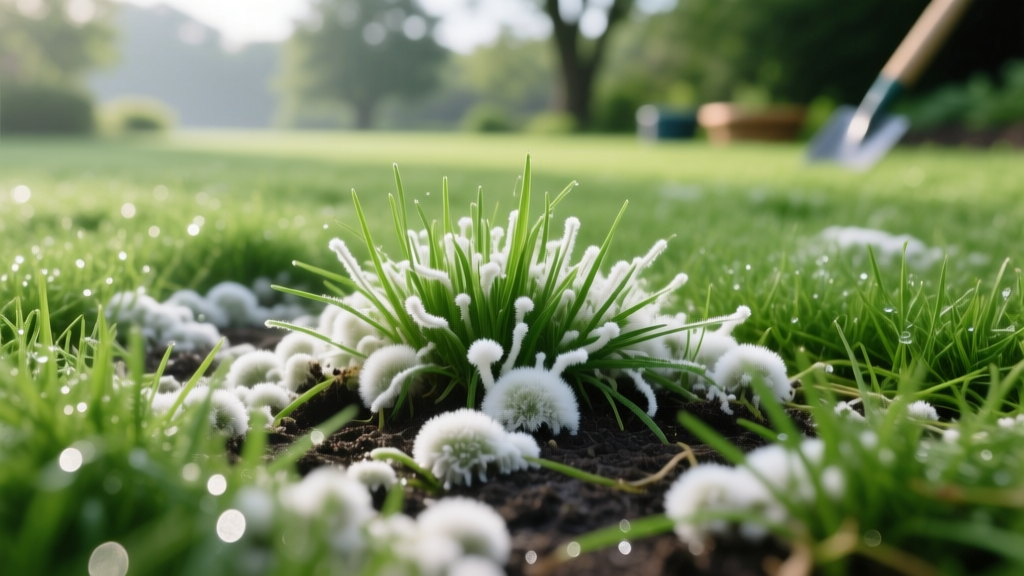
White Fungus on Grass: Exact Diagnosis & Rescue Fixes
Seeing white fungus on grass is an immediate indicator of a pathogenic invasion, but 'white fungus' is a visual symptom, not a specific disease. Homeowners often misapply treatments because they fail to distinguish between the three primary culprits: powdery mildew, snow mold, and the mycelium stage of dollar spot. Applying a contact fungicide to a systemic issue, or treating snow mold in the heat of summer, wastes money and allows the pathogen to establish resistance.
This guide bypasses generic advice to provide a precise diagnostic framework and targeted rescue protocols. We will cover exact active ingredients, Fungicide Resistance Action Committee (FRAC) codes, application rates, and the cultural corrections required to halt the infection within 48 hours.
The Diagnostic Matrix: Identifying Your Specific White Fungus
Accurate identification dictates your chemical and cultural response. Use the matrix below to match your lawn's symptoms to the correct pathogen. For comprehensive regional data, turfgrass pathology resources like the NC State TurfFiles database remain the gold standard for visual confirmation.
| Pathogen / Disease | Visual Symptoms | Primary Grass Targets | Environmental Triggers | Seasonality |
|---|---|---|---|---|
| Powdery Mildew (Erysiphe graminis) | White, talc-like dust coating the surface of leaf blades. Leaves may yellow and die back. | Kentucky Bluegrass, Bermudagrass, Fescue | High humidity, poor air circulation, heavy shade (less than 4 hours direct sun). | Late Spring, Fall |
| Snow Mold (Microdochium nivale / Typhula incarnata) | Circular, matted patches (2-12 inches) covered in white, gray, or pinkish web-like mycelium. | Cool-season grasses (Ryegrass, Fescue, Bluegrass) | Prolonged snow cover on unfrozen ground, heavy autumn nitrogen, tall grass entering winter. | Early Spring (post-snowmelt) |
| Dollar Spot Mycelium (Clarireedia jacksonii) | White, cobweb-like threads visible only in the morning dew. Patches are silver-dollar sized and turn straw-colored. | Almost all warm and cool-season turfgrasses | High humidity, warm days (70-85°F), cool nights, low soil nitrogen. | Early to Mid-Summer |
Immediate Rescue Protocol: The First 48 Hours
Once you have identified the pathogen, execute these cultural controls immediately to alter the microclimate and halt spore germination. Fungicides will fail if the underlying environmental triggers remain active.
Step 1: Alter the Moisture and Airflow Dynamics
- Cease Evening Irrigation: Watering after 4:00 PM extends the leaf wetness period past the 10-hour threshold required for most fungal spores to germinate. Switch to deep, infrequent watering between 4:00 AM and 6:00 AM.
- Bag All Clippings: Do not mulch mow while active mycelium or spores are present. The mower deck will distribute the pathogen across healthy tissue. Bag and dispose of clippings off-site.
- Raise the Mower Deck: Increase your cutting height by 0.5 inches. Scalping the lawn stresses the crown and removes the photosynthetic tissue the plant needs to produce defensive phytoalexins.
Step 2: Physical Disruption (Snow Mold Specific)
If diagnosing snow mold, do not apply fungicides post-snowmelt; the damage is already done, and the fungus is going dormant. Instead, use a stiff leaf rake to gently break up the matted, crusted turf. This restores oxygen flow to the crown and accelerates the drying of the soil surface, allowing the grass to recover from the crown outward.
Targeted Fungicide Application: Chemical and Organic Options
For active powdery mildew and dollar spot, chemical intervention is often necessary to save the turf stand. The critical metric here is the FRAC code, which indicates the fungicide's mode of action. Rotating FRAC codes prevents the pathogen from developing genetic resistance.
Warning: Fungicide Resistance. Never apply the same FRAC code more than twice in a row. If you use a FRAC 11 (QoI) fungicide, your next application must be a FRAC 3 (DMI) or a multi-site contact (FRAC M5) to prevent the fungal population from mutating and rendering the chemical useless.
Systemic Chemical Controls (Curative & Preventative)
Systemic fungicides are absorbed into the plant tissue, stopping the fungus from the inside out. They are ideal for curative rescue fixes.
- Propiconazole 14.3% (FRAC 3): A DMI (Demethylation Inhibitor) fungicide. It halts ergosterol synthesis in the fungal cell membrane.
- Application Rate: 1.1 to 2.0 fluid ounces per 1,000 square feet.
- Cost Estimate: ~$45 per gallon (covers up to 116,000 sq ft at the curative rate).
- Best For: Dollar spot and Powdery mildew.
- Azoxystrobin 23% (FRAC 11): A QoI (Quinone outside Inhibitor) that disrupts fungal respiration.
- Application Rate: 0.2 to 0.4 fluid ounces per 1,000 square feet.
- Cost Estimate: ~$160 per pint (covers up to 23,000 sq ft).
- Best For: Broad-spectrum control, highly effective on stubborn powdery mildew.
Organic and Low-Toxicity Alternatives
If you prefer to avoid synthetic chemicals, or if you are dealing with a minor powdery mildew outbreak in a shaded garden bed, these alternatives alter the leaf surface pH to inhibit spore attachment.
- Potassium Bicarbonate (e.g., GreenCure): Unlike baking soda (sodium bicarbonate), potassium bicarbonate will not cause sodium toxicity or leaf burn in high heat.
- Application Rate: 1 tablespoon per gallon of water. Apply every 7-10 days.
- Cost Estimate: ~$25 for a 5 lb bag.
- Bacillus amyloliquefaciens (e.g., Serenade Garden): A beneficial bacteria that colonizes the leaf surface and outcompetes fungal pathogens for space and nutrients. Apply at 2 fl oz per gallon as a preventative.
Why Your Fungus Keeps Coming Back: Troubleshooting Failures
If you have applied the correct fungicide and altered your watering schedule, but the white fungus on grass returns within three weeks, you are likely facing one of the following structural lawn issues.
1. Thatch Accumulation Exceeding 0.5 Inches
Thatch is a layer of dead and living organic matter between the soil and the grass crown. If it exceeds half an inch, it acts as a sponge, holding moisture against the crown and creating a permanent humidity dome. Furthermore, thick thatch binds systemic fungicides, preventing them from reaching the soil and root zone. Fix: Rent a core aerator or a dethatching machine (power rake) in early fall to physically remove the barrier.
2. The Nitrogen Paradox
'Dollar spot thrives on nitrogen-starved turf, while snow mold and powdery mildew exploit nitrogen-bloated, lush growth. Fungicides are a band-aid if your soil fertility program is misaligned with the season.' — University of Minnesota Extension Turf Pathology Guidelines
Perform a soil test before applying high-nitrogen synthetic fertilizers. If fighting dollar spot, apply a slow-release nitrogen source (like methylene urea) at 0.5 lbs of N per 1,000 sq ft to push the grass to outgrow the infection. If fighting powdery mildew or preparing for winter (snow mold risk), cease all nitrogen applications 6 weeks before the first expected frost to allow the grass blades to harden off.
3. Soil Compaction and Poor Drainage
Fungi require water. Compacted clay soils prevent water infiltration, leaving the top inch of soil perpetually saturated. If a screwdriver cannot be easily pushed 4 inches into your lawn, the soil is compacted. Core aeration, followed by a top-dressing of coarse sand or compost, will permanently alter the drainage profile and starve the fungus of the surface moisture it requires.
Summary: Your Action Plan
- Diagnose: Match the visual symptom and season to the matrix (Powdery Mildew, Snow Mold, or Dollar Spot).
- Correct Culture: Stop evening watering, bag clippings, and raise the mower deck.
- Apply Chemistry: Use Propiconazole (FRAC 3) or Azoxystrobin (FRAC 11) at labeled rates, rotating modes of action.
- Address the Root Cause: Dethatch, aerate, and adjust nitrogen inputs based on a professional soil test.
Treating white fungus on grass is not a one-spray solution. It requires a synthesis of accurate pathogen identification, precise chemical rotation, and long-term microclimate management. By executing this protocol, you will transition your lawn from a reactive state of disease management to a proactive state of turf resilience.

