
Pest Control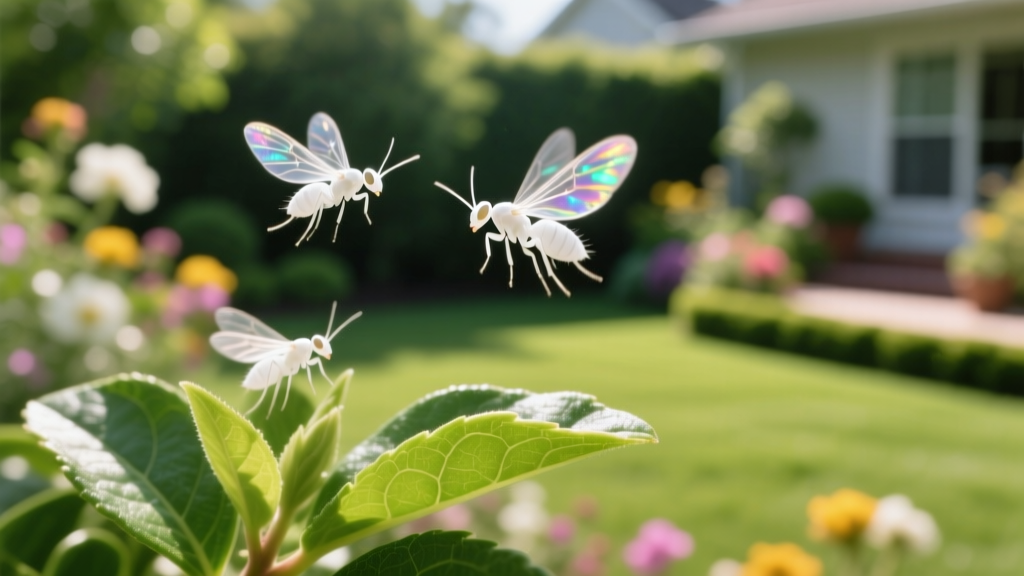
White Little Bugs That Fly: Identify and Eradicate Whiteflies
The Culprits: What Are Those White Little Bugs That Fly?
If you have ever brushed past a garden bush or shaken a tomato plant and witnessed a sudden, chaotic cloud of tiny white specks taking to the air, you have encountered one of the most pervasive pests in yard defense. Homeowners frequently search for 'white little bugs that fly,' but this visual description actually encompasses a few distinct sap-sucking insects. The most common culprit is the whitefly, though woolly aphids and ash whiteflies also fit the bill.
Unlike true flies, whiteflies (family Aleyrodidae) are actually closely related to aphids and scale insects. They congregate on the undersides of leaves, where both the adults and their scale-like nymphs feed on plant phloem. When disturbed, the adults flutter up in a distinctive white cloud before quickly settling back down. Identifying the exact species is the first critical step in formulating an effective eradication strategy for your landscape.
Quick Identification Matrix:
- Whiteflies: Tiny (1-2mm), moth-like, powdery white wings, found on leaf undersides.
- Woolly Aphids: Slightly larger, covered in white, waxy, cotton-like filaments, often on stems and branches.
- Ash Whiteflies: Specifically target ash, hawthorn, and fruit trees; leave behind heavy, sticky honeydew.
Greenhouse vs. Silverleaf vs. Ash Whitefly: Know Your Enemy
Not all whiteflies are created equal. The treatment threshold and the potential for crop devastation vary wildly depending on the species invading your yard. According to the University of California Integrated Pest Management (UC IPM) program, misidentifying your whitefly species can lead to wasted chemical applications and unchecked viral transmission.
| Species | Scientific Name | Primary Host Plants | Key Distinguishing Feature |
|---|---|---|---|
| Greenhouse Whitefly | Trialeurodes vaporariorum | Tomatoes, peppers, fuchsias, hibiscus | Wings lay flat, parallel to the leaf surface; heavy wax bloom. |
| Silverleaf Whitefly | Bemisia tabaci | Poinsettias, squash, melons, tomatoes | Wings held roof-like over the body; transmits devastating viruses. |
| Ash Whitefly | Siphoninus phillyreae | Ash, apple, pear, hawthorn trees | Found primarily on deciduous trees; causes massive honeydew dripping. |
The Damage: Why You Can't Ignore a Whitefly Infestation
Those white little bugs that fly might look harmless, but their feeding habits cause compounding damage that can kill ornamental and vegetable plants alike. Both nymphs and adults pierce the plant's phloem to extract sap, robbing the plant of essential nutrients.
The Honeydew and Sooty Mold Cascade
As whiteflies consume sap, they excrete a sugary, sticky waste called honeydew. This substance coats leaves, stems, and anything situated beneath the infested plant—including your patio furniture and parked car. More critically, honeydew serves as the perfect breeding ground for sooty mold (Capnodium spp.). This black, powdery fungus blocks sunlight from reaching the leaf surface, halting photosynthesis and causing premature leaf drop.
Viral Vectors: The Hidden Threat
The silverleaf whitefly (Bemisia tabaci) is a notorious vector for over 100 plant viruses, most notably the Tomato Yellow Leaf Curl Virus (TYLCV). Once a plant is infected with TYLCV, there is no cure; the plant must be destroyed to protect the rest of your garden. This makes early detection and aggressive management of silverleaf whiteflies an absolute necessity for vegetable gardeners.
Step-by-Step Eradication Protocol for Yard Defense
Effective whitefly control requires an integrated approach. Relying solely on broad-spectrum insecticides often backfires, as these chemicals kill beneficial predatory insects while whiteflies rapidly develop chemical resistance. Follow this targeted protocol:
- Mechanical Disruption: Use a strong jet of water from your hose to blast the undersides of leaves early in the morning. This dislodges nymphs and washes away honeydew. For severe localized infestations on patio plants, a handheld vacuum can literally suck the white little bugs that fly right off the foliage.
- Deploy Yellow Sticky Traps: Whiteflies are highly attracted to the color yellow. Place commercial yellow sticky cards (like the Olson Yellow Sticky Traps) 2 to 3 inches above the plant canopy. While traps won't eradicate a population, they are vital for monitoring population spikes and catching egg-laying females.
- Apply Insecticidal Soaps: Spray potassium salts of fatty acids directly onto the leaf undersides. The soap breaks down the waxy cuticle of the soft-bodied nymphs, causing them to dehydrate and die. This requires direct contact and must be repeated every 5 to 7 days to catch newly hatched nymphs.
- Introduce Biological Controls: For greenhouse or enclosed patio environments, release Encarsia formosa, a parasitic wasp that specifically targets whitefly nymphs. The wasp lays its eggs inside the whitefly scale, turning it black before hatching to kill the pest.
Crucial Neem Oil Warning: If you choose to use Neem oil (Azadirachtin) to smother whitefly eggs, NEVER apply it when ambient temperatures exceed 85°F or when plants are drought-stressed. The oil blocks the plant's stomata, and in high heat, this causes severe phytotoxicity, resulting in scorched, dead leaves.
Product Recommendations & Cost Breakdown (2026 Pricing)
Selecting the right product depends on your yard's ecosystem and whether you are treating edible crops or ornamental trees. Here is a breakdown of highly effective, field-tested products:
- Bonide Insecticidal Soap (Ready-to-Use): Priced around $10 for a 32 oz spray bottle. Ideal for spot-treating small vegetable gardens and indoor houseplants. Safe for use up to the day of harvest.
- Monterey Garden Insect Spray (Spinosad): Costs approximately $18 for 16 oz. Spinosad is a bacterial derivative that attacks the insect's nervous system. It is highly effective against whitefly nymphs and is approved for organic gardening, though it is toxic to bees while wet. Apply only at dusk.
- Safari 20SG (Dinotefuran): A professional-grade systemic insecticide costing roughly $145 for a 12 oz bottle. You dilute a tiny amount (1 tsp per gallon) and apply it as a basal trunk spray or soil drench for large ornamental trees (like Ash or Crepe Myrtles). Note: Never use systemics on blooming plants or edibles due to severe pollinator risks. For deeper insights on systemic safety, consult the Clemson University Home & Garden Information Center.
Preventative Yard Defense Strategies
Once you have eliminated the active cloud of white little bugs that fly, your focus must shift to prevention. Whiteflies are highly attracted to plants with high nitrogen levels, which produce the lush, soft new growth they prefer to feed on.
Nitrogen Management and Reflective Mulches
Switch to a slow-release, balanced fertilizer (like a 10-10-10 NPK) rather than high-nitrogen liquid feeds. Furthermore, if you are growing vulnerable crops like tomatoes or peppers, lay down reflective UV mulch (metallized PET film) at the base of the plants. Research shows that the reflection of UV light confuses the whiteflies' visual navigation systems, reducing landing rates by up to 80% compared to standard black plastic mulch.
Companion Planting Deterrents
Interplant your vulnerable crops with strong-smelling herbs that mask the host-plant volatiles whiteflies use to locate their targets. French marigolds (Tagetes patula), nasturtiums, and basil release compounds that actively repel whiteflies while attracting beneficial predatory insects like ladybugs and lacewings.
Frequently Asked Questions
Are white little bugs that fly harmful to humans or pets?
No. Whiteflies, ash whiteflies, and woolly aphids do not bite, sting, or transmit diseases to humans or pets. They are strictly agricultural and ornamental pests. However, the sticky honeydew they produce can attract nuisance ants and wasps to your patio areas.
Why do I still see whiteflies after spraying insecticide?
Most contact sprays only kill the active adults and early-stage nymphs. The pupal stage and eggs are heavily protected by waxy coatings and are immune to many sprays. You must maintain a strict 5-to-7-day spraying schedule for at least three weeks to break the reproductive cycle and kill the nymphs as they hatch.
Can I use vinegar to kill whiteflies?
While highly acidic vinegar solutions can kill soft-bodied insects on contact, they will also severely burn your plant's foliage and alter the soil pH if dripped into the root zone. Stick to formulated insecticidal soaps or horticultural oils for safe, targeted eradication without causing collateral damage to your landscape.

