
Pest Control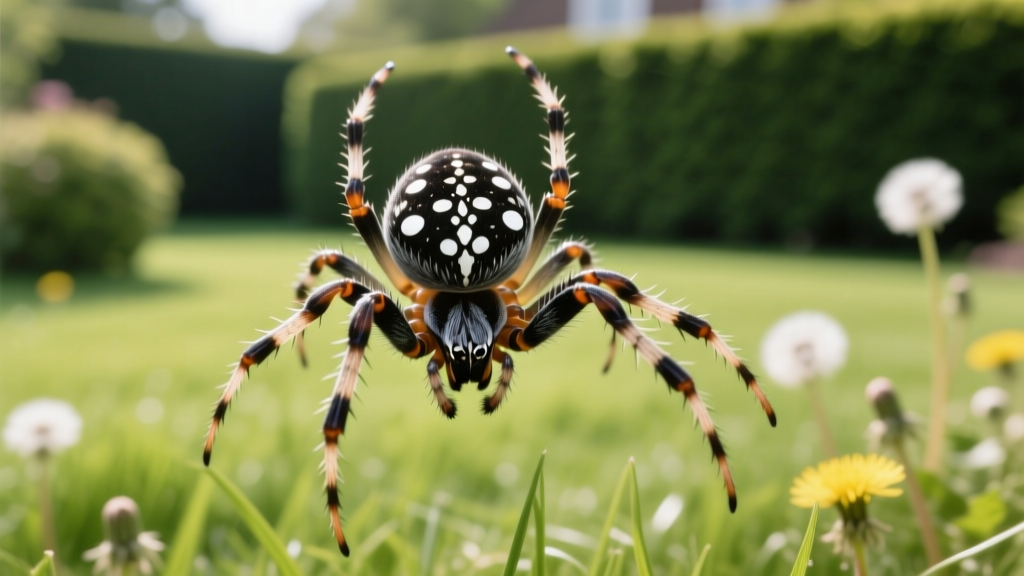
Spiders With White Spots on Back: ID Guide & Yard Rescue Fixes
Spotting spiders with white spots on back across your patio furniture, garden beds, or exterior siding can trigger immediate concern. While most homeowners default to reaching for a broad-spectrum aerosol, accurate symptom diagnosis is critical. The vast majority of white-spotted spiders found in North American landscapes are beneficial predators that actively hunt the exact pests destroying your lawn and ornamental plants. However, when these arachnids migrate from the garden perimeter into your living spaces or heavily congestate around entryways, a targeted rescue fix is required.
This guide provides a precise diagnostic framework to identify the specific species invading your property, assess the actual threat level, and execute a science-backed removal or exclusion plan using 2026-compliant botanical and mechanical controls.
Symptom Diagnosis: Which Spider Has White Spots on Its Back?
Before applying any treatment, you must correctly identify the specimen. Misidentification leads to unnecessary chemical use and eliminates beneficial biological control agents. According to University of Minnesota Extension entomologists, the two most common culprits fitting this visual description are the Zebra Spider and the Arrowhead Spider.
| Species | Visual Markers | Size & Behavior | Habitat & Web Type | Threat Level |
|---|---|---|---|---|
| Zebra Spider (Salticus scenicus) |
Black body with distinct white longitudinal stripes and spots on the cephalothorax and abdomen. | 5-7mm. Diurnal jumping spider. Moves in short, rapid bursts. Does not build capture webs. | Sunlit exterior walls, window frames, patio tables. Hunts actively. | Zero. Venom is medically insignificant to humans. |
| Arrowhead Spider (Verrucosa arenata) |
Yellow, white, or pale orange arrowhead/triangle shape pointing down the center of the abdomen. | 6-15mm (females larger). Orb weaver. Sits head-down in the center of the web during the day. | Shrubs, tall grasses, garden perimeters. Builds classic circular orb webs. | Minimal. Bites only if crushed against skin; mild localized reaction. |
| Bold Jumper (Phidippus audax) |
Iridescent black body; juveniles often feature distinct white or orange spots on the dorsal abdomen. | 8-15mm. Agile hunter. Often raises front legs when threatened. | Fences, tree trunks, woodpiles, sheds. | Zero. Highly beneficial for fly and moth control. |
Diagnostic Tip: If the spider is actively jumping across your siding or patio table in direct sunlight, you are dealing with a Salticidae (jumping spider). If it is suspended motionless in the center of a circular web in your hydrangeas or tomato plants, it is an orb weaver. Neither requires eradication in the garden.
The Rescue Fix Decision Tree: Eradicate or Relocate?
Not every spider sighting warrants a pest control intervention. Use this decision framework to determine your rescue fix strategy based on the spider's location and behavior.
- Location: Deep Garden / Lawn Perimeter
Action: Leave undisturbed. These spiders consume 10-20% of their body weight in insects daily, actively reducing mosquito, aphid, and fly populations. - Location: Exterior Siding / Window Frames
Action: Monitor. If webs are blocking views or jumping spiders are entering through window weep holes, proceed to mechanical exclusion (see below). - Location: Interior Living Space / Garage
Action: Immediate relocation or targeted trap deployment. Indoor environments lack the prey density to sustain them, indicating they are wandering in search of food or overwintering sites.
Step-by-Step Exclusion & Relocation Tactics
When white-spotted spiders breach the home envelope or become a severe nuisance on high-traffic patios, avoid pyrethroid-based foggers. These products leave toxic residues on outdoor surfaces and harm local pollinator populations. Instead, utilize targeted botanical and mechanical rescue fixes.
1. The Cup-and-Card Relocation (For Indoors & Patios)
For isolated Zebra or Bold Jumpers on interior walls or patio furniture, physical removal is the most effective and ecologically sound method.
- Place a clear 16oz plastic cup over the spider.
- Slide a rigid piece of cardstock (like a 5x7 index card) under the cup rim, trapping the spider inside.
- Transport the spider at least 50 feet away from the home's foundation and release it into a dense shrub or groundcover bed.
2. Perimeter Exclusion Using Micro-Encapsulated Botanicals
If jumping spiders are consistently entering through door sweeps or congregating on a specific porch, apply a botanical barrier. The EPA recognizes minimum-risk botanical pesticides as effective for perimeter control without the environmental persistence of synthetic chemicals.
- Product: Essentria IC3 Insecticide Concentrate (Active ingredients: Rosemary oil 10%, Geraniol 5%, Peppermint oil 2%).
- Cost: Approximately $48 per pint (yields up to 32 gallons of finished solution).
- Mix Rate: Combine 1.5 fl oz of Essentria IC3 per 1 gallon of water in a pump sprayer.
- Application: Spray a 3-foot continuous band around the home's foundation, focusing on door thresholds, window casings, and weep holes. The high concentration of peppermint and geraniol acts as a powerful olfactory repellent for arachnids.
- Reapplication: Every 14-21 days during peak summer activity, or immediately after heavy rainfall.
3. Mechanical Trapping for Garages and Sheds
For unheated garages, sheds, or basements where white-spotted spiders seek overwintering harborage, deploy non-toxic adhesive monitors.
- Product: Catchmaster 288i Insect and Spider Glue Boards.
- Cost: ~$16 for a case of 12 boards.
- Placement: Fold into a tunnel shape and place flush against baseboards, behind water heaters, and near garage door tracks. Check and replace every 30 days.
Addressing the Root Cause: Why Are They Congregating?
Spiders do not infest homes; they follow food sources. If you have a high density of Zebra or Arrowhead spiders on your exterior, you have a secondary insect problem. Executing a true rescue fix requires eliminating the prey drive.
Lighting Modification (The 2000K Rule)
Standard exterior lighting emits a 3000K to 4000K color temperature, which emits heavy blue and UV light spectrums. This attracts massive swarms of nocturnal insects, which in turn attracts orb weavers and jumping spiders.
- The Fix: Swap all exterior porch, patio, and security bulbs with 2000K Amber LED bulbs (e.g., Philips LED Bug Light, ~$8 per bulb). Amber light falls outside the visible spectrum for most flying insects, drastically reducing the prey population and forcing the spiders to relocate to the deeper yard.
Moisture and Debris Management
Jumping spiders thrive in environments with high micro-climate humidity and structural complexity.
- Maintain a strict 18-inch clearance zone between mulch beds and your home's foundation.
- Remove stacked firewood, decorative rock piles, and dense ivy from directly against the siding. These serve as primary daytime harborage sites for Salticidae species.
Frequently Asked Diagnostic Questions
Are spiders with white spots on their back venomous to dogs or cats?
No. The Zebra spider, Arrowhead spider, and Bold Jumper possess venom designed to paralyze small insects. Their chelicerae (fangs) are generally too small and weak to pierce mammalian skin, and their venom causes no systemic toxicity in pets. If a pet ingests one, it may cause mild gastrointestinal upset, but it is not a medical emergency.
Why is the white-spotted spider waving its front legs at me?
If you observe a Zebra or Bold Jumper raising and waving its front legs, you are witnessing a threat display or a courtship ritual. Jumping spiders have exceptional vision (their large anterior median eyes can see color and UV light). They wave their legs to appear larger to predators or to signal to a potential mate. It is a sign of curiosity or defense, not aggression.
Will spraying vinegar kill white-spotted spiders?
While highly concentrated acetic acid (horticultural vinegar, 20-30%) can kill spiders on direct contact by destroying their cellular membranes, standard household white vinegar (5%) is largely ineffective as a lethal spray. Furthermore, spraying vinegar on your garden plants or lawn will cause severe phytotoxicity (leaf burn) and alter your soil pH. Stick to the botanical peppermint/geraniol blends mentioned above for safe, effective repellency.

