
Pest Control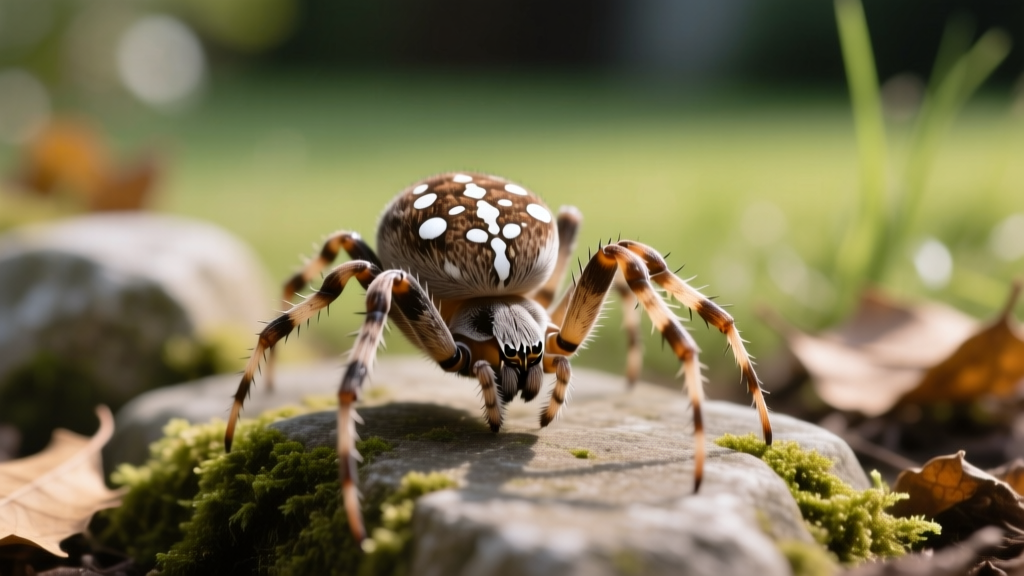
Spider With White Spots on the Back: Identification and Rescue Fixes
The 'White Spotted Back' Spider: Triage and Identification
Spotting a spider with white spots on the back in your garden, shed, or garage triggers an immediate identification challenge for homeowners. While the vast majority of spotted spiders in North American landscapes are harmless, beneficial predators, a specific subset of venomous spiders displays white or yellow dorsal spotting during their juvenile developmental stages. Accurate symptom diagnosis is critical before you reach for a broad-spectrum pesticide or attempt physical removal.
The most common culprit matching this description is the Bold Jumping Spider (Phidippus audax), a highly active, diurnal hunter that patrols garden foliage. However, if the spider is found in a dark, undisturbed corner of a shed or basement, the white spots could indicate a juvenile Black Widow (Latrodectus spp.) undergoing ontogenetic color changes. Misidentifying the latter can result in a dangerous bite, while misidentifying the former destroys a vital natural pest control agent in your landscape.
Diagnostic Matrix: Identifying Your Spotted Spider
Use the morphological and behavioral matrix below to cross-reference the spider you are observing. Pay close attention to the web structure and the specific arrangement of the white spots on the abdomen.
| Species | Size & Coloration | Spot Pattern & Location | Web / Hunting Style | Threat Level |
|---|---|---|---|---|
| Bold Jumper (P. audax) | 3/8 to 3/4 inch; Velvet black body, iridescent green chelicerae (jaws). | One large central white/orange spot flanked by two smaller spots on the dorsal abdomen. | Webless hunter; stalks prey on foliage, fences, and exterior walls. | Harmless / Beneficial |
| Spotted Orbweaver (Neoscona crucifera) | 5/8 inch; Brownish-black with distinct light/white foliate markings. | Cruciform (cross-shaped) pattern of white/yellow spots on the back. | Large, circular orb webs built at dusk, often dismantled by dawn. | Harmless / Beneficial |
| Juvenile Black Widow (Latrodectus) | 1/4 to 1/2 inch; Black or dark brown base with bright white/yellow spots. | Longitudinal rows of white, yellow, or orange spots running down the back. | Irregular, messy, three-dimensional cobwebs in dark, sheltered crevices. | High (Venomous) |
| Goldenrod Crab Spider (Misumena vatia) | 1/4 to 3/8 inch; White, yellow, or green body to match flowers. | Faint red or brown spots on a predominantly white or pale yellow back. | Ambush predator; sits motionless inside flower blossoms. | Harmless / Beneficial |
Symptom Check: The Juvenile Black Widow Factor
The most critical diagnostic failure homeowners make is assuming all black spiders with white spots are jumping spiders. According to entomologists at Texas A&M AgriLife Extension, juvenile black widows hatch with a distinct pattern of white, yellow, and orange stripes and spots on their dorsal abdomen. This spotting serves as a visual disruptor against predators. As the spider molts and matures over several months, these dorsal spots gradually fade, eventually leaving the solid black adult form with the iconic ventral red hourglass.
⚠ Safety Warning: Ventral Inspection
If you suspect a juvenile black widow, do not attempt to handle it. Observe the spider's web. Black widows build tangled, structurally weak, three-dimensional cobwebs close to the ground, under eaves, or inside cluttered storage boxes. If you can safely view the underside (ventral side) of the abdomen from a distance, look for a developing red or orange hourglass mark. If present, treat the specimen as highly venomous.
Rescue Fixes & Management Strategies
Once you have diagnosed the specific spider, apply the appropriate rescue fix. Eradicating beneficial garden spiders disrupts local food webs and invites secondary pest outbreaks (like aphids and caterpillars). Reserve chemical and physical interventions for structural infestations or confirmed venomous species.
Scenario A: The Garden Patrol (Bold Jumpers & Orbweavers)
If the spider with white spots on the back is identified as a Bold Jumper or Spotted Orbweaver, the prescribed action is benign neglect. The University of Florida IFAS notes that Phidippus audax is a premier biological control agent, actively hunting lygus bugs, caterpillars, and flies. If an orbweaver builds a web across a high-traffic garden path, use a broom to gently sweep the web aside at dawn; the spider will typically rebuild it in a less obtrusive location the following evening.
Scenario B: Structural Intrusion & Venomous Threats
If white-spotted spiders are establishing cobwebs inside your shed, garage, or basement, or if you have confirmed juvenile black widows, implement the following three-step exclusion and treatment protocol:
- Deploy Monitoring Traps: Place Catchmaster 288i Insect and Spider Glue Boards ($15 for a 12-pack) along baseboards, behind water heaters, and in dark corners. These non-toxic traps will catch wandering males and help you gauge the severity of the indoor population without aerosolizing chemicals in enclosed spaces.
- Mechanical Exclusion: Spiders enter structures seeking prey and shelter. Seal all exterior cracks wider than 1/16 inch using a high-quality silicone polyurethane caulk. Install 1/4-inch galvanized hardware cloth over foundation vents and weep holes. Replace damaged weatherstripping on garage doors, ensuring a flush seal against the concrete threshold.
- Targeted Botanical Treatment: For immediate knockdown of egg sacs and active webbing in sheds, apply Essentria IC3 Pro Insecticide. This OMRI-listed botanical spray utilizes a synergistic blend of rosemary oil (10%), geraniol (5%), and peppermint oil (2%). Mix at a rate of 2 fluid ounces per gallon of water. Apply using a pump sprayer directly to corners, eaves, and window frames. The strong essential oil profile acts as both a contact killer and a residual repellent, costing approximately $45 for a 16 oz concentrate that yields up to 8 gallons of finished solution.
Expert Insight: Why Broad-Spectrum Sprays Fail
Many homeowners attempt to solve spider problems by spraying bifenthrin or permethrin across their entire lawn and garden perimeter. This is a fundamental misapplication of pest control principles. Spiders are not insects; their biology and grooming habits make them less susceptible to residual contact insecticides applied to broad surfaces. Furthermore, broadcasting synthetic pyrethroids across your landscape decimates the insect prey base, which paradoxically forces surviving spiders to migrate indoors in search of food. Targeted crack-and-crevice treatments combined with physical exclusion always outperform broadcast spraying for long-term spider management.
Quick Reference FAQ
Do white spots on a spider's back mean it's poisonous?
No. In fact, the most common spider with white spots on the back—the Bold Jumping Spider—is completely harmless to humans and lacks medically significant venom. However, juvenile black widows do possess white spots before maturing, so location and web type must be used to differentiate them.
Why is there a spider with white spots on the back in my pool?
Spotted Orbweavers and Bold Jumpers frequently misjudge distances or are blown by wind, landing in swimming pools. They cannot swim and will drown. Use a pool skimmer to remove them; they pose no threat to pool chemistry or swimmers.
How fast do juvenile black widows lose their white spots?
The ontogenetic color change occurs gradually over multiple molts. A juvenile black widow will typically shed its distinct white and yellow dorsal spotting between its 4th and 6th instar stages, which takes roughly 60 to 90 days depending on ambient temperature and food availability.

