
Pest Control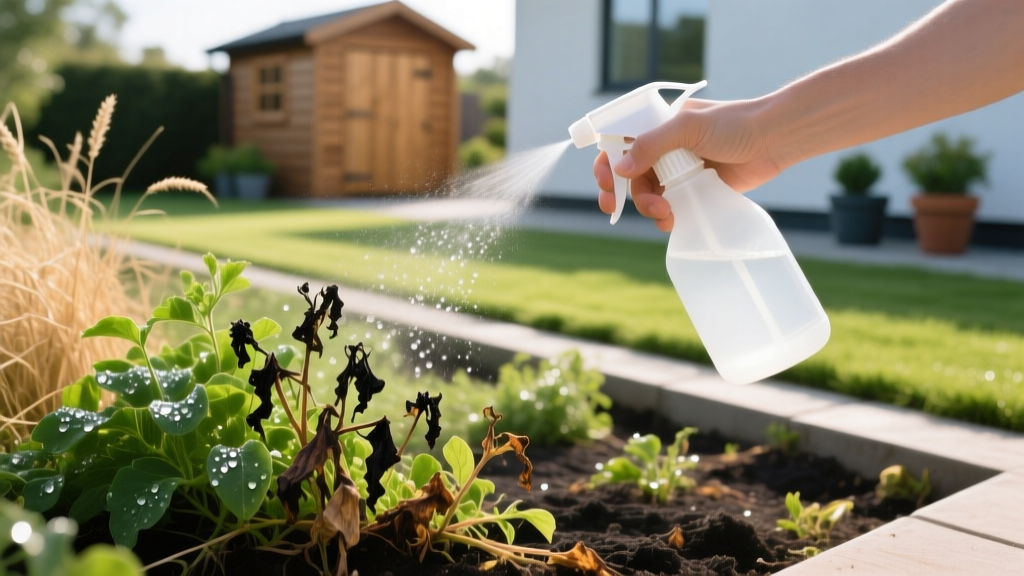
Is White Vinegar as Weed Killer Effective? An Organic Guide
Homeowners seeking organic lawn care solutions frequently turn to pantry staples to manage invasive plants. Using white vinegar as weed killer is one of the most popular chemical-free strategies, but its efficacy is widely misunderstood. While acetic acid is a potent contact herbicide, it is not a systemic root-killer. Understanding the precise chemistry, concentration requirements, and application mechanics is critical to achieving actual weed control without inadvertently damaging your soil microbiome.
The Chemistry of Acetic Acid as a Herbicide
The active ingredient in vinegar is acetic acid. When sprayed on plant foliage, acetic acid rapidly breaks down cell membranes, causing immediate desiccation and tissue collapse. This is why you can see weeds wilting within hours of application on a hot day. However, because acetic acid is strictly a contact herbicide, it does not translocate down into the root system.
According to research on organic weed management, contact herbicides are highly effective on seedlings and annual weeds with shallow root structures. For mature perennial weeds with deep taproots—such as dandelions, bindweed, or Canadian thistle—vinegar will burn the top growth, but the root will simply push out new shoots within two to three weeks. To manage perennials organically, you must repeatedly burn the regrowth to exhaust the root's carbohydrate reserves, a process that can take an entire growing season.
Household vs. Horticultural Vinegar: A Data Breakdown
The most common point of failure when using white vinegar as weed killer is utilizing the wrong concentration. Grocery store white vinegar is typically diluted to 5% acetic acid, which is only lethal to very young, tender weeds. For mature vegetation, commercial horticultural vinegar is required.
| Feature | Household White Vinegar (5%) | Horticultural Vinegar (20%-30%) |
|---|---|---|
| Acetic Acid Concentration | 5% | 20% to 30% |
| Target Weeds | Seedlings, young annuals | Mature annuals, tough perennials, woody shoots |
| Average Cost (Per Gallon) | $3.00 - $4.50 | $25.00 - $40.00 |
| PPE Required | None (standard eye protection optional) | Chemical splash goggles, nitrile gloves, long sleeves |
| Soil Impact | Temporary, minimal pH drop | Severe temporary pH drop, can harm earthworms on contact |
⚠️ Safety Warning: Horticultural vinegar (20%+ acetic acid) is highly corrosive. It can cause irreversible eye damage and severe chemical burns to the skin. The EPA classifies high-concentration acetic acid as a restricted-use pesticide in some jurisdictions. Always wear ANSI-rated chemical splash goggles and acid-resistant gloves when handling or spraying concentrations above 10%.
The Proven Salt-Free Organic Vinegar Recipe
A dangerous trend in online gardening forums recommends mixing vinegar with table salt (sodium chloride) or Epsom salt (magnesium sulfate). Do not add salt to your vinegar weed killer. Sodium chloride does not break down in the soil; it accumulates, causing soil sodicity. This destroys soil structure, prevents water infiltration, and permanently sterilizes the area, making it impossible to grow grass or ornamental plants later. For a truly organic, soil-safe approach, use a surfactant-based recipe.
The Surfactant-Enhanced Recipe
Vinegar has high surface tension. Without a surfactant, the liquid will bead up and roll off the waxy cuticles of mature weeds like plantain or purslane. Adding a natural surfactant ensures the acetic acid coats and penetrates the leaf tissue.
- 1 Gallon White Vinegar (5% for young weeds, 20% for mature weeds)
- 1 Ounce Liquid Castile Soap (acts as an organic surfactant to break surface tension)
- 10 Drops Pure Orange Essential Oil (contains d-limonene, which dissolves waxy plant cuticles and accelerates desiccation)
Mix the solution gently in a dedicated pump sprayer. Do not shake vigorously, or the soap will create excessive suds that clog the sprayer's dip tube.
Application Protocol for Maximum Efficacy
Environmental conditions dictate the success of organic contact herbicides. Acetic acid relies on heat and UV radiation to accelerate the desiccation process.
- Timing: Spray between 10:00 AM and 2:00 PM when the sun is at its peak. Avoid early morning applications when dew is present, as moisture dilutes the acetic acid.
- Temperature Threshold: Only apply when ambient temperatures are above 75°F (24°C). Below this threshold, the chemical reaction slows dramatically, and weeds may survive the treatment.
- Nozzle Selection: Adjust your pump sprayer to a fan pattern rather than a pinpoint cone. You need to thoroughly coat the entire surface area of the weed's foliage, not just hit the center stem.
- Wind Drift: Never spray when wind speeds exceed 5 MPH. Vinegar is non-selective; it will severely burn the edges of your desirable turfgrass or ornamental flowers if drift occurs.
Common Failure Modes and Troubleshooting
Even with the correct recipe, homeowners frequently report that white vinegar as weed killer 'doesn't work.' Here is a diagnostic framework for the most common failure modes:
'The soil's buffering capacity naturally neutralizes acetic acid that reaches the ground. While a heavy application of 20% vinegar will temporarily drop soil pH, the calcium carbonate and organic matter in healthy soil will buffer and neutralize the acid within a few weeks, preventing long-term sterilization.' — University of Minnesota Extension
Troubleshooting Matrix
| Symptom | Root Cause | Corrective Action |
|---|---|---|
| Weed wilts but recovers in 48 hours | Insufficient coverage; waxy leaf cuticle repelled the spray. | Increase castile soap to 1.5 oz per gallon; add d-limonene (orange oil). |
| Weed burns but returns from the root in 2 weeks | Perennial taproot survived (vinegar is non-systemic). | Mow the weed down first, wait 3 days for new leaf flush, then spray the tender regrowth. |
| Solution beads up on the soil and washes away | Hydrophobic soil or excessive surfactant causing runoff. | Aerate the soil beforehand; reduce soap ratio to 0.5 oz per gallon. |
Equipment Maintenance: Protecting Your Sprayer
Acetic acid is highly corrosive to metal and degrades standard rubber O-rings over time. If you leave vinegar in a standard pump sprayer, the internal seals will dry rot and leak within a single season. Always designate a specific, cheap pump sprainer exclusively for acidic herbicides. After every use, flush the tank, wand, and nozzle with clean water for at least two minutes, then pump dry air through the line to clear residual moisture. For heavy-duty 20% horticultural vinegar applications, invest in a sprayer equipped with Viton seals, which are chemically resistant to high-concentration acids.
Integrating Vinegar into a Broader Organic Strategy
Relying solely on white vinegar as weed killer is a reactive, not proactive, lawn care strategy. The EPA's guidelines on organic pest control emphasize that the best defense against weeds is a dense, vigorous turf canopy that starves weed seeds of sunlight. Use vinegar strictly for spot-treating weeds in hardscape areas—such as driveway cracks, patio pavers, and fence lines—where soil health is not a concern. For lawn areas, prioritize core aeration, deep infrequent watering, and organic compost top-dressing to naturally outcompete invasive broadleaf weeds.

