
Pest Control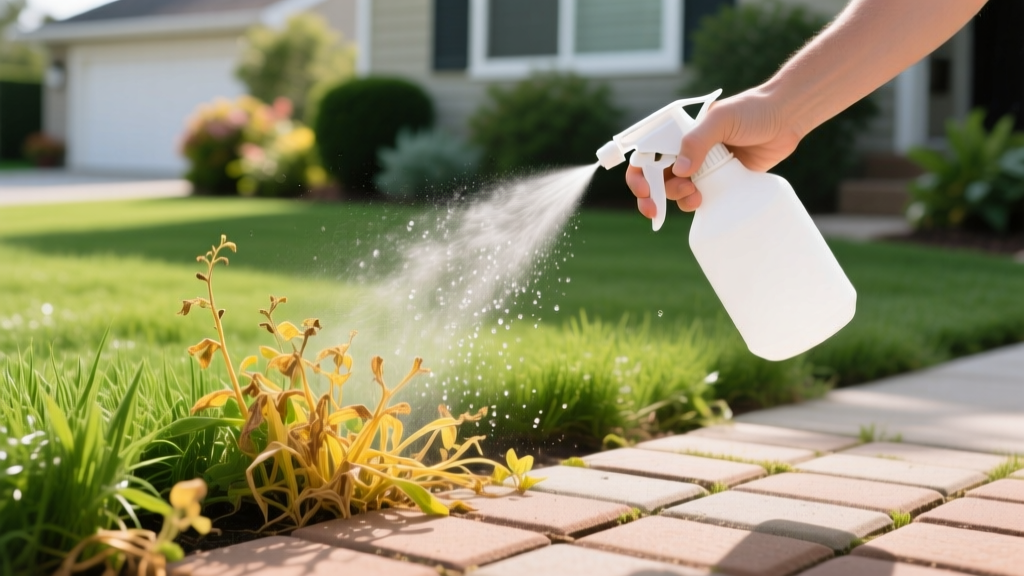
Using White Vinegar as a Herbicide: Mixing Rates and Efficacy
The Reality of White Vinegar as a Herbicide
Using white vinegar as a herbicide is one of the most debated topics in organic lawn care. While it is a highly effective contact burndown agent, it is fundamentally misunderstood by homeowners who expect it to behave like systemic synthetic chemicals. Acetic acid, the active compound in vinegar, destroys plant tissue on contact but does not translocate to the roots. Understanding this biological limitation is the difference between successful organic weed management and endless frustration.
According to the Environmental Protection Agency (EPA), acetic acid is classified as a minimum-risk pesticide when used in specific concentrations. However, achieving actual herbicidal efficacy requires precise mixing ratios, the correct environmental conditions, and the right expectations regarding perennial versus annual weeds.
The Chemistry of Acetic Acid Weed Control
When acetic acid contacts a leaf surface, it rapidly lowers the cellular pH. This causes the cell membranes to rupture, leading to immediate fluid leakage and tissue desiccation. Under direct sunlight, you will visibly see the leaves wilt and turn brown within two to four hours. However, because the acid breaks down rapidly upon contact with soil microbes, it offers zero residual soil activity. Once it hits the dirt, it degrades into water and carbon dioxide within 3 to 5 days.
⚠️ CRITICAL WARNING: The Non-Selective Nature of Vinegar
White vinegar does not distinguish between a dandelion and your prized bermudagrass. It is a non-selective contact herbicide. Any overspray or drift will burn the foliage of desirable turf and ornamental plants. Always use a shielded sprayer or a foam brush when working near lawn edges.
The Internet Myth: Why You Must Skip the Salt
A pervasive DIY recipe circulating online suggests mixing white vinegar, dish soap, and Epsom salt (or table salt) to kill weeds. Do not use salt in your herbicide mix. While sodium chloride will kill the weed, it also acts as a soil sterilant. Salt accumulates in the topsoil, destroys soil structure, prevents water uptake, and ensures that absolutely nothing will grow in that spot for years. Stick to acetic acid and a surfactant for a truly organic, soil-safe approach.
Exact Mixing Matrix for Different Weed Types
Household white vinegar typically contains 5% acetic acid. This is sufficient only for very young, tender annual weeds. For mature weeds or perennials, you must source horticultural vinegar (20% to 30% acetic acid). The National Pesticide Information Center (NPIC) notes that concentrations above 11% require careful handling and personal protective equipment (PPE) due to the risk of severe skin and eye burns.
| Target Weed Profile | Required Acetic Acid % | Surfactant Rate (per Gallon) | Expected Efficacy |
|---|---|---|---|
| Seedling Annuals (Chickweed, Purslane) | 5% (Household) | 1 tsp non-ionic surfactant | 90-100% single-application kill |
| Mature Annuals (Crabgrass, Spurge) | 10% - 15% | 1 tbsp non-ionic surfactant | 70-85% top-kill; may require spot retreatment |
| Perennials (Dandelion, Thistle, Bindweed) | 20% - 30% (Horticultural) | 2 tbsp methylated seed oil | Top-kill only. Roots will resprout in 7-14 days. |
Why Surfactants are Non-Negotiable
Weed leaves, especially mature ones, are coated in a waxy cuticle designed to repel water. If you spray plain vinegar, the droplets will bead up and roll off onto the soil. Adding a surfactant (like a dedicated non-ionic agricultural surfactant or a basic liquid dish soap in a pinch) breaks the surface tension, forcing the acetic acid to spread evenly across the leaf surface and penetrate the stomata.
Step-by-Step Application Protocol
To maximize the burndown effect of your white vinegar herbicide, follow this strict application sequence:
- Verify Environmental Conditions: Apply only when temperatures are above 70°F (21°C). Heat accelerates the cellular rupture process. Ensure zero rain is forecasted for at least 12 hours post-application, and wind speeds are below 5 mph to prevent drift.
- Mix in the Correct Order: Fill your pump sprayer halfway with water. Add the horticultural vinegar. Top off with remaining water. Add the surfactant last. Adding soap first will cause massive foaming when the liquid agitates, making it impossible to seal the sprayer.
- Spray to Wetness, Not Drenching: Use a fine mist nozzle. Coat the leaves thoroughly until they glisten, but avoid creating puddles on the soil surface. Soil application is a waste of product since acetic acid has no residual root-killing properties.
- Monitor and Reapply Perennials: Annual weeds will shrivel and die within 48 hours. Perennial weeds with deep taproots (like dandelions or dock) will turn brown and appear dead, but the roots remain viable. You must reapply the 20% solution to the new shoots as soon as they emerge (usually day 10) to exhaust the root's carbohydrate reserves.
Commercial vs. DIY: Cost and Efficacy Breakdown
Homeowners often debate whether to mix their own solutions or buy pre-formulated commercial organic weed killers. Here is the economic reality for the 2026 landscaping season:
- DIY Household 5% Vinegar: Costs roughly $3.50 per gallon. Highly ineffective on anything but newly sprouted weeds in garden bed cracks.
- DIY 30% Horticultural Vinegar (Diluted to 15%): A 1-gallon jug of 30% industrial acetic acid costs about $22 to $28 online or at farm supply stores. Diluted 1:1 with water, your cost per ready-to-use gallon is roughly $12.50, plus the cost of PPE (acid-resistant gloves and goggles).
- Commercial 20% Pre-Mixed Organic Herbicides: Brands like Green Gobbler or Nature's Avatar sell pre-mixed 20% acetic acid solutions with integrated surfactants. These typically retail for $35 to $45 per gallon. You are paying a premium for the convenience, the safety labeling, and the optimized surfactant blend.
The Verdict: If you are treating a small patio, buy the commercial pre-mix. If you are managing a large driveway or extensive gravel paths, buying 30% vinegar and diluting it yourself offers massive cost savings, provided you invest in proper safety gear.
Common Failure Modes and Troubleshooting
Troubleshooting Matrix
Problem: The weeds turned brown but recovered completely in a week.
Diagnosis: You sprayed a perennial weed with 5% household vinegar, or failed to reapply to the new shoots.
Fix: Upgrade to a 20% horticultural solution and commit to a 3-week follow-up spraying schedule.
Problem: The solution burned the edges of my desirable turfgrass.
Diagnosis: Sprayer drift caused by wind, or using a wide-fan nozzle near bed edges.
Fix: Switch to a shielded spray head or use a sponge applicator for precision edge work.
Problem: The spray mixture is foaming out of the tank and clogging the nozzle.
Diagnosis: Surfactant was added before the water and vinegar were fully mixed, or the tank was over-pressurized.
Fix: Depressurize, add the surfactant last, and gently swirl the tank rather than shaking it.
Frequently Asked Questions
Will white vinegar permanently alter my soil pH?
No. While acetic acid is highly acidic, it is rapidly broken down by soil microbes into harmless byproducts. Research shows that soil pH returns to its baseline within a week of application, provided you are not applying it daily in the exact same spot.
Can I use apple cider vinegar instead of white vinegar?
Apple cider vinegar contains the same 5% acetic acid concentration as standard household white vinegar, but it is significantly more expensive and leaves behind a sticky sugar residue that can attract unwanted insects like ants and yellow jackets. Always stick to cheap, distilled white vinegar or clear horticultural vinegar.
Is horticultural vinegar safe for pets once it dries?
Yes. Once the liquid has completely evaporated and the acetic acid has broken down on the surface (usually within 2 to 4 hours), the area is entirely safe for dogs and cats to walk on. Keep pets away during the wet application phase to prevent paw pad irritation.

