
Pest Control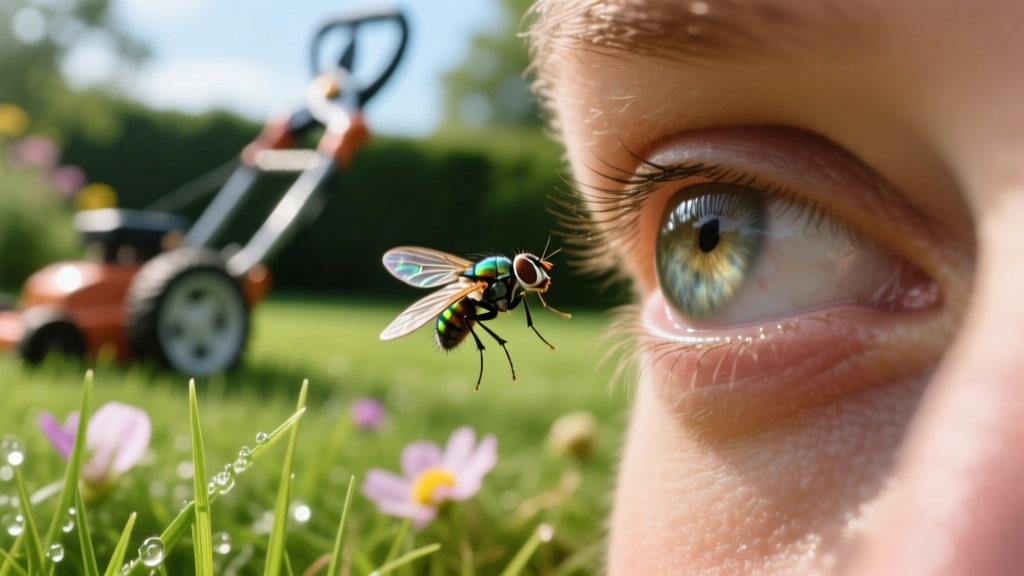
Why Do Gnats Fly in Your Face? The Science and Solutions
There are few outdoor annoyances more persistent than a swarm of gnats repeatedly dive-bombing your eyes, nose, and mouth. While it might feel like a random act of nature, the question of why do gnats fly in your face actually has a precise biological answer. These tiny insects are not acting out of spite; they are following highly evolved chemical and thermal trails that your body naturally emits.
Understanding the sensory mechanics behind gnat attraction is the first step toward effective pest management. By identifying the specific species targeting you and altering your yard's microclimate, you can disrupt their breeding cycles and reclaim your outdoor spaces.
The Biological Magnets: What Draws Gnats to Your Head
Gnats rely on sophisticated olfactory receptors to locate hosts and breeding grounds. Your head and face act as a concentrated beacon for several key attractants:
The Carbon Dioxide Plume Effect: An average adult exhales approximately 1 kilogram of CO2 per day. Because you breathe out of your nose and mouth, your face sits at the epicenter of a concentrated CO2 plume. Gnats possess specialized sensory organs called maxillary palps that detect CO2 gradients, allowing them to fly directly upwind toward your breath.
- Lactic Acid and Ammonia: The bacteria on your skin, particularly Staphylococcus epidermidis, break down sweat into lactic acid and ammonia. The scalp and forehead have a high density of sebaceous and eccrine glands, making your face a primary source of these volatile organic compounds (VOCs).
- Ocular and Nasal Secretions: Certain gnat species require specific proteins, salts, and enzymes found in tear fluid and mucus to develop their eggs. Your eyes and nose provide a direct, accessible source of these vital nutrients.
- Thermal Signatures: The human head loses a significant amount of body heat. Gnats use thermal gradients to distinguish warm-blooded hosts from the cooler ambient environment, especially during early morning or late evening hours.
Identifying the Culprit: Which Gnat is Targeting You?
Not all gnats are the same, and the reason they are swarming your face depends heavily on the species. Misidentifying the insect often leads to ineffective treatment plans. Use the matrix below to determine which pest you are dealing with.
| Species | Primary Attraction | Behavior & Biting | Common Habitat |
|---|---|---|---|
| Fungus Gnats (Bradysia spp.) | CO2 plumes, soil fungi | Non-biting; hovers erratically near eyes/nose | Overwatered potted plants, damp mulch beds |
| Eye Gnats (Hippelates spp.) | Tear fluid, pus, sweat | Non-biting; deliberately lands on eyelids and tear ducts | Sandy soils, agricultural edges, compost piles |
| Biting Midges (Culicoides spp.) | CO2, body heat, lactic acid | Bites aggressively; leaves painful, itchy red welts | Salt marshes, muddy shorelines, damp leaf litter |
For a deeper understanding of midge behavior and habitat preferences, the American Mosquito Control Association (AMCA) provides extensive entomological data on Culicoides species and their impact on outdoor environments.
Yard and Garden Management: Eliminating Breeding Grounds
If you are constantly asking why gnats fly in your face every time you step onto your patio, the source is likely within 50 feet of where you are standing. Eradicating the breeding sites is vastly more effective than relying solely on personal repellents.
1. Deploy Bti (Bacillus thuringiensis israelensis)
Bti is a naturally occurring soil bacterium that produces crystalline proteins toxic only to the larval stages of flies, gnats, and mosquitoes. It is entirely safe for humans, pets, and beneficial pollinators.
- Application Rate: For garden beds and potted plants, apply granular Bti (commonly sold as Mosquito Bits) at a rate of 1 tablespoon per square foot of soil surface.
- Soil Drench: Steep 4 tablespoons of Bti granules in 1 gallon of water for 24 hours. Strain the liquid and use it to water your plants. This ensures the active spores penetrate the top 2 inches of soil where fungus gnat larvae feed on root hairs.
- Frequency: Reapply every 14 days during peak breeding seasons (spring and early autumn) to break the 21-day life cycle of the gnat.
The Environmental Protection Agency (EPA) recognizes Bti as a cornerstone of integrated pest management (IPM) due to its high target specificity and lack of environmental persistence.
2. Introduce Beneficial Nematodes
For severe lawn and garden infestations, apply Steinernema feltiae nematodes. These microscopic worms actively hunt and parasitize gnat pupae in the soil. Apply them via a hose-end sprayer in the early evening when UV radiation is low, ensuring the soil temperature is between 55°F and 85°F for optimal nematode mobility.
3. Correct Irrigation and Mulching Errors
Fungus gnats require consistently damp organic matter to reproduce. Allow the top 1.5 inches of soil in garden beds and containers to dry out completely between waterings. Replace thick, moisture-trapping mulches (like peat moss) with arborist wood chips or inorganic gravel borders, which dry rapidly and deter egg-laying females.
Personal Defense: Repellents and Aerodynamic Disruption
When yard management is not enough, or when you are venturing into wild environments, personal defense strategies must be tailored to the flight mechanics and olfactory limits of the gnat.
Avoid Scented Grooming Products: Floral and fruity shampoos, lotions, and sunscreens mimic the VOCs of rotting fruit and nectar. Switch to unscented, mineral-based sunscreens and soaps when spending time in gnat-heavy areas.
Chemical and Botanical Repellents
According to the EPA's guidelines on insect repellents, not all active ingredients perform equally against tiny biting and non-biting flies.
- Picaridin (20% concentration): Often preferred over DEET for facial application, Picaridin does not degrade plastics or synthetic fabrics and has a low odor profile. It effectively masks the lactic acid signatures gnats use to track hosts.
- Oil of Lemon Eucalyptus (OLE / PMD): A plant-derived option that provides up to 6 hours of protection. Ensure the product lists para-menthane-3,8-diol (PMD) as the active ingredient, as unformulated essential oils evaporate in under 30 minutes.
- DEET (15-30% concentration): Highly effective but can cause skin irritation when applied too close to the eyes or mucous membranes. Apply to the brim of a hat or collar rather than directly to the forehead.
The Aerodynamic Solution: Wind Velocity
Gnats are remarkably weak fliers. The average fungus gnat or midge has a maximum flight speed of roughly 1.5 to 2.0 miles per hour. You can exploit this physiological limitation by using directional fans. A standard oscillating patio fan generating a breeze of just 3.5 to 4.0 mph at your seating area creates an impenetrable aerodynamic wall. The wind shear not only prevents the gnats from physically reaching you, but it also rapidly disperses your CO2 and lactic acid plumes, rendering you invisible to their sensory organs.
Frequently Asked Questions
Can gnats transmit diseases to humans?
While most common household fungus gnats are harmless, Hippelates eye gnats have been implicated in the mechanical transmission of bacterial conjunctivitis (pink eye) and yaws in tropical regions. Biting midges can transmit localized allergens but are not primary vectors for systemic human diseases in North America.
Why do gnats seem worse at dawn and dusk?
Gnats are highly susceptible to desiccation (drying out). During the heat of the day, they retreat to damp, shaded undergrowth to conserve moisture. As the sun sets and ambient humidity rises, they emerge to feed and mate, coinciding with the times humans are most likely to be outdoors relaxing.
Does wearing light-colored clothing help?
Yes. Dark colors like black, navy, and deep red absorb heat and create a stronger thermal signature against the horizon. Gnats and midges use visual contrast combined with thermal imaging to locate hosts. Wearing lightweight, loose-fitting clothing in white, khaki, or pale gray reduces your visual and thermal profile.

