Pest Control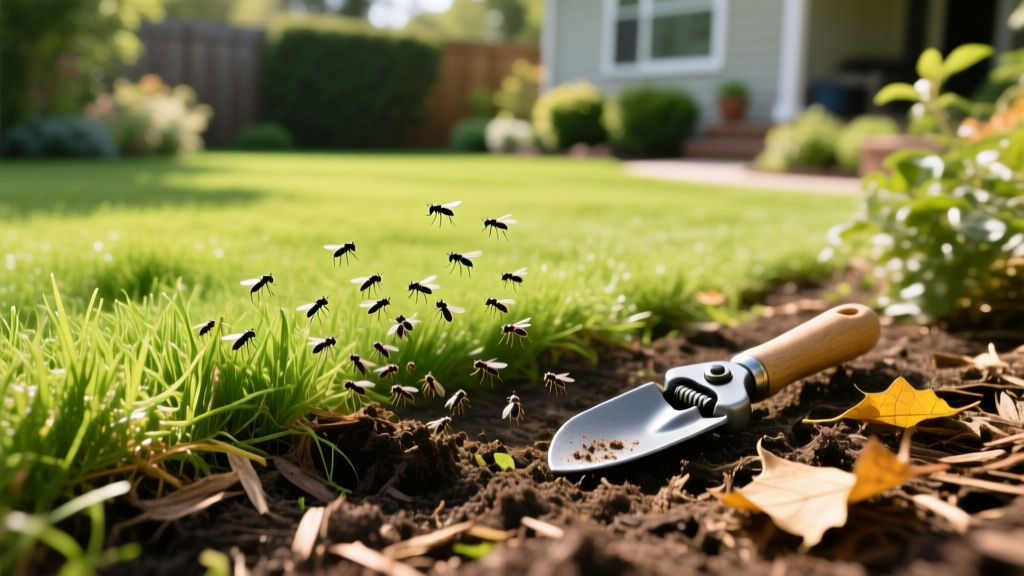
Why Are There So Many Gnats Outside? Yard Causes & Fixes
If you are asking why there are so many gnats outside your home, the answer almost always traces back to localized moisture imbalances and decaying organic matter. Gnat population explosions are not random; they are direct biological responses to specific microclimates in your yard. While they are a nuisance, understanding the exact species swarming your patio or lawn is the first step toward eradication. Blanket spraying broad-spectrum insecticides rarely works and often destroys beneficial predatory insects that naturally keep gnat numbers in check.
The Big Three: Identifying Your Outdoor Gnat Swarm
The term 'gnat' is a colloquial catch-all for several distinct families of small flying insects. Correct identification dictates your treatment protocol. Misidentifying a biting midge as a harmless fungus gnat will lead to ineffective soil treatments and continued bites.
| Species | Scientific Name | Size & Appearance | Primary Habitat | Bites Humans? |
|---|---|---|---|---|
| Fungus Gnats | Bradysia spp. | 1/8 inch, dark gray/black, long legs, weak fliers | Damp topsoil, thick thatch, potted plants | No |
| Biting Midges | Culicoides spp. | 1/32 to 1/8 inch, grayish, mottled wings | Muddy margins, salt marshes, wet compost | Yes (painful) |
| Eye Gnats | Liohippelates spp. | 1/16 inch, shiny black, distinct halteres | Sandy loam soils, agricultural edges | No (but swarm eyes) |
According to Penn State Extension, fungus gnats are the most common culprit for swarms hovering just above the turf line or patio pavers. If the swarm is aggressively flying into your face and eyes, you are likely dealing with eye gnats. If you are experiencing sharp, itchy bites around your ankles near wet soil, biting midges (often called no-see-ums) are the cause.
Environmental Triggers: Why Populations Explode
Gnats require three elements to breed rapidly: moisture, organic food sources, and temperatures between 70°F and 80°F. When you notice a sudden influx, one of the following yard conditions has reached a critical threshold:
1. Thatch Buildup Exceeding 0.5 Inches
Thatch is the layer of dead and living grass shoots between the green vegetation and the soil surface. When this layer exceeds half an inch, it acts like a sponge, trapping moisture and creating an ideal, protected breeding ground for fungus gnat larvae. The larvae feed on the fungi and decaying roots within this layer.
2. Overwatering and Poor Drainage
Fungus gnat eggs require consistently damp topsoil to hatch. Lawns irrigated daily for short durations keep the top 1/2 inch of soil perpetually wet. Similarly, low-lying areas where water pools for more than 24 hours after a rainstorm become prime nurseries for biting midges.
3. Mulch and Compost Piles
Wood mulch applied thicker than 3 inches retains excessive moisture against the soil surface. As the bottom layers of mulch begin to decompose, they cultivate the exact fungal networks that fungus gnats consume. Compost bins lacking proper aeration also generate massive midge and gnat populations.
Targeted Eradication: Matching Treatment to the Pest
Eliminating outdoor gnats requires breaking their reproductive cycle. Adult gnats live for only 7 to 10 days; the real battle is won in the soil where the larvae develop.
Biological Control: Bti (Bacillus thuringiensis israelensis)
For biting midges and fungus gnats breeding in wet soil or standing water, Bti is the gold standard. Bti is a naturally occurring bacterium that produces proteins toxic only to the larvae of flies, mosquitoes, and midges.
Product Recommendation: Summit Mosquito Bits (approx. $18 for a 30 oz shaker).
Application: Broadcast 4 tablespoons per 200 square feet over damp lawn areas and mulch beds. For heavy infestations, steep 4 tablespoons in a gallon of water for 30 minutes, strain the solids, and use the 'Bti tea' to drench the soil. Repeat every 14 days for two cycles.
Beneficial Nematodes (Steinernema feltiae)
These microscopic worms actively hunt and infect gnat larvae in the soil. The S. feltiae species is specifically adapted to cooler soil temperatures and targets fungus gnat larvae with high efficiency.
Product Recommendation: Arbico Organics Nematodes (approx. $35 for 5 million count, treats up to 5,000 sq ft).
Application: Apply via hose-end sprayer in the early morning or late evening when UV light is low. The soil must remain moist for at least 7 days post-application to allow the nematodes to migrate and infect hosts. According to the UC Statewide IPM Program, combining nematodes with Bti provides a synergistic effect that decimates larval populations.
⚠️ Warning: The Bug Zapper Trap
Do not rely on UV bug zappers for outdoor gnat control. Studies show that zappers indiscriminately kill thousands of beneficial predatory insects and pollinators while capturing very few gnats. Furthermore, the UV light actually attracts more gnats to your patio area than it kills, worsening the localized swarm.
14-Day Yard Remediation Protocol
Follow this structured timeline to alter your yard's microclimate and eradicate the infestation.
- Day 1: Moisture Audit. Use a soil moisture meter (e.g., Kenszer Probe Meter, $15) to test 10 random spots in your lawn. If the top 1 inch reads 'wet', halt all irrigation immediately.
- Day 2: Thatch Removal. Rent a power dethatcher or use a stiff metal thatch rake to aggressively pull up matted dead grass. Bag and remove all debris from the property; do not compost it.
- Day 4: Core Aeration. Aerate compacted zones to a depth of 3 to 4 inches. This improves water infiltration, preventing the surface puddling that midges require.
- Day 5: First Bti Application. Apply Bti granules or soil drench to all identified breeding zones, focusing on the margins of garden beds and low-lying turf.
- Day 8: Mulch Adjustment. Rake existing wood mulch to break up matted layers and reduce depth to a maximum of 2 inches. Allow the soil surface to dry completely between waterings.
- Day 12: Nematode Application. Apply Steinernema feltiae nematodes to the soil to target any surviving larvae that hatched after the initial Bti treatment.
- Day 14: Second Bti Application. Reapply Bti to catch the final generation of emerging adults before they can lay new eggs.
Frequently Asked Questions
Does apple cider vinegar work for outdoor gnats?
Apple cider vinegar traps are moderately effective for indoor fruit flies (Drosophila), but they are virtually useless for outdoor fungus gnats or biting midges. Outdoor air currents dissipate the scent, and these species are not attracted to fermentation volatiles in the same way fruit flies are. Stick to Bti and cultural moisture control for yard swarms.
Why are there so many gnats outside after it rains?
Rainfall saturates the thatch layer and fills micro-depressions in the soil, creating temporary pools of standing water. As noted by Texas A&M AgriLife Extension, biting midges can complete their larval development in highly saturated mud that lacks standing water. A heavy rain triggers synchronized hatching of pupae that were waiting for sufficient moisture.
Can I use permethrin to kill gnats in the yard?
While synthetic pyrethroids like permethrin will kill adult gnats on contact, they do not penetrate the thatch layer effectively to kill larvae. Furthermore, permethrin is highly toxic to bees and aquatic life. Because adult gnats live for only a few days, killing the adults without addressing the soil-borne larvae results in a new swarm emerging 48 hours later. Biological larvicides are vastly superior for long-term control.