
Pest Control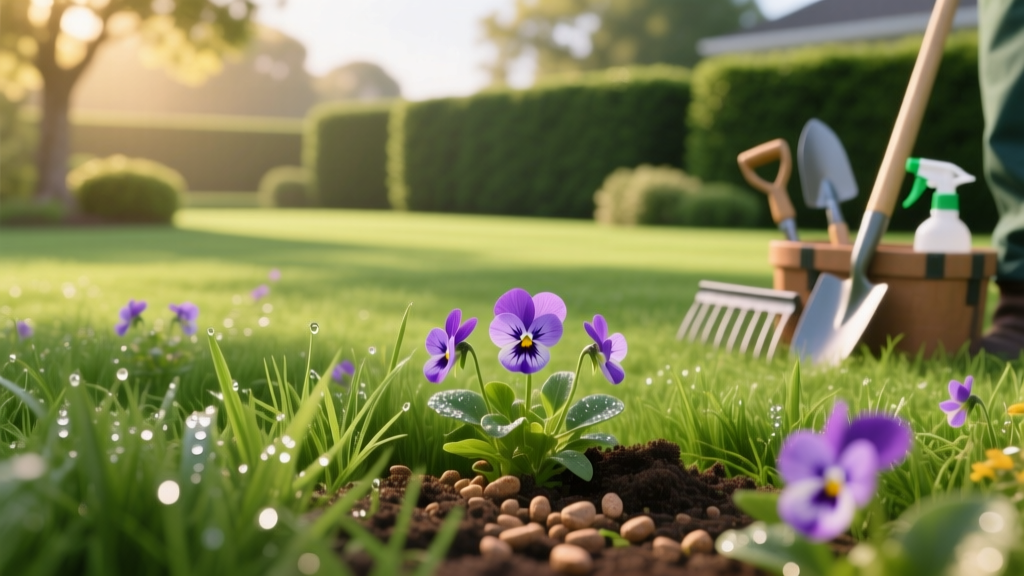
Effective Wild Violet Herbicide Tactics and Soil Nutrition Fixes
The Soil-Weed Connection: Why Wild Violets Invade
Wild violets (Viola sororia and Viola papilionacea) are frequently misdiagnosed as simple cosmetic nuisances. In reality, their aggressive colonization is a biological indicator of specific soil imbalances. While most homeowners reach for generic, off-the-shelf 2,4-D weed killers, these formulations routinely fail against the violet's thick, waxy cuticle and extensive rhizomatous root system. To achieve permanent eradication, you must pair a targeted wild violet herbicide with strategic soil nutrition corrections.
Violets thrive in environments where cool-season turfgrasses are physiologically stressed. They favor moist, compacted soils with high organic matter but imbalanced N-P-K ratios, particularly in soils lacking available phosphorus. Furthermore, wild violets tolerate slightly acidic conditions (pH 5.5 to 6.2) much better than Kentucky bluegrass or tall fescue, which require a pH of 6.5 to 7.0 for optimal nutrient uptake. Applying a chemical knockdown without addressing these underlying soil parameters guarantees the weeds will return from seed or surviving rhizomes within a single growing season.
Selecting the Right Wild Violet Herbicide: Active Ingredients Breakdown
Standard broadleaf herbicides relying solely on 2,4-D are insufficient for wild violet control. You need a multi-active-ingredient formulation that includes triclopyr or dicamba. Triclopyr is exceptionally effective at translocating through the rhizomes, while dicamba provides rapid foliar burndown. Below is a comparison of the most effective professional-grade and consumer-accessible herbicide profiles for violet eradication.
| Active Ingredient Profile | Product Examples | Application Rate (per 1,000 sq ft) | Efficacy on Wild Violets | Est. Cost (2026) |
|---|---|---|---|---|
| Triclopyr + Dicamba + 2,4-D | Q4 Plus, Trimec Classic | 1.5 - 2.0 fl oz | Excellent (Systemic rhizome kill) | $45 - $55 / Quart |
| Triclopyr (Ester formulation) | SpeedZone Southern, Turflon Ester | 0.75 - 1.0 fl oz | Superior (Penetrates waxy cuticle) | $60 - $75 / Quart |
| 2,4-D + MCPP + Dicamba | Three-Way Select, PBI Gordon Trimec | 1.5 fl oz | Moderate (Requires multiple apps) | $35 - $45 / Quart |
| Quinclorac | Drive XLR8 | N/A | Poor (Ineffective on broadleaf violets) | $40 / Quart |
Temperature & Formulation Warning: When using ester-based herbicides (like SpeedZone), applications must be made when daytime temperatures are below 85°F. Above this threshold, esters can volatilize (turn into a gas) and drift onto nearby ornamental shrubs, causing severe phytotoxicity. For mid-summer applications, switch to an amine-based formulation like Trimec Classic.
The 3-Phase Eradication and Soil Rehabilitation Protocol
Chemical control is only phase one. Integrating this with soil nutrition management ensures the turfgrass can outcompete future violet germination.
Phase 1: Foliar Attack with Surfactant Enhancement
Because wild violet leaves are coated in a hydrophobic waxy layer, herbicide droplets will often bead up and roll off before the active ingredient can penetrate the stomata. You must include a Non-Ionic Surfactant (NIS) in your tank mix.
- Herbicide: 1.5 fl oz of a Triclopyr/Dicamba blend (e.g., Q4 Plus) per 1,000 sq ft.
- Surfactant: Add 1 to 2 teaspoons (approx. 0.25% v/v) of NIS per gallon of water.
- Water Volume: Calibrate your sprayer to deliver 2.0 gallons of mixed solution per 1,000 sq ft for optimal coverage.
- Timing: Apply in early fall (September to October) when violets are actively pulling nutrients—and the herbicide—down into their rhizomes for winter storage.
Phase 2: Alleviating Compaction and Amending pH
Wait 14 days after the herbicide application to allow the chemical to fully translocate through the violet's root system. Once the weeds show signs of necrosis, address the soil structure. According to University of Minnesota Extension, wild violets heavily exploit compacted, poorly drained soils where turfgrass roots suffocate.
- Core Aeration: Perform deep-tine core aeration to a depth of at least 3 inches. This physically disrupts violet rhizome networks and opens pathways for soil amendments.
- Soil Testing: Submit a soil sample for a Mehlich-3 extraction test. If your soil pH is below 6.3, apply pelletized calcitic limestone at a rate of 25 to 40 lbs per 1,000 sq ft. Raising the pH to 6.8 locks out the specific micronutrients violets prefer while optimizing phosphorus availability for turf.
Phase 3: Competitive Turf Fertilization
Once the soil pH is corrected and compaction is relieved, you must feed the turf to close the canopy gaps left by the dying violets. However, fertilizer timing relative to herbicide use is critical.
'Applying high-nitrogen synthetic fertilizers within 7 days of a systemic herbicide application causes biochemical antagonism. The rapid flush of turf and weed growth dilutes the herbicide concentration in the plant tissue, leading to incomplete rhizome kill.' — Purdue University Turf Science Program
To avoid this, utilize slow-release, coated nitrogen sources. Products utilizing methylene diurea (MDU) or sulfur-coated urea (SCU) provide a steady 8-to-12-week nutrient release. This steady feed promotes lateral turf stolon growth without triggering the rapid cellular expansion that compromises herbicide efficacy. Aim for a fertilizer with a high potassium (K) ratio, such as a 15-0-15 or 18-2-12 blend, to strengthen turf cell walls against future weed encroachment and environmental stress.
Long-Term Soil Nutrition Defenses Against Regrowth
Even after successful eradication, wild violet seeds can remain viable in the soil seedbank for up to three years. Preventing germination requires maintaining a hostile soil environment for the weed while fostering ideal conditions for the turf.
Phosphorus Management
Wild violets are highly efficient at scavenging phosphorus in low-fertility soils. If your soil test reveals low phosphorus (P) levels, apply a starter fertilizer containing ammonium phosphate (e.g., 18-46-0) during your fall overseeding. Ensuring the turfgrass has immediate access to phosphorus allows it to establish a dense, aggressive root mass that physically shades out and outcompetes violet seedlings.
Organic Matter and Topdressing
While violets tolerate high organic matter, they struggle in well-aerated, sandy-loam profiles. If your soil is heavy clay, implement an annual topdressing program using a 70/30 sand-to-compost mix. Apply a quarter-inch layer immediately after fall aeration. This gradually improves soil drainage, reducing the persistent surface moisture that wild violet seeds require to break dormancy in early spring.
Summary Checklist for Lawn Care Professionals and Homeowners
- Identify: Confirm broadleaf, heart-shaped leaves with waxy coating; check for rhizomes in the top 2 inches of soil.
- Select Herbicide: Choose a Triclopyr + Dicamba blend; avoid standalone 2,4-D or Quinclorac.
- Enhance: Always mix with a Non-Ionic Surfactant (NIS) to breach the waxy cuticle.
- Delay Fertilizer: Wait 7-10 days post-spray before applying nitrogen to prevent herbicide dilution.
- Correct Soil: Core aerate and apply lime to push soil pH above 6.5.
- Feed Smart: Use slow-release MDU/SCU fertilizers with adequate potassium to thicken the turf canopy.

